
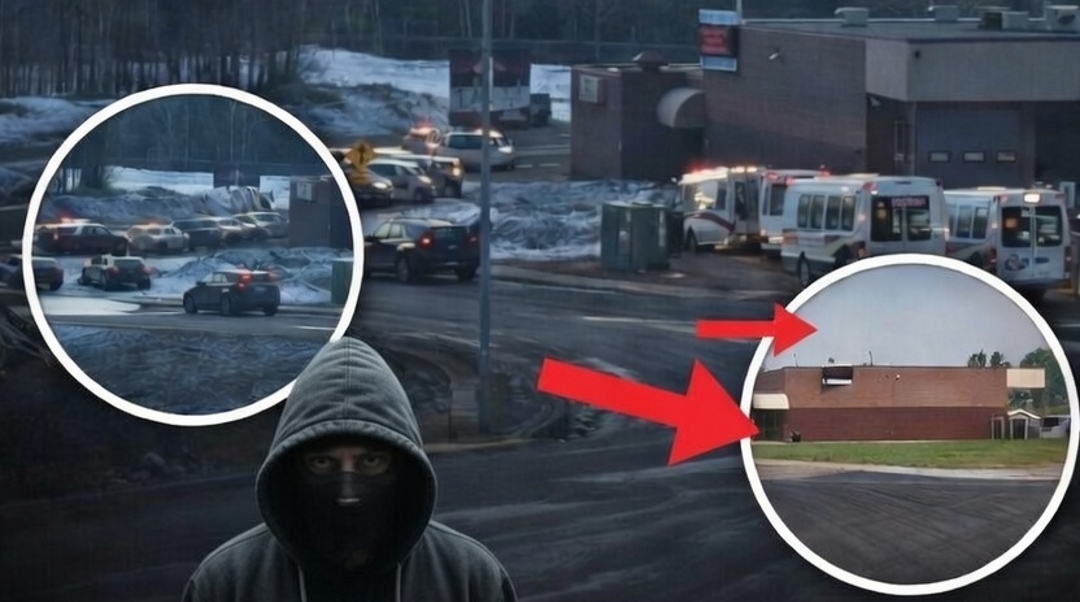
A quiet morning shattered into sirens, flashing lights, and the kind of silence that only follows chaos.
Authorities have confirmed that ten people are dead — including the suspected gunman — and dozens more are wounded after a mass shooting that unfolded in a community still struggling to understand how something so violent could erupt so suddenly.
Law enforcement officials said the attack began inside a public building before spilling into surrounding areas, sending people running for cover. Witnesses described hearing rapid gunfire, followed by screams and the sound of doors slamming as employees and visitors tried to barricade themselves inside offices and classrooms.
By the time police arrived, the scene was already unfolding at terrifying speed. Officers secured the perimeter, ambulances lined the street, and emergency responders began triaging victims in parking lots and hallways.
Authorities later confirmed that the suspected gunman was among the dead. Investigators have not yet publicly detailed whether the suspect died by suicide or was killed during the police response, but they emphasized that there is no ongoing threat to the public.
Hospitals across the region reported receiving dozens of patients with injuries ranging from minor to life-threatening. Medical staff described an overwhelming surge as families rushed in searching for loved ones, clinging to updates that were changing minute by minute.
Community leaders called the violence “unimaginable” and urged residents to rely on verified information rather than rumors circulating online. In the hours after the attack, social media filled with conflicting reports about motives, identities, and supposed warning signs — many of which authorities cautioned were unconfirmed.
According to guidance from the FBI’s active shooter safety resources, rapid response and coordinated communication are critical in minimizing casualties during such incidents. Officials said first responders followed established protocols to clear rooms, secure victims, and prevent further harm.
Still, protocols cannot erase what happened.
Families gathered at reunification centers set up by local officials, some holding photos, others gripping phones in trembling hands. Counselors and clergy stood nearby, offering support as names were slowly confirmed.
Investigators are now working to reconstruct the suspect’s movements leading up to the attack. That process typically involves examining digital footprints, interviewing acquaintances, reviewing surveillance footage, and searching for any prior contact with law enforcement.
Experts note that while motives in mass shootings vary, many incidents involve complex combinations of personal grievances, untreated mental health struggles, access to firearms, and social isolation. The CDC’s firearm violence prevention resources highlight the importance of early intervention and community awareness in identifying potential warning signs before violence escalates.
For residents, those broader conversations feel distant compared to the immediate grief settling in.
Neighbors described the area as typically calm — a place where children walked to school and people recognized one another in passing. The abrupt shift from normalcy to trauma has left many shaken, unsure how to explain what happened to their families.
Officials urged the public not to amplify graphic imagery or speculation, noting that such content can retraumatize survivors and complicate the investigation. Law enforcement also asked anyone with verified information or relevant footage to submit it directly to authorities rather than posting it online.
In the coming days, more details will likely emerge: the suspect’s background, potential warning signs, and whether any systemic failures played a role. Those findings may spark renewed debate over public safety measures, gun policy, mental health services, and school or workplace security.
But for now, the focus remains on the victims.
Vigils are already being planned. Flags are being lowered. Schools and offices in the area have announced temporary closures as the community absorbs the scale of the loss.
Officials emphasized that accurate information will be released as it becomes available and urged patience during the investigative process. They also encouraged residents struggling emotionally to seek support through local crisis lines and mental health providers.
Ten lives have ended. Dozens more people face long recoveries. And an entire community is left asking how a routine day turned into one of its darkest chapters.