
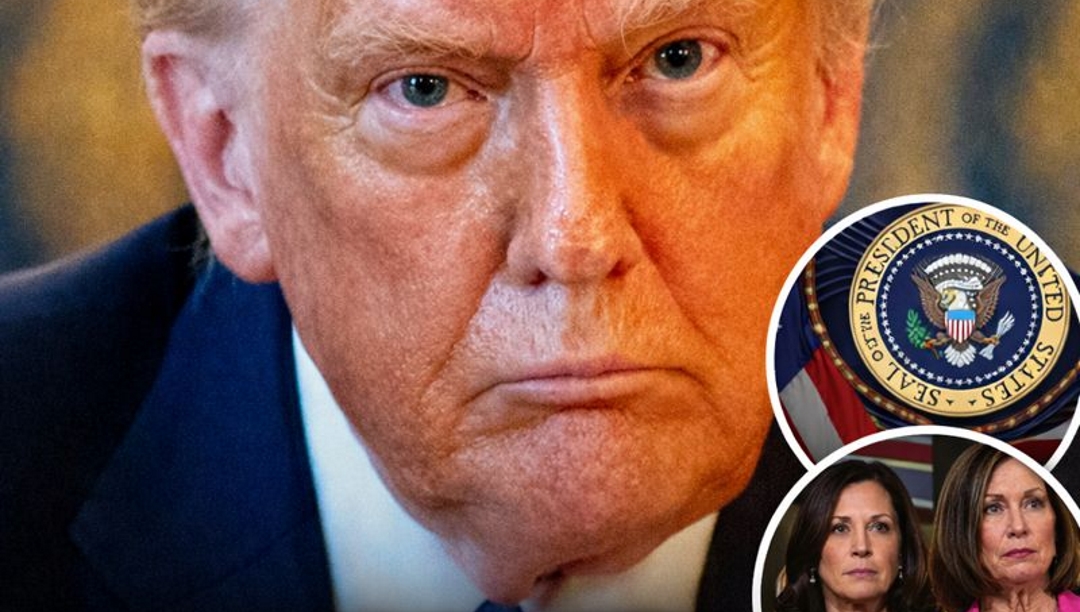
The 25th Amendment to the US Constitution is often mentioned during moments of political crisis, but few Americans fully understand what it actually does, how it works, or how rarely it has been used in modern history.
In recent years, the amendment has repeatedly resurfaced in conversations surrounding Donald Trump, particularly during periods of controversy, public concern over leadership stability, or questions about a president’s ability to govern.
Ratified in 1967 following the assassination of John F. Kennedy, the 25th Amendment was designed to clarify what happens if a president dies, resigns, becomes incapacitated, or is deemed unable to perform the duties of the office.
Before its adoption, the Constitution offered little guidance on presidential incapacity, leaving dangerous gray areas during moments of national emergency.
The amendment contains four sections, but it is Section 4 that has drawn the most attention in modern political debates.
Section 4 allows the vice president and a majority of the president’s Cabinet to declare that the president is “unable to discharge the powers and duties of his office.” If invoked, the vice president immediately becomes acting president.
Crucially, this process does not require congressional approval at the outset. It begins inside the executive branch itself, making it a unique constitutional mechanism.
If the president disputes the declaration, Congress must then step in. Both the House and the Senate would be required to vote, with a two-thirds majority in each chamber needed to keep the vice president in power.
This extremely high threshold is intentional. The amendment was designed to prevent political abuse while still providing a safeguard against genuine incapacity.
Legal scholars emphasize that the amendment is not a punishment, nor is it meant to remove a president for unpopular decisions, political disagreements, or scandals.
Instead, it focuses strictly on ability — whether a president can carry out the responsibilities of the office in a functional and reliable manner.
That distinction is why the 25th Amendment has never been used to permanently remove a president against their will.
It has been invoked temporarily several times, most notably when presidents underwent medical procedures requiring anesthesia. In those cases, power was transferred briefly and returned once the president recovered.
The idea of using Section 4 against a conscious, resisting president remains unprecedented.
During Donald Trump’s presidency, the amendment entered public discourse following events that raised concerns among critics about decision-making, temperament, and stability.
Several former administration officials later revealed that internal discussions about the amendment had taken place, though it was never formally invoked.
Vice presidents play a decisive role in this process. Without their participation, Section 4 cannot move forward. This alone makes the amendment politically and practically difficult to deploy.
Cabinet members would also face immense pressure, legal scrutiny, and historical consequences for such an action.
Even if the amendment were successfully triggered, it would not permanently remove a president unless Congress upheld the decision after a contested vote.
That requirement ensures that no single faction can quietly seize power without broad institutional agreement.
Supporters of the amendment argue that its existence is essential for national stability, particularly in moments of crisis when swift action may be required.
Critics, however, warn that invoking it against a sitting president could deepen political divisions and undermine public trust if perceived as partisan.
Constitutional experts largely agree that the amendment is best understood as a last-resort safeguard — a constitutional fire extinguisher rather than a political tool.
As debates continue over presidential power, accountability, and mental fitness, the 25th Amendment remains a rarely used but profoundly significant part of the American system.
Its presence reflects a recognition that even the highest office in the country must have contingency plans for moments when leadership fails or falters.
For a detailed breakdown of the amendment’s language and historical background, the full text and analysis can be found through the National Constitution Center.
Additional context on how the amendment has been discussed in relation to modern presidencies is available via ongoing national reporting from Reuters.
While dramatic headlines often suggest otherwise, invoking the 25th Amendment is neither simple nor quick — and its ultimate power lies in the extraordinary consensus it requires to override a sitting president.