
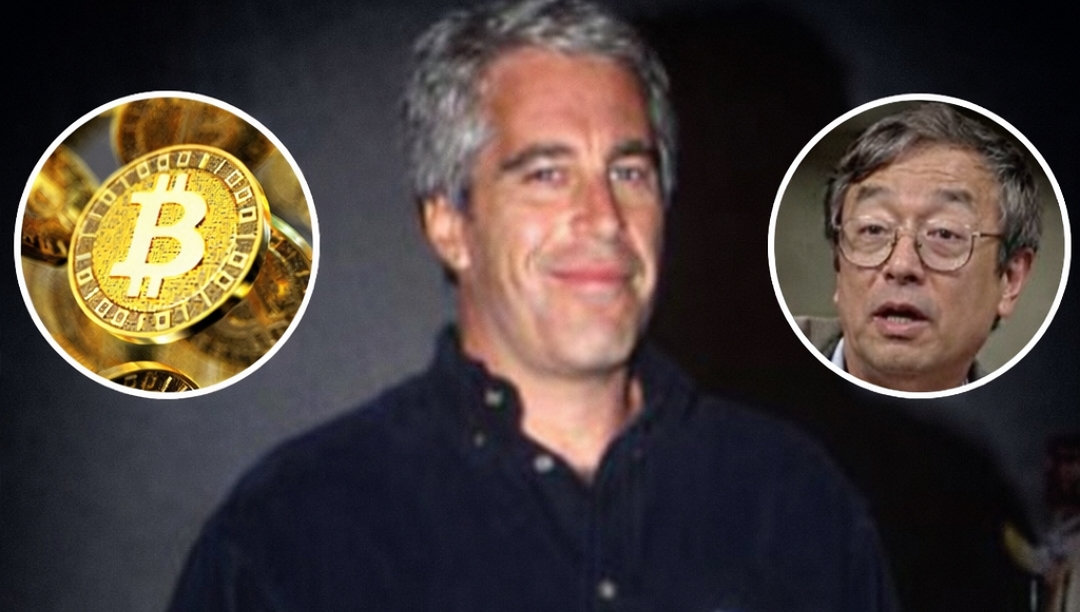
A sensational claim has been circulating online with renewed intensity: that disgraced financier Jeffrey Epstein was secretly the creator of Bitcoin, operating under the pseudonym Satoshi Nakamoto. Fueled by a so-called “viral email,” screenshots, and loosely connected timelines, the theory has spread rapidly across social media, crypto forums, and conspiracy circles. But when examined closely, the claim collapses under basic scrutiny.
The email at the center of the controversy allegedly references Epstein discussing cryptography, digital currency, or early Bitcoin concepts. Supporters of the theory argue that Epstein’s wealth, intelligence connections, and proximity to powerful technologists make him a plausible candidate. In reality, none of the claims withstand factual verification.
To understand why the theory gained traction, it helps to look at what we actually know about Satoshi Nakamoto. Bitcoin’s creator first appeared publicly in 2008, releasing the Bitcoin white paper and communicating exclusively through online forums and emails. Satoshi demonstrated deep technical knowledge of cryptography, distributed systems, and open-source software, and vanished entirely from public communication around 2010.
Jeffrey Epstein’s documented activities during that same period tell a very different story. Epstein was deeply embedded in finance, elite social networks, and later, criminal investigations. There is no credible evidence linking him to cryptographic research, software development, or peer-to-peer protocol design at the level required to create Bitcoin.
Crypto historians and blockchain analysts have repeatedly emphasized that Bitcoin’s architecture reflects years of specialized academic and technical engagement. Writing secure cryptographic code is not a side project; it requires deep, hands-on expertise. Epstein, for all his wealth and connections, has no known record of producing original technical work in this domain.
As reporting on the search for Satoshi Nakamoto has detailed, dozens of candidates have been proposed over the years, including computer scientists, mathematicians, and cryptographers with verifiable track records. Epstein has never appeared on any serious list maintained by researchers or Bitcoin core developers.
The viral email itself is another weak link. Digital forensics experts note that screenshots circulating online lack metadata, original headers, or verifiable sourcing. No reputable journalist or outlet has authenticated the email, and no primary documents place Epstein in direct contact with Bitcoin’s development in its early years.
So why does the claim persist?
Part of the answer lies in Epstein’s posthumous notoriety. Since his death in 2019, Epstein has become a magnet for conspiracy theories involving secret knowledge, hidden power structures, and elite manipulation. Bitcoin, with its anonymous origins and massive financial impact, provides fertile ground for those narratives.
There is also a broader psychological pattern at work. When major mysteries remain unsolved, people tend to attach them to already infamous figures. The idea that one shadowy figure secretly controlled multiple world-changing systems is emotionally compelling, even if unsupported by evidence.
However, linking Epstein to Bitcoin creates more contradictions than clarity. Bitcoin was designed to reduce centralized control, eliminate reliance on elite intermediaries, and operate transparently through open-source code. Epstein’s documented behavior, by contrast, involved secrecy, coercion, and exploitation within highly centralized power structures.
Experts also point to linguistic and behavioral analysis. Satoshi’s writing style, time-zone activity, and collaborative approach suggest someone embedded in software development culture, not high-society finance. The tone of Satoshi’s communications emphasized decentralization, privacy, and technical rigor—values inconsistent with Epstein’s known pursuits.
In analysis examining why most Satoshi theories fail, researchers note that viral claims often rely on coincidence rather than causation, and collapse once timelines, skills, and motivations are examined side by side.
Another red flag is the lack of corroboration from the Bitcoin community itself. Early Bitcoin contributors, developers, and forum participants have consistently rejected the Epstein theory. Many interacted directly with Satoshi and have stated there was nothing in his behavior or communication style that resembled Epstein or his known associates.
Importantly, no cryptographic keys, early Bitcoin signatures, or wallet activity—some of which are still visible on the blockchain—have ever been connected to Epstein. Those digital fingerprints are among the strongest tools available for identifying Bitcoin’s creator, and they point elsewhere.
The resurgence of the claim also highlights how misinformation spreads in the crypto space. Screenshots travel faster than source documents, and emotional narratives often outperform technical explanations. Once a claim is framed as “what they don’t want you to know,” it becomes resistant to correction.
This does not mean questions about Bitcoin’s origins are illegitimate. Satoshi Nakamoto remains unidentified, and that mystery continues to fascinate researchers and investors alike. But speculation is not evidence, and attaching unrelated figures to the mystery only muddies the historical record.
The Epstein-Bitcoin claim ultimately says more about internet culture than about cryptocurrency history. It reflects a tendency to merge real crimes with unrelated enigmas, producing stories that feel dramatic but lack substance.
When stripped of viral framing, the theory collapses into a familiar pattern: an unverified document, amplified by social media, tied to a notorious name, and repeated until it feels plausible. But plausibility is not proof.
There is currently no credible evidence—technical, documentary, or testimonial—that Jeffrey Epstein was Satoshi Nakamoto or had any role in Bitcoin’s creation. Until such evidence exists, the claim remains firmly in the realm of conspiracy, not fact.
Bitcoin’s origins may still be unresolved, but tying them to Epstein solves nothing. It distracts from genuine research, undermines serious inquiry, and replaces critical thinking with sensationalism.
The truth behind the viral email is far less dramatic than the headline suggests: it is unverified, unsupported, and inconsistent with everything known about both Bitcoin’s creation and Jeffrey Epstein’s life.
In a digital age saturated with misinformation, the lesson is simple. Extraordinary claims require extraordinary evidence—and in this case, none has been produced.