
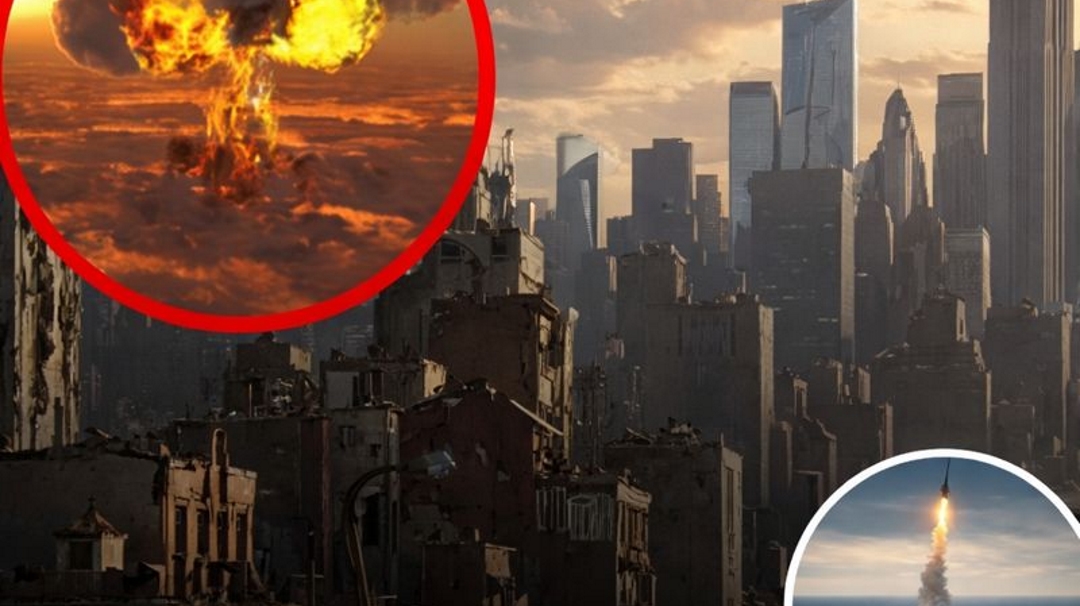
As global tensions rise and military flashpoints multiply, fears about what a third world war could look like are no longer confined to science fiction. Security analysts, historians, and defense experts have all warned that if a large-scale global conflict were to break out, geography could determine survival.
Unlike past wars, World War III would likely unfold at terrifying speed, driven by advanced weapons systems, cyber warfare, and the ever-present shadow of nuclear escalation. Some locations would face immediate and overwhelming danger, not because of chance, but because of their strategic importance.
Major capital cities would sit at the top of that list. Political centers such as Washington, Moscow, Beijing, and London are deeply intertwined with military command structures, intelligence networks, and decision-making hubs. In a worst-case scenario, these cities could become early targets in an effort to cripple leadership and communication.
Equally vulnerable would be regions hosting large military bases or nuclear facilities. Areas surrounding missile silos, naval ports, and air force command centers would carry enormous risk, especially if adversaries attempted to neutralize strike capabilities before they could be deployed.
Experts also point to transportation and logistics hubs as potential danger zones. Major ports, shipping canals, and international airports play a critical role in moving troops, fuel, and supplies. In a global conflict, disrupting these arteries could be just as devastating as a direct battlefield strike.
Some of the world’s most densely populated urban areas could face disproportionate consequences even if they are not direct targets. Modern warfare often creates cascading effects — power grid failures, water shortages, food supply breakdowns — that can turn megacities into humanitarian disasters within days.
Nuclear-armed nations would face unique risks, but neighboring countries might suffer just as much. Fallout does not respect borders, and even limited nuclear exchanges could contaminate vast regions, forcing mass evacuations and long-term environmental damage.
Strategic chokepoints such as narrow sea lanes and contested waterways would also become extremely dangerous. Areas like the South China Sea, the Strait of Hormuz, and parts of Eastern Europe could see intense military activity as global powers fight to control movement and resources.
Cyber warfare adds another layer of vulnerability. Cities heavily dependent on digital infrastructure — smart grids, automated hospitals, data-driven transportation systems — could be plunged into chaos if networks are disabled or manipulated during wartime.
Rural areas might appear safer on the surface, but proximity to energy facilities, communication towers, or supply routes could still place communities at risk. Even remote regions could face shortages if global trade collapses.
Climate and geography would also shape survival. Areas already prone to extreme weather or limited resources could struggle to support populations displaced by conflict. Refugee flows could overwhelm neighboring regions, creating secondary crises far from the front lines.
Defense analysts emphasize that modern wars are not confined to soldiers and battlefields. Civilians would be directly affected through economic shocks, infrastructure collapse, and psychological strain unlike anything seen before.
Historical modeling and modern simulations have explored how quickly escalation could spiral, with some assessments suggesting that early miscalculations could lead to catastrophic consequences within hours.
Research from global nuclear risk assessments has repeatedly warned that humanity is closer to large-scale conflict than at many points during the Cold War.
Military scholars have also outlined how modern deterrence strategies rely on restraint and communication — both of which become fragile under political pressure.
While no one can predict exactly how a future global conflict would unfold, experts agree on one thing: location would matter immensely. The safest places would likely be those far removed from military value, dense populations, and strategic infrastructure.
Ultimately, discussions about worst-case scenarios are not meant to fuel fear, but to highlight the importance of diplomacy, de-escalation, and global cooperation. The cost of getting it wrong would not be measured in borders or victories, but in lives.
For now, World War III remains a possibility — not a certainty — but understanding the risks underscores just how much is at stake if tensions continue to rise.