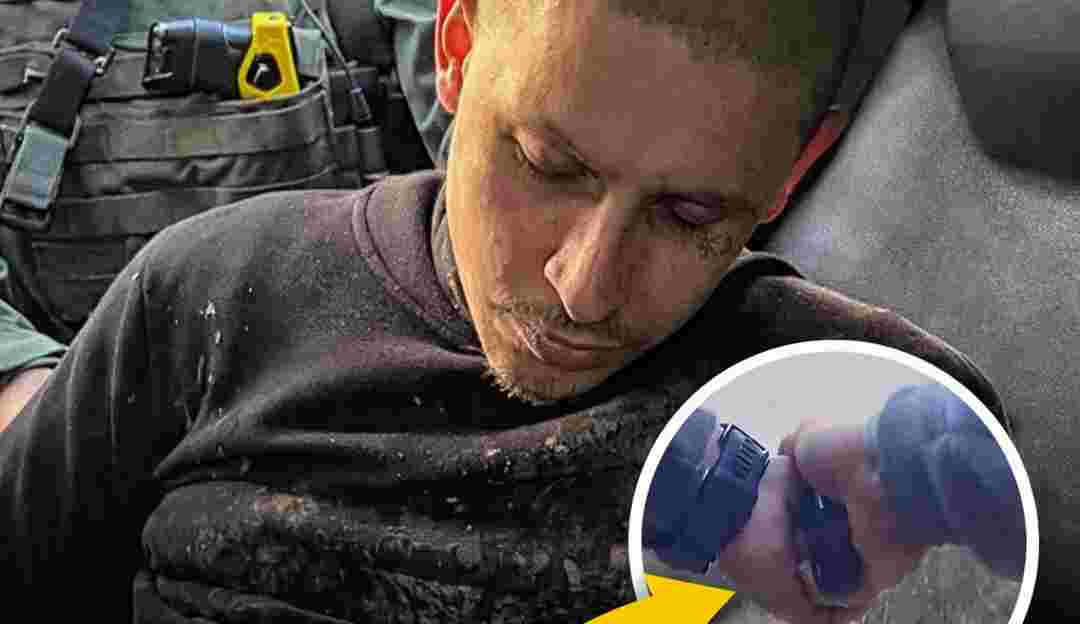
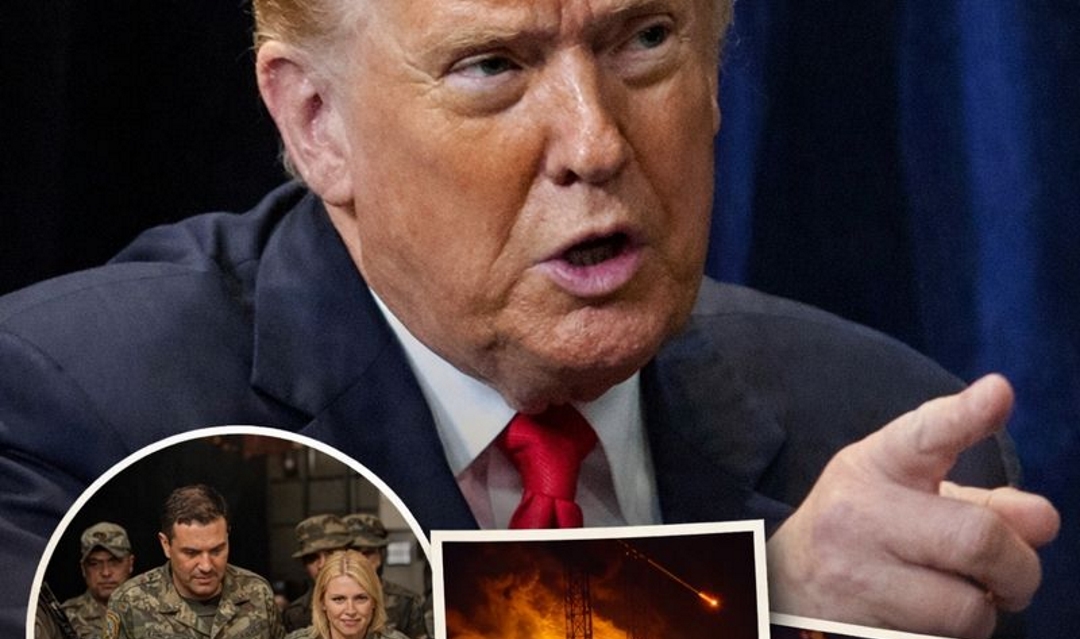
The image spreading online isn’t subtle. Donald Trump pointing forward, explosions tearing through a city skyline, soldiers escorting detainees, and a blunt claim splashed across the bottom: the Venezuelan president and his wife were captured after U.S. airstrikes on the capital. This time, the story behind the image is not imaginary — but it is still unfolding, contested, and volatile.
In the early hours of Saturday, multiple outlets reported explosions across Caracas, with residents describing low-flying aircraft, loud detonations near military facilities, and fires lighting up the skyline. Within hours, Trump publicly stated that U.S. forces had carried out targeted strikes and that President Nicolás Maduro and his wife, Cilia Flores, were taken into custody and removed from the country, according to live reporting following his announcement.
The strikes immediately triggered chaos and confusion inside Venezuela. Government officials in Caracas acknowledged explosions and described the attacks as “foreign aggression,” while stopping short of confirming Maduro’s whereabouts. State television continued broadcasting without the president appearing publicly, fueling speculation and panic. Independent confirmation has been difficult, a reality noted by journalists monitoring events on the ground.
Trump framed the operation as a decisive move against what he described as a criminal regime, alleging corruption, drug trafficking, and human rights abuses. Supporters quickly hailed the move as historic, arguing it ended years of failed diplomacy. Critics, however, immediately raised legal and constitutional alarms, pointing to the absence of congressional authorization and warning of destabilization across Latin America.
Explosions in Caracas overnight. Trump claims Maduro and his wife were captured. Venezuelan officials dispute it. Situation extremely fluid. — World Alerts (@worldalert) Jan 3, 2026
International reaction was swift and divided. Some regional leaders called emergency meetings, while others demanded restraint and verification. Oil markets jumped sharply on fears of prolonged instability, a reaction tracked closely in early financial analysis. Diplomats warned that even the perception of regime removal could trigger unrest well beyond Venezuela’s borders.
Inside the U.S., lawmakers scrambled for briefings. Several members of Congress publicly questioned the legal authority behind the strikes, while others praised what they called decisive leadership. Defense officials confirmed military activity but declined to comment on the alleged capture, directing questions to the White House.
For Venezuelans, the moment has been terrifying. Social media videos showed residents sheltering indoors as blasts echoed through the city. Reports of power outages, disrupted communications, and overwhelmed emergency services circulated widely, some corroborated by early eyewitness accounts. Hospitals reportedly moved into emergency protocols as uncertainty spread.
Analysts say the strikes represent the most aggressive U.S. military action in Latin America in decades, reviving memories of past interventions that reshaped entire regions. Whether this operation marks a turning point or the start of a longer crisis remains unclear, especially as Venezuelan officials continue to deny that Maduro has been transferred to U.S. custody.
Trump says Maduro is captured. Venezuelan government denies knowing his location. No independent confirmation yet. This could reshape the hemisphere. — Global Newsroom (@globalnewsnow) Jan 3, 2026
The coming hours are critical. Proof of custody, international verification, and legal justification will determine whether Trump’s claim stands as a historic intervention or collapses into a diplomatic firestorm. For now, the image reflects a moment of extreme uncertainty — one that has already shaken markets, governments, and millions of lives across the region.
Whatever the final outcome, January 2026 may be remembered as the moment U.S.–Venezuela tensions crossed a line that cannot be easily reversed.