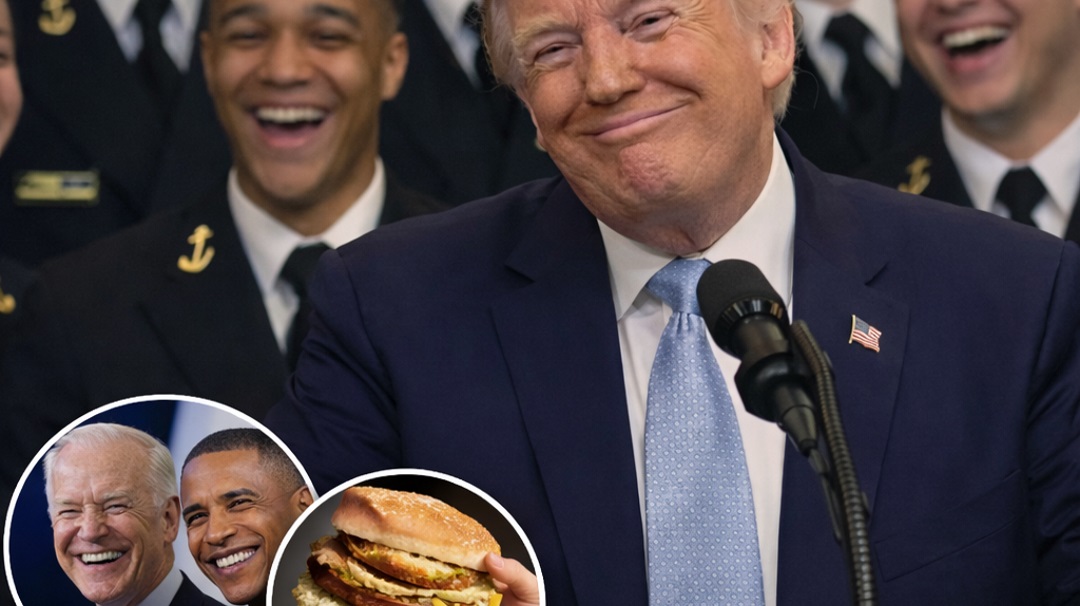
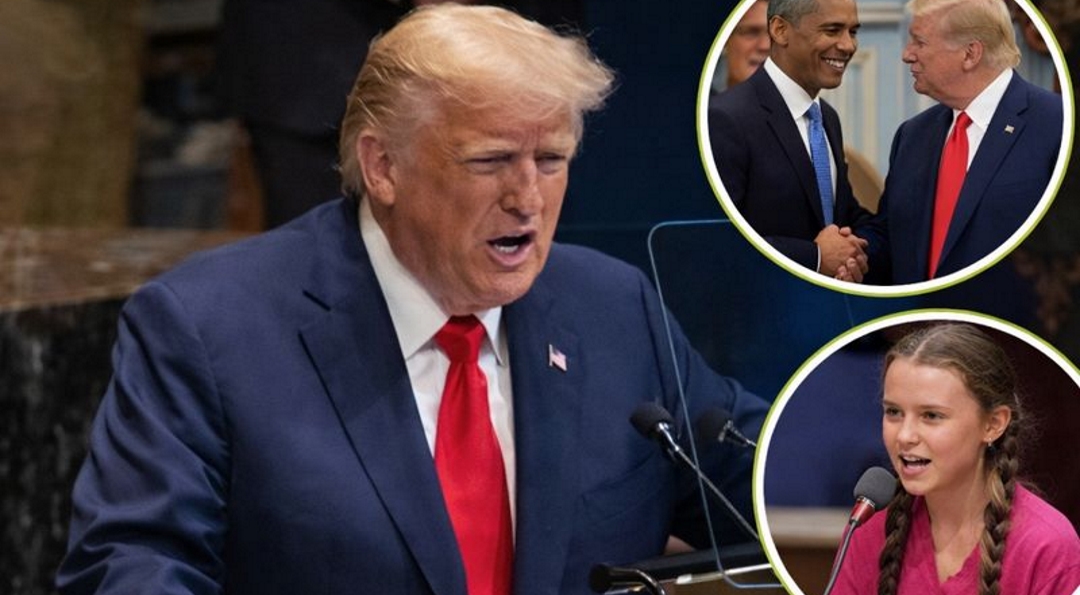
It was a moment that instantly lit up social media and cable news chyrons. Standing at the podium, Donald Trump made a sweeping declaration about the Nobel Prize, arguing that his record on peace and diplomacy eclipses that of every historical figure who has ever received the honor.
The claim wasn’t framed as a hypothetical or a complaint about being overlooked. Trump presented it as a statement of fact, suggesting that history itself had failed to properly credit what he described as unmatched achievements on the global stage.
According to people in the room, the comment drew audible reactions, with some supporters nodding approvingly while others appeared stunned by the scale of the assertion. Within minutes, clips were circulating online, fueling debate about ego, legacy, and how presidents measure themselves against the past.
Trump pointed to Middle East normalization agreements, the absence of new large-scale wars during his term, and his unconventional diplomatic style as evidence. Allies quickly circulated breakdowns of key agreements signed during his presidency, arguing they represented tangible outcomes rather than symbolic gestures.
Critics, however, were quick to counter that Nobel history isn’t built on self-assessment. Past recipients range from diplomats to activists, many honored not for dominance but for restraint, compromise, or long-term humanitarian impact. One former State Department official referenced the Nobel Peace Prize archive as proof that the committee often rewards quiet influence rather than headline-grabbing deals.
The timing of Trump’s remarks also mattered. The global landscape remains unstable, with conflicts ongoing and diplomatic tensions unresolved. Against that backdrop, some analysts saw the statement as an attempt to seize narrative control, framing his presidency as a stabilizing force rather than a polarizing one.
Supporters leaned into the contrast with previous administrations, arguing that Trump avoided prolonged military entanglements where others escalated. Conservative commentators cited economic and security analyses that credited pressure-based diplomacy with deterring adversaries, even if the methods were controversial.
On social media, the reaction split sharply along familiar lines.
Trump saying he deserves the Nobel more than anyone in history is peak Trump — equal parts confidence and controversy. — Political Desk (@ThePoliticalHQ) April 2024
Others mocked the claim outright, pointing out that Nobel laureates include figures who ended wars, dismantled weapons systems, or devoted decades to peace-building without ever holding formal power. To them, Trump’s statement reflected a fundamental misunderstanding of how the prize is awarded.
Yet even critics acknowledged something else: Trump understands spectacle. By placing himself “above every historical figure,” he forced a conversation not just about the Nobel Prize, but about how political legacies are judged in the age of viral soundbites.
Some historians noted that presidents have long obsessed over legacy, though few have voiced it so bluntly. Past leaders often relied on biographers and institutions to elevate their standing over time. Trump, by contrast, appears determined to do it himself, in real time.
There’s also a political dimension. By framing himself as uniquely deserving of global recognition, Trump reinforces a broader message to supporters: that he is unfairly treated by elites, overlooked by institutions, and judged by different standards. That narrative has been central to his appeal since 2016.
Even so, the Nobel Committee rarely responds to public pressure, let alone self-nomination rhetoric. Experts familiar with how nominations actually work emphasized that hundreds of names are submitted each year, most of them quietly, with no guarantee of consideration.
The contrast between Trump’s public certainty and the committee’s opaque process only widened the gap between perception and reality. Whether the claim was meant seriously or strategically, it succeeded in one crucial way: it dominated the news cycle.
You don’t have to agree with Trump to admit this: he knows exactly how to keep himself at the center of the conversation. — Media Monitor (@MediaMonitorUS) April 2024
In the end, the Nobel Prize itself may be beside the point. The statement wasn’t about medals or ceremonies in Oslo. It was about rewriting the story of his presidency on his own terms, daring supporters and critics alike to argue with his version of history.
Whether that version endures will be decided long after the speeches stop. For now, Trump’s claim has once again blurred the line between legacy-building and provocation, leaving the public to sort out where confidence ends and exaggeration begins.