
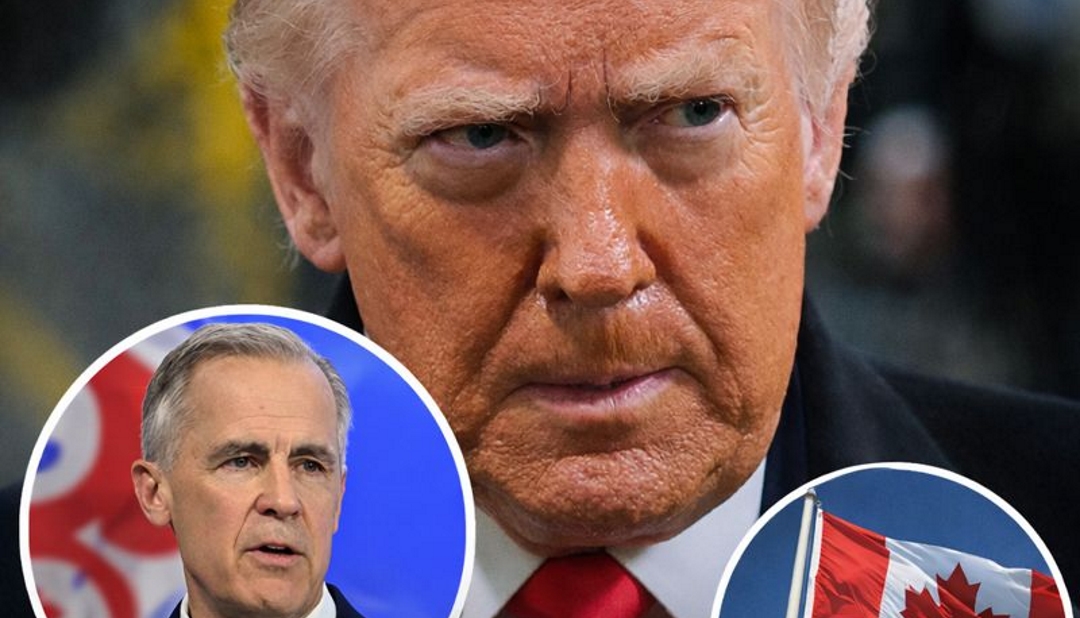
Donald Trump has intensified his rhetoric toward Canada following public criticism from Prime Minister Mark Carney, triggering renewed concern about the stability of the U.S.–Canada relationship at a moment of global economic and political uncertainty.
The exchange followed remarks in which Carney questioned the direction and reliability of Trump’s foreign policy approach, comments that quickly drew attention on both sides of the border. Coverage from international outlets noted that the unusually direct language marked a departure from the traditionally cautious tone Canadian leaders use when addressing U.S. politics.
Trump responded by signaling potential consequences for Canada, though he stopped short of outlining specific measures. Analysts told global news services that the language echoed Trump’s past strategy of applying public pressure ahead of any formal policy action, particularly in trade and diplomatic disputes.
Canadian officials moved quickly to de-escalate, emphasizing cooperation and mutual economic dependence. Government sources cited by British and European media stressed that cross-border trade, defense coordination, and energy ties remain too deeply integrated for sustained confrontation.
The episode nevertheless raised questions about how a renewed Trump presidency — or an increasingly influential Trump campaign — could affect allies. Policy experts interviewed in coverage of transatlantic and North American relations warned that even rhetorical clashes can unsettle markets and complicate diplomatic planning.
Carney’s comments were framed domestically as a defense of multilateral cooperation and economic stability, themes he has emphasized throughout his political career. Supporters argue that candor is necessary when global norms are under strain, while critics caution that public criticism risks provoking unnecessary retaliation.
Trump allies, meanwhile, defended his response as a show of strength, arguing that allies should not expect immunity from criticism. Similar dynamics played out during Trump’s previous term, when disputes with close partners were documented extensively in archived foreign policy reporting.
No official actions have been announced, and both governments continue routine diplomatic engagement. Still, observers say the exchange underscores how quickly personal politics can spill into international relations — particularly when public messaging replaces quiet diplomacy.
As the situation develops, analysts will be watching for any concrete policy moves that follow the rhetoric. For now, the confrontation remains verbal, but it has already injected fresh tension into one of the world’s closest bilateral relationships.