
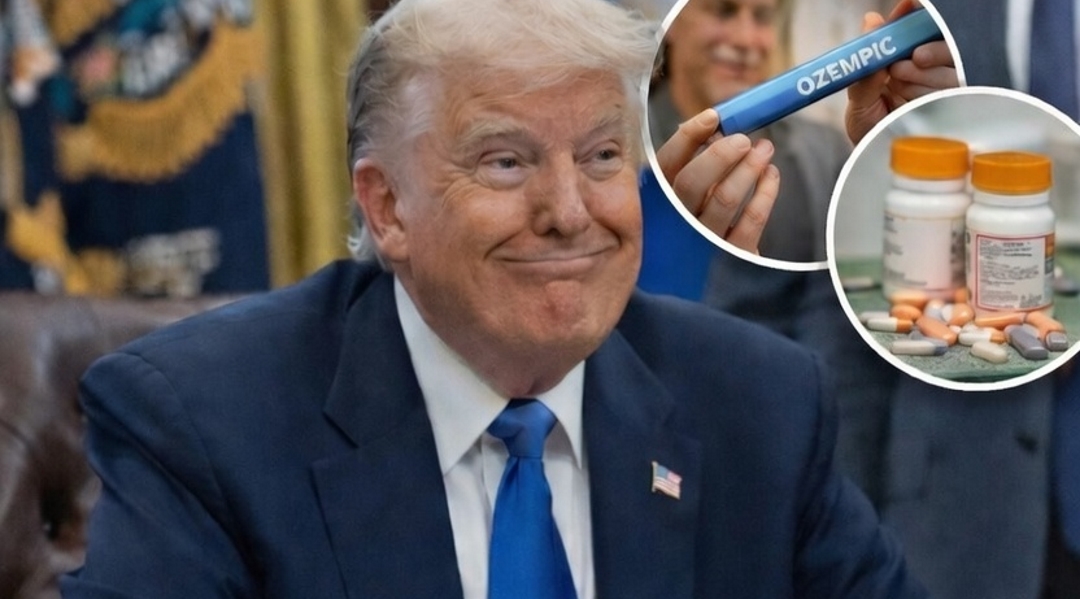
Donald Trump drew attention during a recent appearance after joking about a business associate who uses Ozempic, referring to the medication as the “fat shot” and quipping that it “isn’t working.” The remark, delivered in his characteristic off-the-cuff style, quickly spread across social media and reignited discussion about the booming market for weight-loss drugs.
The former president made the comment while speaking informally about health trends among wealthy acquaintances. According to attendees, the line was met with laughter from some in the audience, though critics later accused him of trivializing medical treatment and body image issues.
Ozempic, a brand name for the drug semaglutide, was originally approved to treat Type 2 diabetes. In recent years, however, it has become widely known for its significant weight-loss effects. As demand surged, the medication became a cultural flashpoint — celebrated by some as a breakthrough and criticized by others as emblematic of celebrity-driven body pressures.
The U.S. Food and Drug Administration has approved semaglutide formulations for chronic weight management under specific conditions, noting that it should be used alongside diet and exercise. Medical professionals emphasize that the drug is not a cosmetic shortcut but a prescription therapy intended for patients meeting defined clinical criteria.
Trump’s remark appeared to blur that distinction, framing the medication as a trend rather than a treatment. While he did not name the associate directly, the joke suggested skepticism about the visible results.
Supporters defended the comment as lighthearted banter, arguing that Trump often uses humor to comment on cultural phenomena. Critics countered that reducing a prescription medication to a punchline risks reinforcing stigma around both obesity and medical intervention.
The conversation unfolds amid a broader surge in popularity for GLP-1 receptor agonists — the drug class that includes Ozempic. According to information from the National Institute of Diabetes and Digestive and Kidney Diseases, obesity remains a complex chronic disease influenced by genetics, environment, and behavior, often requiring medical management beyond lifestyle adjustments alone.
Pharmacies across the country have reported intermittent shortages as demand climbed, fueled in part by high-profile endorsements and widespread social media coverage. Some physicians have voiced concern that non-diabetic patients seeking rapid weight loss may compete with diabetic patients who rely on the medication to regulate blood sugar.
Trump has long commented publicly on health and body image, frequently referencing weight during political rallies. His latest remark fits within that pattern but lands at a moment when weight-loss drugs have become both medically significant and culturally sensitive.
Healthcare advocates say casual references to medications can obscure the underlying health realities. Obesity is associated with increased risk of heart disease, diabetes, and certain cancers. For some patients, pharmacological treatment offers measurable health improvements.
Others argue that the intense spotlight on GLP-1 drugs has created unrealistic expectations. Rapid transformations highlighted on social media may not reflect typical outcomes, and medical professionals stress that individual responses vary.
Trump did not elaborate on whether his associate was using the drug under medical supervision or as part of a broader health regimen. His comment focused solely on appearance, not clinical outcomes.
The episode underscores how weight-loss medications have moved from exam rooms into mainstream conversation. What was once a niche pharmaceutical treatment now occupies headlines, late-night jokes, and political speeches.
Whether intended as humor or critique, the remark has added another layer to the ongoing public debate about body image, medical innovation, and the role of celebrity commentary in shaping perceptions of health.
As GLP-1 medications continue to reshape treatment approaches for obesity and diabetes, experts caution that discussions should remain grounded in evidence and patient care rather than spectacle.
For now, Trump’s quip has ensured that the “fat shot” — as he called it — remains not just a medical development, but a cultural talking point.