
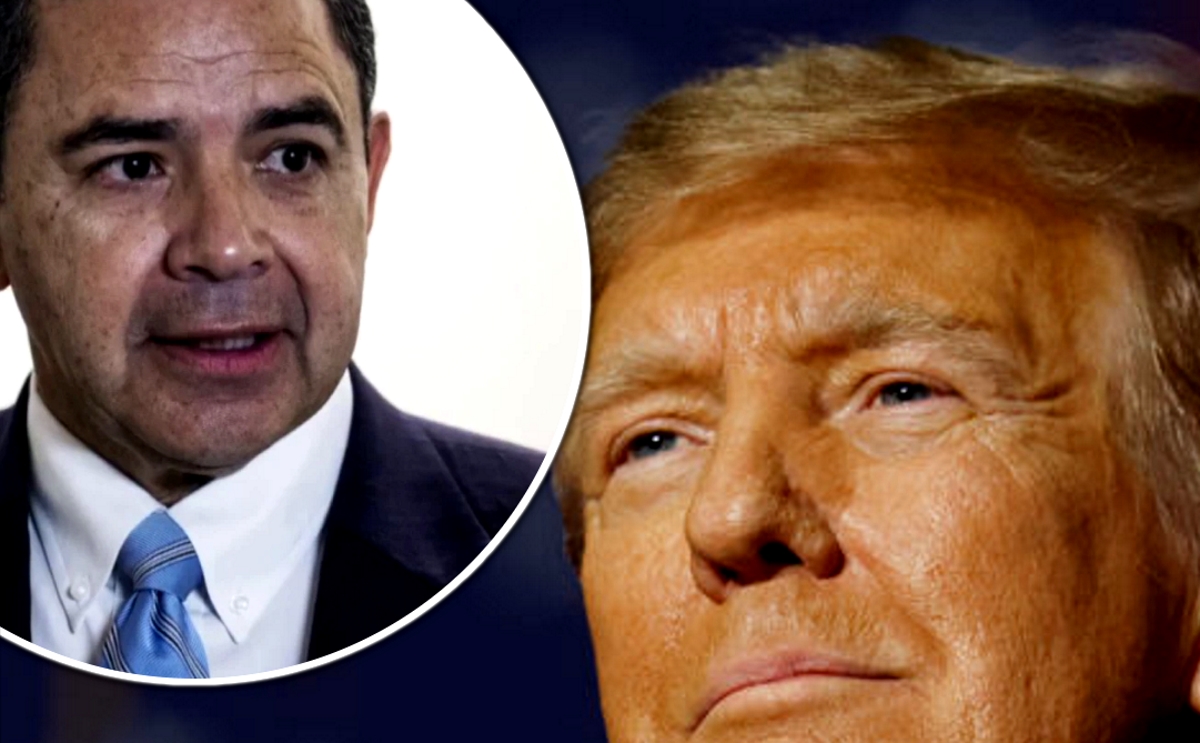
It happened quietly, as if slipped through the cracks of a long day — a presidential pardon that erased a sprawling bribery case against Texas Congressman Henry Cuellar before a single juror heard a word of testimony. What began as an early-morning legal bombshell rippled into one of the most emotionally charged political storms of the year, documented first in a fast-moving wire update before Washington fully understood how explosive it would become.
Cuellar, once celebrated for his influence along the U.S.–Mexico border, had been staring down accusations of accepting nearly $600,000 through covert channels tied to foreign energy interests. Prosecutors alleged the money traveled through consulting contracts controlled by his wife — a setup described in a deep regional investigation that mapped the money’s pathway from overseas offices to family accounts. For months, the case seemed destined to become one of the most consequential corruption trials in recent history.
But then Trump erased it — instantly, completely, irrevocably. He declared the charges “political sabotage,” echoing language highlighted in a public-broadcast analysis that captured how aggressively the White House framed the indictment as an act of persecution.
On social media, stunned Americans erupted with grief, disbelief, and rage. One voice captured the country’s trembling frustration:
You don’t get pardoned this fast unless power protects you. This wasn’t mercy — it was a message.— Harper J. (@HarperSpeaks) Dec 4, 2025
Cuellar’s legal saga had been building for months: FBI raids, seized devices, encrypted messages, and witness statements hinting at backdoor deals. All of it evaporated with a few words on a presidential order, drawing questions about justice that reporters dissected in a Houston-based investigation detailing just how much evidence prosecutors had assembled.
Inside the Capitol, lawmakers scrambled. Some argued the pardon exposed a dangerous precedent — that elected officials could escape accountability if they enjoyed political favor. Others insisted Cuellar was a victim of selective prosecution. The contradiction was captured in an urgent political briefing describing sharp fractures even within the president’s own party.
Foreign money. Shell contracts. A federal indictment. All gone because someone needed a political ally. This is how democracies corrode.— Jordan K. (@JordanOnPolitics) Dec 4, 2025
Meanwhile, constituents back home felt blindsided. Some had believed Cuellar represented stability; others suspected corruption long before charges appeared. But none expected the system to shut down before answers surfaced. A border-community advocate referenced findings from a government-focused breakdown describing how foreign influence concerns had shaken trust across the region.
Ethics groups reacted with force. They warned the pardon undermined federal anti-corruption efforts, a point raised sharply in a watchdog-focused summary arguing the decision could “incentivize misconduct” among officials who now expect presidential shields.
Why should any politician fear consequences now? They just saw someone skip the entire justice system.— Luna A. (@CivicLuna) Dec 4, 2025
But behind the political narratives, one fact terrified legal scholars most: the pardon arrived before trial — before jurors, testimony, or cross-examination. That timing, examined in a regional legal briefing, suggested an attempt to halt transparency itself. Without a trial, the public may never see evidence. Never hear witness accounts. Never know the depth of foreign entanglement.
Inside D.C., whispers spread that the pardon had also shielded unnamed individuals tied to the same influence network. Those rumors, reported cautiously in a national policy breakdown, suggested prosecutors were preparing to unveil broader connections — threads now severed.
This wasn’t just a pardon. It was a blackout. A curtain pulled down to hide what we were about to learn.— Eli Navarro (@TheNavarroReport) Dec 4, 2025
Some in law enforcement privately described the moment as “devastating,” according to a source quoted anonymously in a West Coast investigation that chronicled agents’ frustration at losing a case they believed was airtight. Years of work — gone. Paper trails, shredded. Witnesses, silenced by relevance gone overnight.
And yet, amid all this outrage, Cuellar himself remained largely silent — offering gratitude to the president, denying wrongdoing, and thanking supporters. But he offered no explanation for the financial flows, no accounting of the foreign funds, no clarification for why multiple companies with government interests were routing money to his household. Those unanswered questions deepened the national wound.
For millions who once believed in the integrity of public office, the pardon didn’t just rewrite a legal case. It rewrote faith. It told Americans that truth can be erased if someone powerful decides they want it erased. It told voters that influence is currency — and justice is negotiable.
And worst of all, it confirmed something far darker: that accountability no longer comes from courts, evidence, or the rule of law — but from whether the person in question is useful to power.