
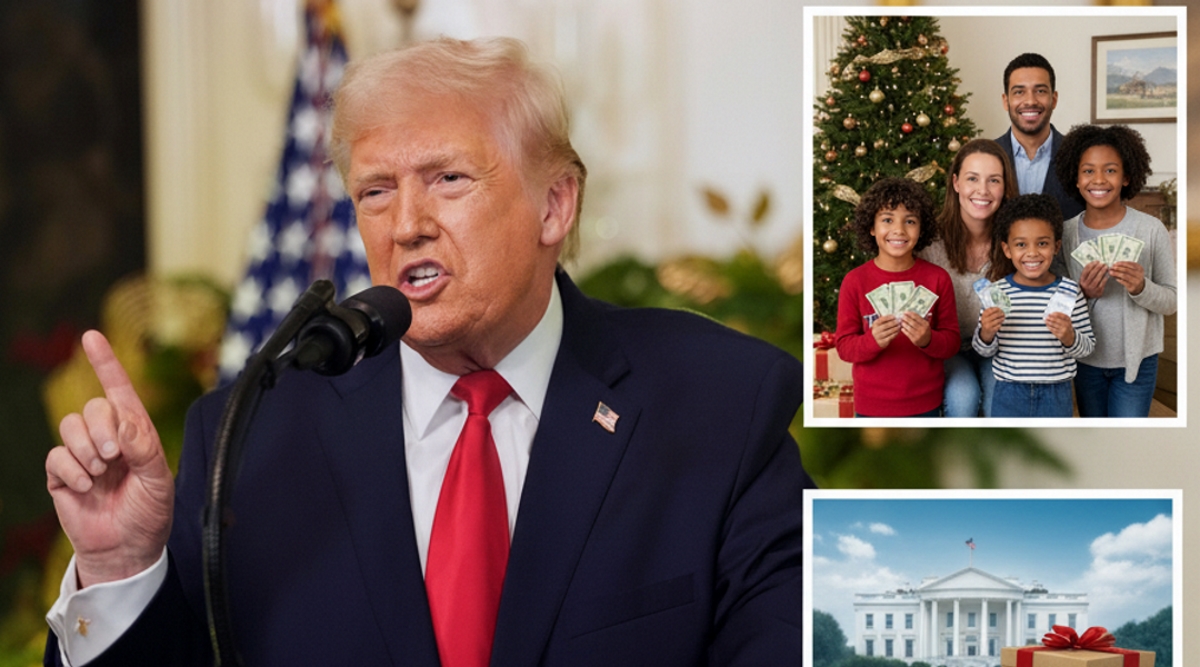
Donald Trump has injected fresh volatility into the holiday season by promising a Christmas cash gift to millions of Americans, framing it as both immediate relief and a symbolic rejection of what he calls “Biden’s mess.” The pledge landed at a moment when inflation fatigue, housing costs, and consumer anxiety are shaping how families approach the end of the year.
Speaking to supporters, Trump described the proposal as a direct response to economic strain he says has been ignored by Washington elites. The idea of a holiday cash infusion quickly spread online, triggering a mix of hope, skepticism, and confusion about how such a promise could actually be implemented.
Trump’s comments tap into lingering memories of pandemic-era stimulus checks, which reshaped public expectations about direct government payments. Those earlier programs, analyzed in economic retrospectives, remain among the most tangible forms of federal relief many Americans recall.
Supporters embraced the promise as proof that Trump understands household pressure. Conservative commentators circulated clips of the remarks alongside data cited in inflation critiques arguing that everyday costs have outpaced wages under the current administration.
People are struggling right now. Cash in hand matters more than speeches. — Rep. Elise Stefanik (@EliseStefanik) Dec 2025
Economists, however, immediately raised questions about feasibility. Any nationwide cash payment would require congressional approval, funding mechanisms, and administrative infrastructure, hurdles outlined in budgetary explainers detailing how large-scale spending moves through Washington.
Critics warned that vague promises risk fueling unrealistic expectations. They pointed to analyses in inflation reporting suggesting that untargeted cash injections can drive prices higher rather than relieve long-term pressure.
Trump’s framing of the proposal as a corrective to Biden-era policy is central to its political appeal. By tying cash relief to blame, he transforms an economic tool into a moral argument, a strategy examined in messaging analysis focused on populist campaigns.
Promising checks without a plan is politics, not policy. — Jared Bernstein (@econjared) Dec 2025
The pledge also reopened debate over who would qualify. Trump referenced “millions of Americans” but offered no specifics on income thresholds, employment status, or funding sources, gaps that policy analysts flagged in distribution studies examining how aid design shapes outcomes.
Among voters, reaction split sharply along partisan lines. Some saw the promise as compassionate and decisive, while others described it as election-year pandering. Polling trends discussed in attitude surveys show economic trust remains one of the most powerful drivers of political allegiance.
Trump allies argue that even proposing direct relief signals a willingness to act quickly. They contrast that with what they describe as slow, bureaucratic responses under Biden, a critique echoed in campaign coverage tracking his renewed economic pitch.
Washington debates. Families need help now. — Kari Lake (@KariLake) Dec 2025
Fiscal watchdogs cautioned that broad cash promises could deepen deficits already stretched by interest payments and entitlement spending. Long-term risks outlined in debt outlooks highlight how politically popular measures can carry lasting costs.
Still, the emotional power of a Christmas payment is difficult to dismiss. Holiday expenses arrive as heating bills rise and credit card balances climb, pressures detailed in consumer data showing growing reliance on debt.
Trump’s promise now exists in a familiar gray zone between rhetoric and policy. No formal proposal has been introduced, no legislative language drafted, and no timeline offered, leaving voters to weigh intention against execution.
Yet politically, the impact is already real. By invoking Christmas and cash in the same breath, Trump reframed economic frustration as a personal grievance with a promised remedy, sharpening contrasts ahead of the election.
Whether the pledge becomes a concrete plan or fades into the long list of campaign promises, it has already succeeded in one respect: forcing the country to once again debate how much responsibility government bears for easing everyday hardship — and who should get the credit when help arrives.