
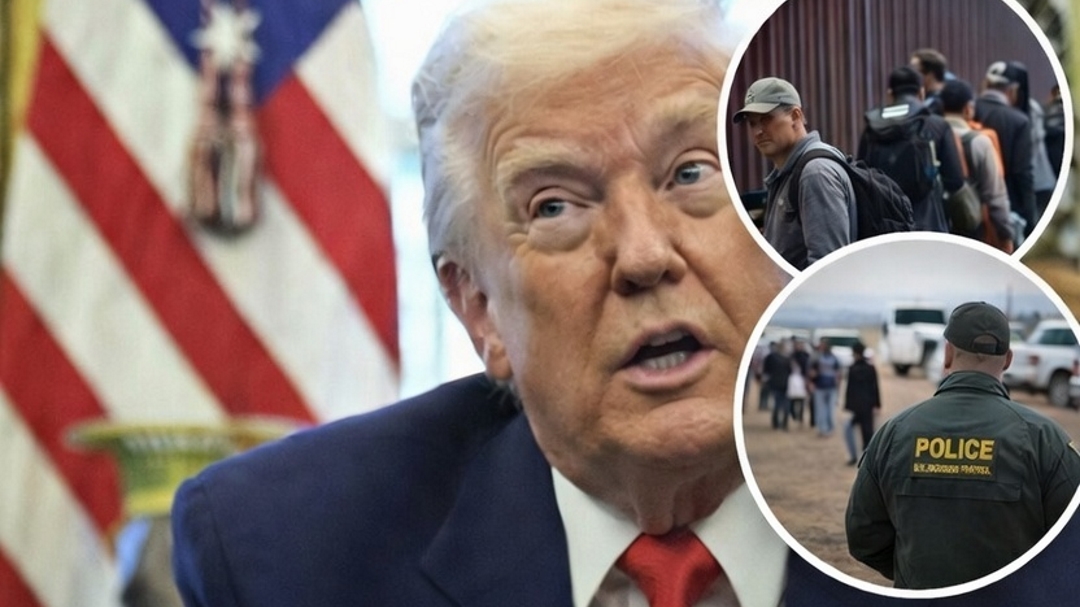
Donald Trump has once again called for a total ban on Muslims entering the United States, reviving one of the most controversial proposals from his 2016 presidential campaign and reigniting a national debate over immigration, religion, and constitutional limits.
Speaking at a campaign-style event, Trump said stronger measures were needed to protect national security, arguing that the United States must adopt tougher screening policies to prevent extremist threats. His remarks quickly drew both applause from supporters and sharp criticism from civil rights advocates.
The proposal echoes a pledge he first made in December 2015, when he called for “a total and complete shutdown of Muslims entering the United States” following terrorist attacks overseas. That original statement became a defining flashpoint of his campaign and shaped years of legal and political battles.
After taking office in 2017, Trump signed an executive order restricting travel from several predominantly Muslim-majority countries. The policy, often referred to by critics as the “Muslim ban,” went through multiple revisions before the Supreme Court ultimately upheld a version of it in 2018. Details of that ruling are outlined in coverage from the U.S. Supreme Court decision in Trump v. Hawaii, which found the administration had broad authority over immigration policy.
Trump’s renewed comments appear to go further than existing restrictions, suggesting a blanket ban based on religious identity rather than nationality. Legal scholars say such a measure would face immediate constitutional challenges under the First Amendment’s protection of religious freedom and the equal protection principles embedded in U.S. law.
Supporters argue that national security concerns justify extraordinary steps. They point to past terrorist incidents and claim that immigration systems remain vulnerable. Critics counter that blanket religious bans undermine American values and risk alienating allies.
Muslim advocacy groups swiftly condemned the remarks. Civil rights organizations warned that targeting individuals based on faith contradicts the nation’s foundational principles. The American Civil Liberties Union has previously challenged similar policies in court, arguing that immigration restrictions must not discriminate on the basis of religion.
International reaction has also begun to surface. Diplomats from several Muslim-majority countries expressed concern that renewed rhetoric could strain diplomatic ties and complicate travel for students, business professionals, and families.
During his speech, Trump framed the issue as a matter of safety rather than discrimination. He emphasized what he described as the need for “extreme vetting” and asserted that previous travel restrictions demonstrated the executive branch’s authority to act.
Political analysts say the renewed call is likely aimed at energizing his base ahead of upcoming electoral contests. Immigration has long been central to Trump’s political brand, from border wall proposals to travel restrictions.
Opponents, however, argue that such rhetoric deepens division and stigmatizes millions of Muslim Americans who are U.S. citizens. Religious leaders from multiple faiths have called for unity, warning that policies targeting specific religious groups risk eroding social cohesion.
Polling in recent years has shown that public opinion on immigration and travel restrictions remains divided. While some Americans favor stricter border controls, others express concern about policies perceived as discriminatory.
Legal experts caution that even if a sweeping ban were proposed, its implementation would likely face immediate injunctions in federal court. The judicial review process that followed earlier travel restrictions spanned months and reached the highest court in the land.
For now, Trump’s statement remains a campaign promise rather than an enacted policy. But the words themselves have already reignited a conversation that once dominated headlines and courtroom arguments across the country.
Whether such a proposal could withstand constitutional scrutiny — and whether it would ultimately become policy — remains uncertain. What is clear is that the issue of immigration, religion, and national security continues to sit at the center of America’s political crossroads.