
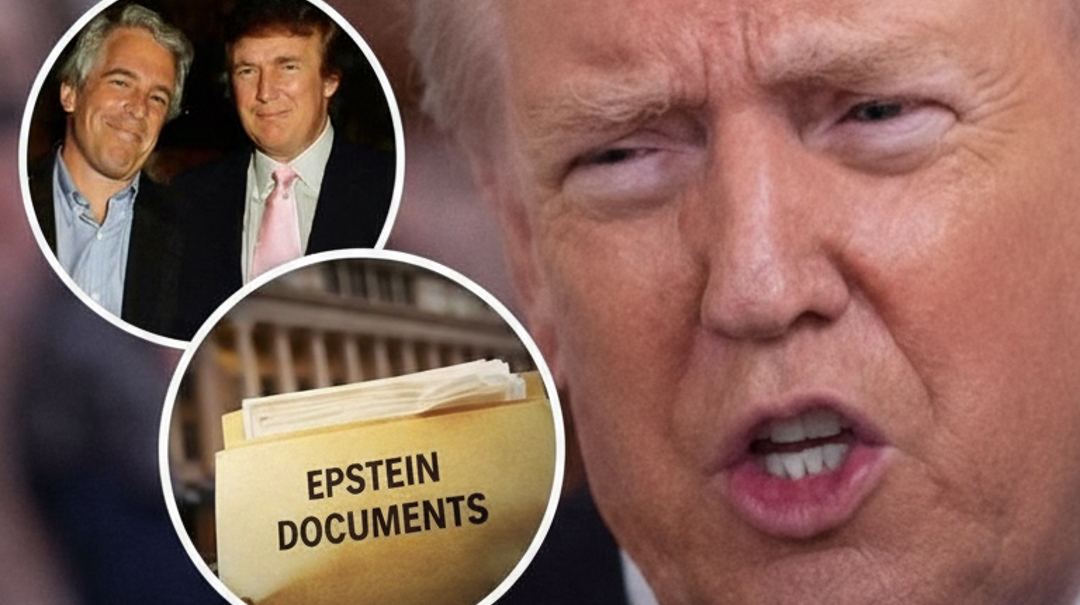
Donald Trump is facing renewed scrutiny after a fresh release of court documents connected to Jeffrey Epstein set off a wave of headlines, social media speculation, and political backlash. The former president broke his public silence as online claims spread rapidly, fueled by selective excerpts and viral interpretations of material drawn from long-running legal proceedings.
The documents, unsealed as part of ongoing transparency efforts surrounding Epstein’s network, include previously sealed testimony, references, and second-hand allegations that have circulated in various forms for years. While none of the newly released material constitutes a criminal finding against Trump, his name appears alongside numerous other high-profile figures, immediately triggering renewed debate.
Trump’s response was blunt and dismissive. He denied wrongdoing and criticized what he described as politically motivated attempts to revive unproven accusations. In statements to allies and sympathetic media, he argued that the resurfacing claims were part of a broader effort to damage him during an already volatile political moment.
The accusations drawing the most attention involve a long-disputed claim that Trump was connected to sexual abuse involving an underage girl. That allegation has circulated online for nearly a decade, originating from a lawsuit that was ultimately withdrawn before trial. No criminal charges were ever filed, and no court ruling established the claim as fact.
Nonetheless, the release of the Epstein documents reignited interest, especially among critics who argue that powerful men connected to Epstein were never fully held accountable. Social media platforms quickly amplified screenshots, partial quotes, and sensational summaries, often without crucial legal context.
According to reporting from Reuters’ breakdown of the unsealed Epstein material, the documents primarily reflect testimony and references rather than verified findings, and they do not establish new evidence of criminal conduct by Trump or others mentioned. Legal experts quoted in the coverage emphasized the distinction between being named in testimony and being charged with a crime.
Still, the optics were enough to spark outrage across political lines. Critics accused Trump of minimizing serious allegations, while supporters framed the controversy as another example of recycled claims being weaponized against him. Hashtags related to Epstein and Trump trended for hours, with users arguing fiercely over what the documents do—and do not—prove.
The renewed attention also reopened discussion of Trump’s past relationship with Epstein. The two were photographed together in the 1990s, and Trump has acknowledged knowing Epstein socially before later distancing himself. He has repeatedly stated that he cut ties with Epstein well before the financier’s first arrest.
In his latest remarks, Trump reiterated that position, saying he had “nothing to do” with Epstein’s crimes and accusing political opponents of exploiting the scandal. He did not directly address the specific underage abuse claim beyond calling it “false” and “discredited.”
Legal analysts note that the Epstein files are complex and easily misinterpreted. Many names appear because witnesses were asked broad questions or because individuals were referenced in passing. In several cases, those mentioned have denied wrongdoing or were never accused of crimes.
A separate analysis published by the Associated Press explains why the Epstein document release has caused confusion, pointing out that unsealed records often contain allegations that were never tested in court. The outlet stressed that unsealing does not equal validation.
Despite those clarifications, the controversy has already had political consequences. Advocacy groups renewed calls for full transparency around Epstein’s associates, while Trump’s critics argued that voters deserve clear answers. Supporters countered that the timing of the outrage suggests partisan intent rather than new revelations.
The episode highlights how unresolved scandals can resurface years later in the age of viral media. Even without new evidence, old allegations can regain traction when framed through dramatic headlines and stripped-down summaries.
For Trump, the challenge is balancing denial with damage control. Engaging too deeply risks amplifying claims he says are false, while staying silent allows critics to shape the narrative. His decision to speak out reflects an attempt to close the story before it gains further momentum.
As the Epstein documents continue to be reviewed by journalists and the public, experts urge caution. Context, sourcing, and legal outcomes matter, especially in cases involving serious accusations and powerful figures.
For now, the renewed Epstein spotlight serves less as a revelation and more as a reminder of how unresolved questions—and the absence of definitive answers—can continue to haunt public life long after the court filings are closed.