
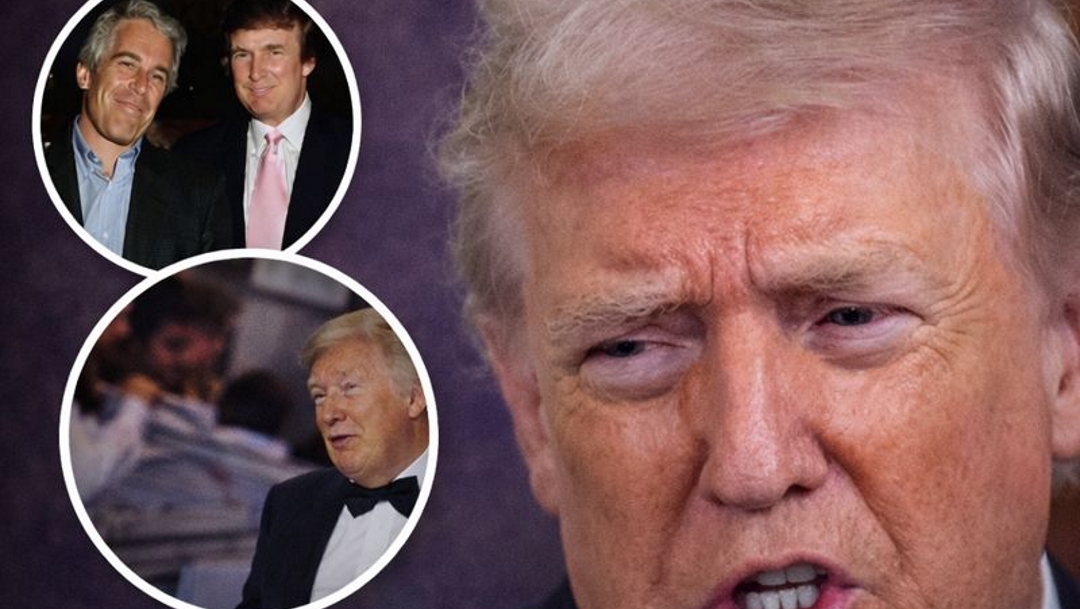
Former U.S. president Donald Trump has publicly responded after newly released documents tied to the Jeffrey Epstein investigation reignited an old allegation involving an underage girl. The claim, which has circulated for years without a court finding, resurfaced as part of a massive document release that includes raw investigative material, emails, and third-party statements collected over decades.
The renewed attention followed publication of millions of pages connected to Epstein’s network and interactions. Almost immediately, social media posts and headlines framed the material as new evidence. Legal experts and journalists cautioned that the release largely consists of untested claims and background records rather than adjudicated facts.
Trump, through statements and public remarks, rejected the allegation and characterized it as false. He has long denied wrongdoing related to Epstein and has previously said he cut ties with Epstein years before the financier’s arrest. No criminal charge has been brought against Trump in connection with the claim, and no court has ruled on it.
The allegation itself traces back to a civil filing that was later withdrawn and never litigated. It alleged sexual abuse by Epstein and named Trump as present in an encounter. The withdrawal meant the claim was never tested in court, witnesses were never cross-examined, and no judicial findings were made. That procedural history matters, attorneys say, because allegations without adjudication cannot be treated as established facts.
The newly released materials include references to the withdrawn filing and other unverified statements attributed to Epstein or third parties. Investigators gathered these records to map Epstein’s contacts and activities, not to certify the truth of each assertion. As a result, the documents contain a mixture of corroborated evidence, hearsay, speculation, and drafts.
Trump’s response emphasized that distinction. He denied the accusation, pointed to the absence of charges or findings, and criticized what he called misleading portrayals of the files. His team also noted that Epstein, who died in jail in 2019, never testified at trial and left behind a record that mixes fact with self-serving claims.
Journalists covering the release stressed that the files are best read as an archive rather than a verdict. Names appear for many reasons: contact lists, meeting notes, or references by Epstein himself. Inclusion does not equal guilt, and absence does not equal innocence. Sorting one from the other requires corroboration, sworn testimony, and court proceedings that, in many cases, never occurred.
The broader public reaction illustrates how quickly raw documents can be flattened into sensational narratives. Clips and screenshots circulated without context, while longer explanations struggled to keep pace. Media scholars say this pattern is common when large data dumps hit an attention-driven ecosystem.
For victims of sexual abuse, the renewed attention has also prompted mixed reactions. Some advocates argue transparency is essential and overdue; others warn that careless amplification can retraumatize survivors while muddying the difference between allegations and proof. Both concerns, they say, can be true at the same time.
What remains clear is that Epstein’s death left many questions unresolved. Without a trial, the legal system never tested numerous claims that now circulate in public. That gap fuels recurring waves of speculation whenever new material becomes available.
Coverage explaining what the document release does and does not establish has urged readers to separate verified findings from unproven assertions. A concise overview of Trump’s denial and the context of the allegation can be found in reporting that outlines the claim’s history and procedural status. An additional explainer on the scope of the Epstein records and why many entries remain unverified is available in coverage breaking down how to read the files responsibly.
As the debate continues, legal experts repeat a basic principle: allegations require proof, and proof requires process. Document releases can inform investigations and public understanding, but they are not substitutes for trials, evidence standards, or judicial rulings.
Trump’s response, supporters say, underscores that point; critics counter that scrutiny of powerful figures is necessary regardless of outcomes. The tension between transparency and due process is unlikely to fade, particularly in cases where the central defendant is no longer alive to face trial.
For now, the resurfaced allegation remains unadjudicated. Readers navigating the headlines are urged to weigh claims carefully, check sourcing, and note what has—and has not—been established by courts.