
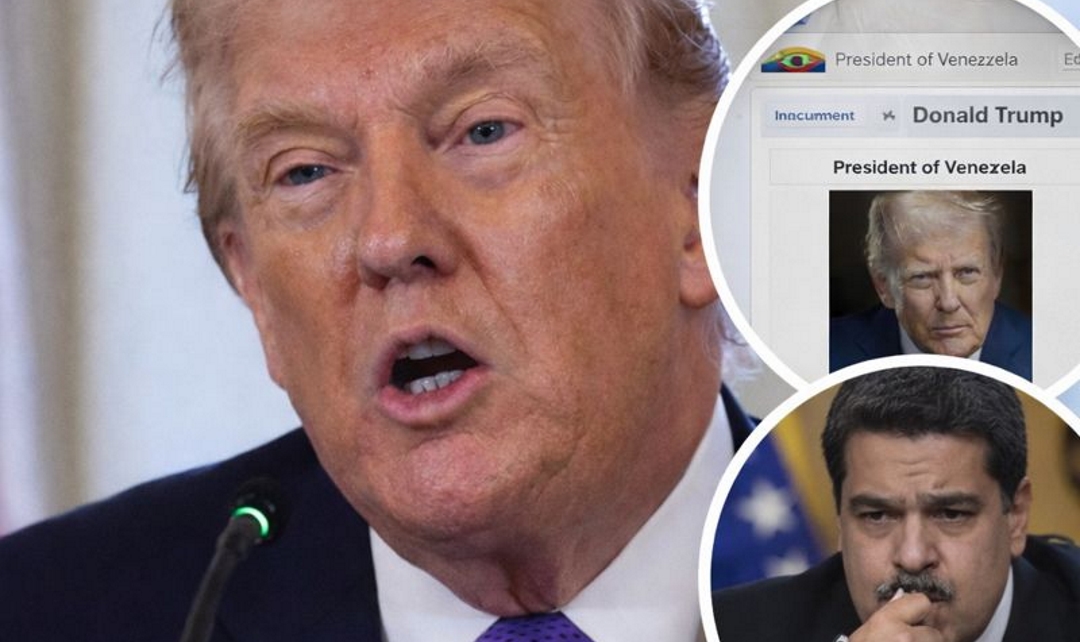
The image spread fast and raised eyebrows almost instantly. A screenshot, shared and amplified online, appeared to show Donald Trump listed as the “President of Venezuela” on what looked like an official-style page. Within hours, critics, journalists, and foreign policy observers were all asking the same question: how did this get shared, and why wasn’t it caught before going public?
The post, which circulated briefly before being removed, seemed to originate from a manipulated or fabricated profile designed to mimic authoritative government listings. Trump’s sharing of it — whether accidental or careless — triggered immediate backlash, especially given the already tense history between the United States and Venezuela.
Venezuela’s political situation has long been a lightning rod in U.S. politics, particularly during Trump’s presidency, when Washington openly supported opposition leader Juan Guaidó while rejecting Nicolás Maduro’s legitimacy. That backdrop made the fake “President of Venezuela” claim feel especially volatile, as outlined in background explainers on the crisis that detail years of diplomatic confrontation.
Social media users quickly pointed out inconsistencies in the page’s formatting, language, and sourcing. Some noted it resembled a poorly edited database entry rather than any legitimate government or international record. Fact-checkers jumped in, linking the image to a broader pattern of misleading political content that spreads rapidly when amplified by high-profile figures.
Within minutes, screenshots flooded platforms like X and Instagram, paired with commentary accusing Trump of either failing to verify information or deliberately leaning into confusion. Media watchdogs referenced ongoing concerns about misinformation, especially when shared by political leaders with massive audiences.
This is why verification matters. One share from a major figure can send a completely false narrative worldwide. — Daniel Dale (@ddale8) March 2026
Trump’s team later downplayed the incident, suggesting it was either a misunderstanding or an example of how quickly false content circulates online. Supporters echoed that defense, arguing the outrage was overblown and that the post had no real-world impact.
Critics weren’t convinced. They argued the episode underscores a recurring issue: the blurring line between satire, disinformation, and official communication in modern politics. In foreign policy contexts, even symbolic missteps can carry weight, particularly with countries already suspicious of U.S. intentions, as explored in analyses of U.S.–Venezuela relations.
Experts in digital misinformation pointed out that fabricated profiles and altered screenshots are increasingly common tools used to sow confusion. When prominent figures reshare them, intentionally or not, it can legitimize false narratives and make later corrections far less effective. A recent Pew study on online misinformation found that corrections rarely travel as far as the original misleading post.
The timing also mattered. With Trump once again dominating headlines and shaping political discourse, any online slip is instantly magnified. This incident followed several weeks of heightened scrutiny over his digital messaging, fundraising claims, and foreign policy rhetoric.
Even if it was a mistake, this shows how fragile the information ecosystem is when leaders don’t double-check sources. — Joyce Alene (@JoyceWhiteVance) March 2026
For Venezuelans watching from afar, the episode landed differently. Some saw it as darkly ironic, given years of U.S. involvement in their country’s political struggles. Others dismissed it as internet noise that changes nothing on the ground, where economic hardship and political repression remain daily realities.
Still, the controversy reignited broader debates about responsibility in the digital age. When political leaders share content, critics argue, the burden of accuracy is higher — not lower — precisely because of the influence they wield.
Whether the fake page was shared out of haste, confusion, or poor vetting, the fallout was real. It served as another reminder that in today’s hyperconnected environment, a single post can spiral into an international talking point in minutes.