
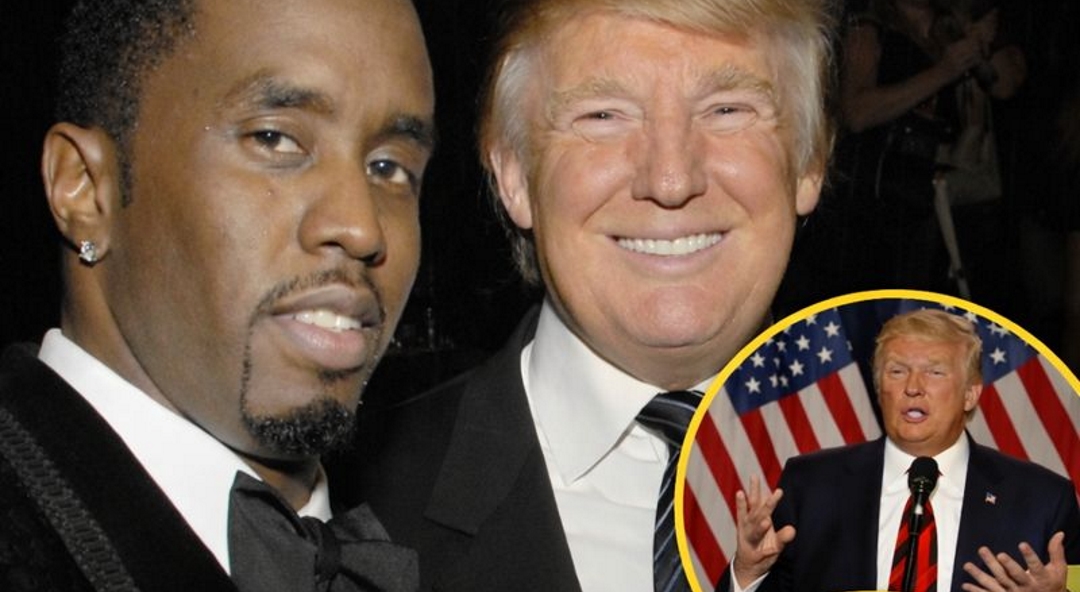
Donald Trump is moving quickly to shut down speculation that he could ever pardon Sean “Diddy” Combs, as the music mogul faces mounting legal pressure and a widening federal investigation that has pulled celebrities, former allies, and prosecutors into the spotlight.
The former president made it clear in recent comments that no pardon discussions are happening, distancing himself from Combs at a moment when the case is rapidly evolving. Sources close to the situation say Trump wants no association with a scandal that has already triggered raids, sealed filings, and a wave of damaging allegations.
For months, rumors had circulated online that Combs might eventually seek political intervention if charges escalated. Those whispers intensified after federal agents conducted high-profile searches tied to the ongoing investigation, fueling debate across social media and cable news panels.
Trump’s rejection lands as investigators continue to scrutinize Combs’ business empire, private residences, and past conduct. Legal analysts following court developments closely say the case appears far from resolution, with prosecutors signaling they are still gathering testimony and digital evidence.
Behind the scenes, Trump advisers reportedly urged him to make his position unmistakable. Any suggestion of a pardon, they warned, could ignite backlash from both political opponents and supporters already sensitive to issues of power, celebrity, and accountability.
The fallout has also reopened discussion of Trump’s long and complicated relationship with celebrity culture. While he has famously granted controversial pardons in the past, insiders stress that this situation is fundamentally different — involving unresolved allegations and an active federal probe.
Public reaction has been swift. Commentators tracking industry shockwaves say the denial underscores how radioactive the case has become, even for figures accustomed to political risk.
Trump saying “no pardon” tells you everything about how serious this case is becoming. Political distance is strategic right now. — Legal Affairs (@LegalAffairs) January 2026
Meanwhile, Combs’ legal team has remained publicly silent on the pardon issue, focusing instead on procedural challenges and efforts to limit the scope of evidence seized. Attorneys familiar with federal investigation strategy note that silence can be deliberate when prosecutors are still building a case.
The situation has also placed renewed scrutiny on Trump himself. Critics argue that his past willingness to intervene in celebrity cases makes his denial noteworthy, while supporters frame it as proof that the allegations have crossed a line too severe to touch.
Political strategists suggest Trump’s calculus is simple: any perceived sympathy toward Combs could become a liability in future campaigns, especially amid broader debates about law enforcement, elite privilege, and justice.
At the same time, the case continues to ripple through the entertainment world. Former collaborators, executives, and insiders are quietly assessing their own exposure, as subpoenas and cooperation deals remain a looming possibility. Observers tracking corporate fallout patterns say high-profile cases often expand far beyond their original targets.
When politicians rush to create daylight between themselves and a celebrity, it usually means prosecutors are holding serious cards. — Justice Watch (@JusticeWatch) January 2026
For now, Trump’s message is unambiguous: no pardon, no conversations, no connection. Whether that stance holds if the case drags on — or if new revelations surface — remains an open question.
What is clear is that the intersection of politics, celebrity, and criminal law is once again on full display. As investigators push forward, both Trump and Combs appear locked into damage-control mode, aware that every statement carries consequences far beyond the courtroom.