
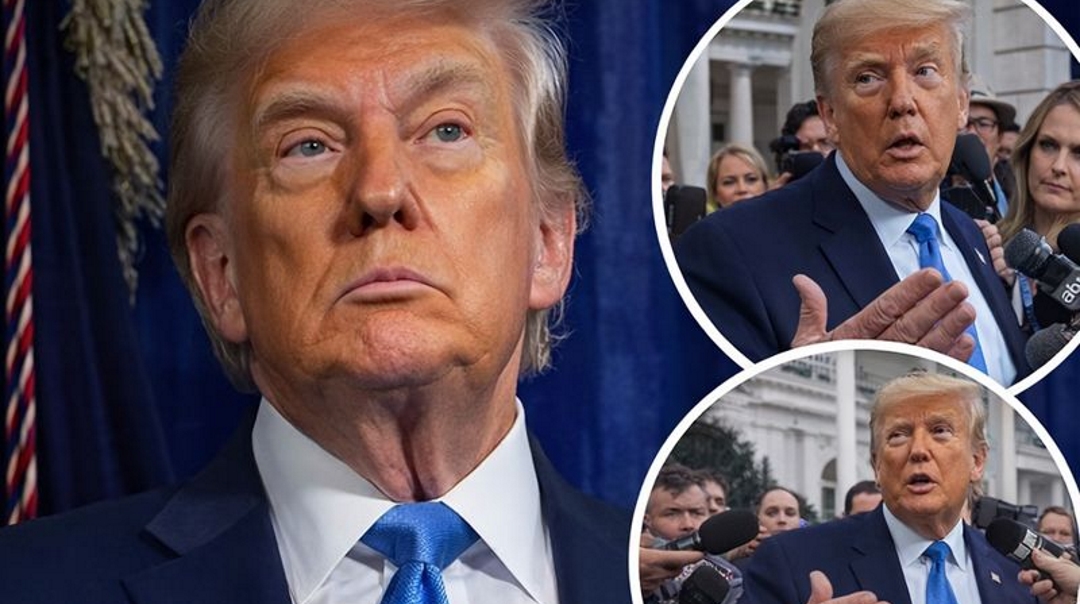
The image captures a moment that quickly spread across social media: Donald Trump holding what looks like a Treasury check, his expression tense, reporters crowding in. What followed only added fuel. When pressed about his long-promised $2,000 “tariff checks,” Trump appeared momentarily caught off guard, offering vague explanations that left even some allies uneasy.
The moment unfolded during a post-event media scrum, where reporters asked for specifics about how the proposed payments would work and when Americans could actually expect to see the money. Trump, who has repeatedly floated the idea as part of his broader trade agenda, leaned on familiar rhetoric about tariffs “paying for themselves,” but stopped short of outlining any concrete mechanism.
Supporters have long pointed to his past trade wars as evidence that aggressive tariffs can be leveraged to benefit domestic workers. Critics, however, note that previous tariff rounds often translated into higher prices for consumers, a reality detailed in economic analyses of past trade policy that show costs frequently landing on U.S. households rather than foreign exporters.
As cameras rolled, Trump insisted the checks were still part of his vision, framing them as compensation for Americans impacted by unfair trade practices. Yet when asked whether Congress had been consulted or whether the Treasury had any framework in place, his answers drifted. Observers described the exchange as one of the rare moments where his confidence visibly wavered.
The proposal itself has always been murky. Trump has suggested that revenue generated from new tariffs — particularly on Chinese imports — could be redistributed directly to Americans. Economists counter that tariff revenue fluctuates and is already earmarked for existing government obligations, a point underscored in recent budgetary breakdowns examining federal revenue streams.
Online reaction was swift and polarized. Some supporters argued the media was deliberately trying to trip him up, while critics seized on the exchange as proof the promise was more slogan than policy. Clips circulated alongside commentary referencing past tariff impacts that showed mixed results for American workers.
Trump can sell the idea, but when pressed on the math, the $2,000 checks still don’t add up. — Aaron Rupar (@atrupar) March 2026
Behind the scenes, Republican strategists are split. Some view the checks as a powerful populist message that resonates with voters frustrated by inflation and stagnant wages. Others worry the lack of clarity opens the door to attacks, especially when opponents can point to trade data suggesting tariffs function more like hidden taxes.
Democrats were quick to pounce. Several lawmakers dismissed the promise as unrealistic, arguing that any large-scale payment program would require congressional approval and detailed legislation. One senior aide privately described the proposal as “policy theater,” designed to generate headlines rather than results.
Still, Trump’s base remains deeply loyal. At rallies, chants referencing the checks have already begun to surface, with supporters framing them as a symbol of economic retaliation against foreign competitors. The imagery of a physical check, emblazoned with national symbols, plays into a broader narrative of direct benefits delivered by strong leadership.
Whether you love or hate him, Trump knows how to turn a policy idea into a viral moment — even when the details are thin. — Political Polls (@Politics_Polls) March 2026
The exchange has reignited a familiar debate: should bold economic promises be judged on feasibility or messaging power? Trump has long thrived on the latter, often forcing opponents into defensive positions. But as voters grow more skeptical and economically strained, unanswered questions risk cutting through the spectacle.
For now, the $2,000 tariff checks remain an idea without a roadmap. Whether that matters politically may depend less on spreadsheets and more on trust — and on whether moments like this one linger in the public memory as a slip, or simply another flash in a relentless media cycle.