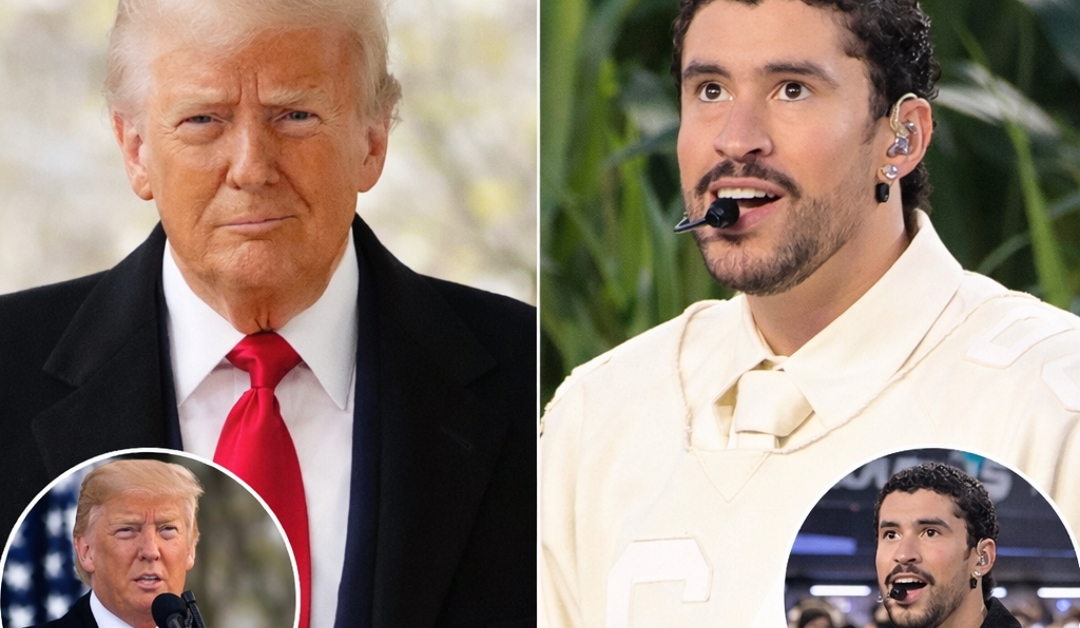
Bad Bunny, whose career has been defined by breaking language barriers and redefining global pop, did not respond directly. Instead, his fans flooded platforms with clips from the show, praising its energy, choreography, and unapologetic embrace of Latin culture.
The halftime performance itself was designed as a statement. Mixing Spanish-language hits with high-production visuals, Bad Bunny leaned fully into his identity rather than diluting it for a mainstream audience. For supporters, that was precisely the point.
Trump’s criticism also revived a familiar pattern. Throughout his political career, he has repeatedly targeted cultural figures—athletes, musicians, actors—whom he believes represent ideological opposition. The NFL, in particular, has been a frequent target, dating back to protests over racial justice.
What made this moment different was the timing. Super Bowl LX drew one of the largest global audiences in history, and Bad Bunny’s inclusion reflected the league’s push to appeal beyond traditional demographics. For many executives, that shift is not political but economic.
Industry analysts note that Latin music has become one of the fastest-growing sectors in global streaming, with Bad Bunny consistently ranking among the most-played artists worldwide. From that perspective, his halftime slot was less a statement and more a strategic move.