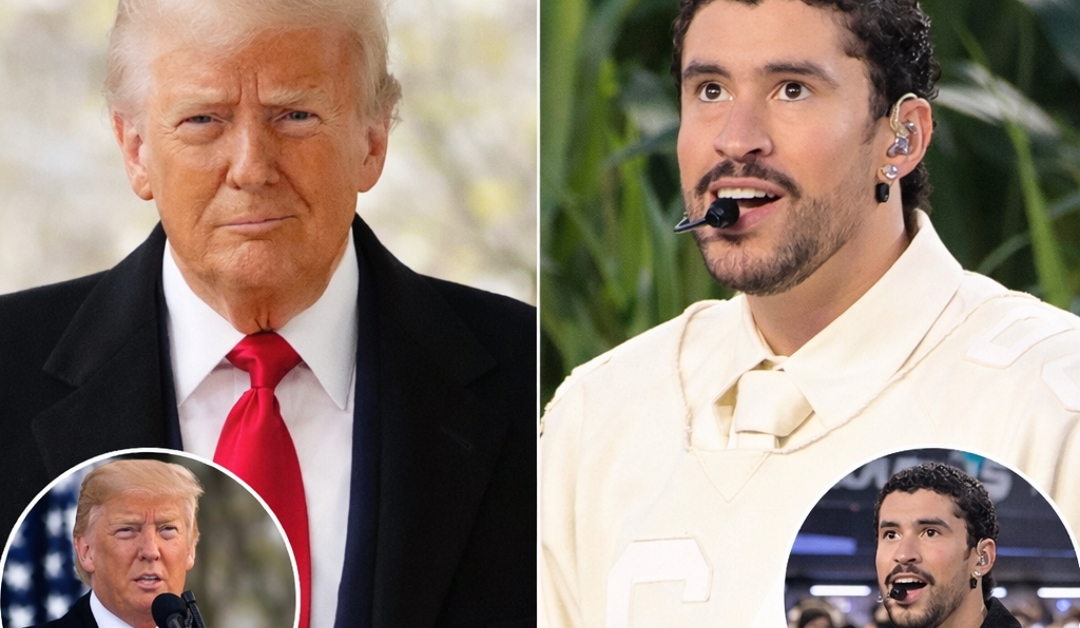
Still, Trump’s comments resonated strongly with his base. Supporters praised him for “saying what others wouldn’t,” while critics accused him of dismissing an entire culture and its influence on modern America.
The controversy was amplified by media coverage dissecting both the performance and Trump’s reaction, including reporting on how Trump framed the halftime show as cultural decline.
Bad Bunny’s career, however, suggests that such criticism rarely slows his momentum. He has built a fanbase by rejecting expectations—refusing to sing exclusively in English, challenging gender norms in fashion, and embracing political and social themes when it suits him.
For the NFL, the episode underscores the tightrope it walks. Halftime shows are meant to unite massive audiences, but in an increasingly polarized environment, almost any creative choice risks backlash from one side or another.
Super Bowl LX itself was already notable for its scale, technological ambition, and global reach. The halftime show became just one of many moments that reflected how the event has evolved beyond football into a cultural referendum.
As analysts pointed out in broader discussions of the Super Bowl’s cultural impact, halftime performances increasingly mirror shifts in American identity rather than define a single, shared tradition.
Trump’s attack on Bad Bunny ultimately revealed less about the performance itself and more about the moment America is in. Music, sports, and politics have become inseparable, each serving as a proxy for deeper debates over who the country is—and who it’s for.
Whether viewed as a celebration or a provocation, Bad Bunny’s Super Bowl appearance achieved something undeniable: it forced a conversation far beyond the field, proving once again that halftime is no longer just a break in the game.
And as long as figures like Trump continue to weigh in, those conversations are unlikely to quiet anytime soon.