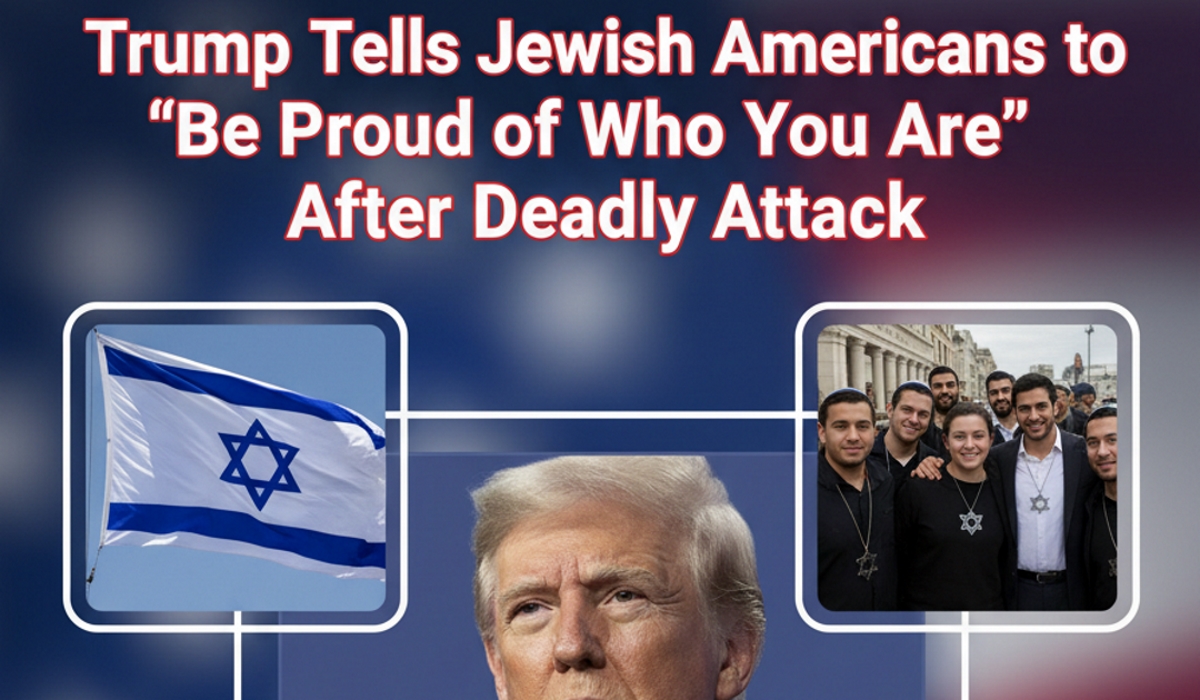
In the aftermath of a deadly terror attack that left Jewish communities shaken and grieving, Donald Trump delivered a message aimed directly at Jewish Americans: “Be proud of who you are.” The statement, issued as shock and fear rippled through synagogues, community centers, and households across the country, quickly became a focal point of both comfort and controversy.
The attack, which authorities described as ideologically motivated, reignited long-standing fears about rising antisemitism in the United States. Vigils formed almost immediately, while security was visibly increased at Jewish institutions, scenes widely shared in early accounts documenting the raw aftermath.
Trump’s message circulated rapidly online, with supporters praising its tone of solidarity and critics questioning its context and intent. The phrase itself echoed themes Trump has used before when addressing identity and loyalty, moments examined in past coverage analyzing his complicated relationship with Jewish audiences.
Jewish leaders reacted in markedly different ways. Some welcomed the message as a simple affirmation at a moment of trauma, while others argued that words alone ring hollow without sustained action against hate crimes, concerns long outlined in tracking reports measuring the rise in antisemitic incidents nationwide.
Pride matters, but safety matters more. Our communities are still afraid. — Rabbi Jonah Pesner (@RabbiPesner) Dec 2025
The terror attack itself followed a familiar pattern seen in recent years, where extremist ideology turns deadly with little warning. Analysts reviewing the suspect’s background noted similarities to other cases discussed in federal data tracking religiously motivated violence.
Trump framed his message as one of resilience, urging Jewish Americans not to retreat into fear. Allies close to him said the wording was intentional, meant to counter what they describe as a culture of intimidation, a strategy explored in political analysis of his crisis messaging.
Critics, however, revisited Trump’s past statements and policy decisions, arguing that his record complicates the symbolism of the moment. Previous remarks about Jewish voters, Israel, and loyalty resurfaced quickly, with commentators pointing to documented timelines that show recurring friction.
Context matters. You can’t separate today’s words from years of rhetoric. — Amy Spitalnick (@amyspitalnick) Dec 2025
For families directly affected by the attack, the political debate often feels distant from their immediate reality. Mourners spoke about fear returning to everyday routines — walking to synagogue, wearing visible symbols of faith — experiences echoed in community interviews capturing the human toll.
Security experts warned that spikes in antisemitic violence tend to follow high-profile global events and inflammatory rhetoric, regardless of intent. These patterns have been studied extensively in research on radicalization linking language, perception, and action.
Trump’s supporters counter that his message should be judged in isolation, arguing that calls for pride and resilience are exactly what traumatized communities need to hear. Conservative Jewish groups circulated the quote widely, framing it as moral support rather than policy, a response noted in community reaction coverage.
The broader political implications remain unresolved. Jewish voters are not a monolith, and surveys consistently show diverse views across religious, generational, and ideological lines, trends detailed in demographic studies examining how identity intersects with politics.
Pride is powerful, but it doesn’t stop bullets. We need protection and accountability. — Eliza Bennett (@ElizaReports) Dec 2025
As investigations into the attack continue, community leaders emphasize that moments of unity must translate into sustained vigilance. Federal agencies have pledged resources, while local officials face renewed pressure to address threats before they turn fatal, commitments outlined in security briefings.
Trump’s statement, brief but emotionally charged, now sits within a larger national conversation about fear, identity, and leadership in times of crisis. For some, it offered reassurance. For others, it reopened unresolved questions about responsibility and rhetoric.
What remains undeniable is the atmosphere in which the message landed. Jewish Americans are once again confronting a reality where pride and vulnerability coexist, and where every public word spoken after violence carries weight far beyond its length.