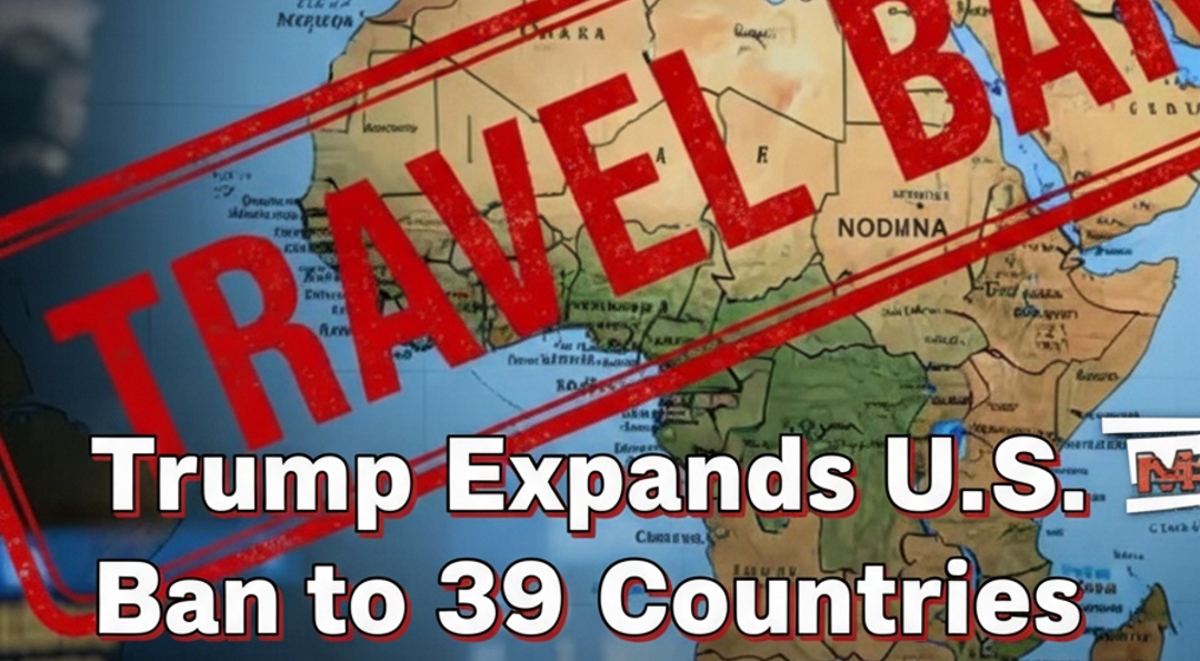
Donald Trump has announced a dramatic expansion of the U.S. travel ban, extending restrictions to citizens from 39 countries and reviving one of the most contentious policies of his presidency. The move immediately triggered global backlash, reigniting fears of mass disruption, diplomatic fallout, and a return to immigration crackdowns that once sparked chaos at airports worldwide.
Trump framed the decision as a necessary act of national defense, arguing that the expanded ban is aimed at protecting Americans from what he described as systemic vetting failures and security blind spots. The language closely mirrors rhetoric used during his first term, when similar justifications were deployed to defend earlier bans that faced fierce legal and moral opposition.
According to campaign officials, the 39 countries were selected based on a mix of intelligence assessments, visa overstay data, and alleged non-cooperation with U.S. security agencies. Comparable criteria were cited during earlier iterations of the policy, as outlined in prior security explanations detailing how travel restrictions were structured.
Human rights organizations responded with alarm, warning that the expanded ban could strand families, block students, and derail medical care for people who have already been vetted through legal channels. Advocates pointed to documented harm in impact assessments showing how previous bans separated spouses and parents from children for years.
This will once again punish families who followed the rules and did nothing wrong. — ACLU (@ACLU) Dec 2025
Supporters praised the announcement as long overdue, calling it a return to “common sense” immigration enforcement. Conservative lawmakers and commentators circulated arguments echoed in policy defenses claiming that broad entry restrictions are a legitimate tool for risk management.
The legal outlook remains uncertain. While the Supreme Court upheld Trump’s third version of the travel ban in 2018, constitutional scholars warn that expanding the policy to 39 countries could invite fresh challenges, especially if evidence suggests religious, ethnic, or regional targeting, concerns raised in constitutional reviews.
Foreign governments reacted with frustration and anger, warning that the ban undermines diplomatic cooperation and economic ties. Similar fallout followed earlier restrictions, tensions examined in foreign policy analysis detailing how blanket bans strained alliances.
Collective punishment disguised as security policy will damage global trust. — Human Rights Watch (@hrw) Dec 2025
Universities, airlines, and multinational employers are already preparing for disruption. During the original travel bans, colleges reported international students unable to return to campus, while airlines struggled with inconsistent enforcement, chaos documented in education reporting tracking academic fallout.
Trump defended the expansion as a temporary but necessary measure to allow time for vetting systems to be overhauled. That justification aligns with messaging analyzed in campaign coverage examining his renewed hardline approach.
Critics counter that data does not support the security rationale. Research consistently shows that immigrants from previously banned countries were rarely linked to terrorism on U.S. soil, findings summarized in statistical reviews frequently cited in court challenges.
Fear-based policies don’t make us safer. They just make us smaller. — Ilhan Omar (@IlhanMN) Dec 2025
The expansion has also reignited debate over the scope of presidential power. Immigration law grants broad authority to restrict entry, but historians argue that how that power is used defines national values, themes explored in governance research on executive discretion.
For immigrant families, the announcement brought immediate fear and confusion. Advocacy groups reported surges in calls from people unsure whether to travel, apply for visas, or remain abroad, scenes reminiscent of the airport chaos chronicled in early rollout coverage during prior bans.
Politically, the move reinforces Trump’s reliance on immigration as a defining campaign issue. Strategists say the sheer scale of the expansion — 39 countries — sends a clear signal to his base that he intends to govern even more aggressively than before, a calculation explored in strategy analysis.
Whether the expanded ban survives legal scrutiny or is reshaped by courts remains uncertain. What is already undeniable is its immediate impact on global mobility, diplomacy, and the lives of millions caught in its reach.
As governments respond and families wait for clarity, Trump’s decision has once again forced the country to confront a familiar question: where the line lies between security and exclusion — and how many people are willing to be cut off in the name of protection.