
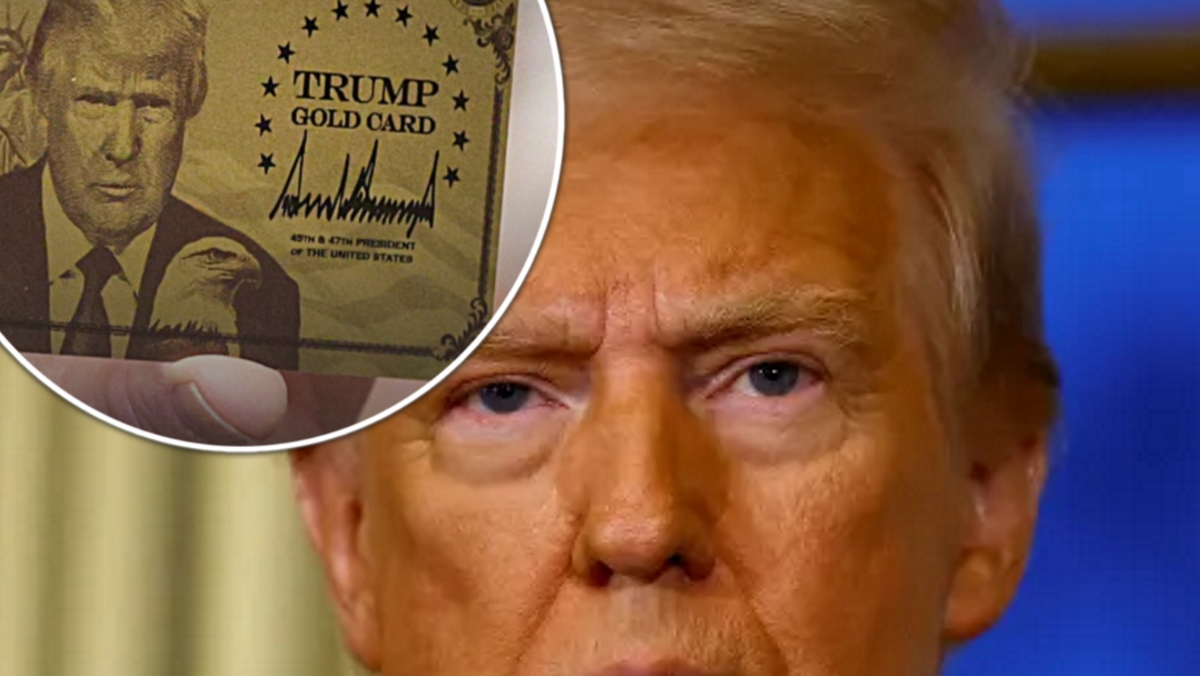
Donald Trump’s controversial “Gold Card” visa program has quietly crossed a staggering financial milestone, generating more than $1 billion in sales as wealthy foreigners rush to secure fast-track access to the United States. The figure, revealed through newly surfaced filings and promotional materials, has reignited fierce debate over who gets to buy their way into America — and at what cost.
The program, aggressively marketed to high-net-worth individuals, offers expedited residency privileges in exchange for a multimillion-dollar investment. Supporters frame it as a revenue-generating tool that injects foreign capital into the U.S. economy, while critics argue it effectively monetizes citizenship and deepens inequality baked into the immigration system.
According to internal breakdowns cited by outlets tracking the rollout, thousands of applicants from Asia, the Middle East, and Eastern Europe have already enrolled, pushing total sales past the billion-dollar mark far faster than even backers anticipated. The scale of the uptake has stunned immigration analysts who expected far slower adoption.
The Gold Card initiative echoes — but significantly expands — existing investor visa pathways, most notably the EB-5 program, which has long allowed wealthy foreigners to obtain green cards by funding U.S. projects. However, Trump’s version removes many of the bureaucratic hurdles, a shift detailed in explanations of how traditional investor visas work.
If you have millions, borders disappear. If you don’t, they harden. — Immigration advocate (@ImmJusticeNow) Dec 2025
Trump allies have celebrated the revenue figure as proof of “smart immigration,” arguing that the program turns demand into economic gain without relying on taxpayer dollars. Conservative commentators circulated comparisons to struggling border enforcement budgets, claiming the Gold Card flips the script by making immigration pay for itself.
But immigration lawyers warn that speed and scale create risk. Vetting wealthy applicants across jurisdictions is complex, and critics note that similar programs abroad have been linked to money laundering and political influence, concerns outlined in research on golden visa corruption risks.
Human rights groups have also sounded the alarm, arguing the optics are impossible to ignore. As asylum seekers face years-long backlogs and harsh enforcement, the idea that residency can be purchased outright has struck many as morally corrosive, a tension explored in analysis of wealth-based immigration systems.
There’s one line for refugees and another for billionaires. That’s the story. — Policy analyst (@BorderPolicy) Dec 2025
The $1 billion figure has also sparked scrutiny on Capitol Hill. Several lawmakers have questioned where the money flows, how oversight is handled, and whether national security safeguards are sufficient. Previous congressional investigations into investor visas, documented in government accountability reviews, flagged systemic weaknesses that critics say could now be amplified.
Trump has leaned into the backlash, framing it as proof the program disrupts entrenched interests. In recent remarks, he described the Gold Card as a “tremendous success,” arguing that the U.S. should compete with countries that already sell residency to elites.
Indeed, similar schemes exist in Portugal, Malta, and the Caribbean, where “golden visas” have transformed real estate markets and political debates, impacts examined in international reporting on visa-for-sale programs.
Selling access isn’t new globally — but the scale here is unprecedented. — Global economist (@EconWatch) Dec 2025
What makes Trump’s program distinct, experts say, is how openly transactional it is. There is little pretense of job creation or regional development; the pitch is speed, access, and certainty. That clarity has driven demand — and controversy — in equal measure.
For communities grappling with housing shortages and strained infrastructure, the influx of ultra-wealthy newcomers raises practical concerns. Economists warn that investor-driven migration can distort local markets, a pattern tracked in studies on housing pressure and foreign capital.
Still, the numbers speak for themselves. Crossing $1 billion in sales cements the Gold Card as one of the most lucrative immigration initiatives ever attempted in the U.S., regardless of where one stands politically.
The question now is sustainability. Will demand continue, or will regulatory scrutiny slow the pipeline? And as the program grows, will its economic gains outweigh the ethical and security questions it leaves behind?
For now, Trump’s Gold Card has done exactly what it promised: turned immigration into a high-dollar marketplace. Whether that legacy is viewed as innovation or exploitation may depend on who’s buying — and who’s left waiting outside the gate.