
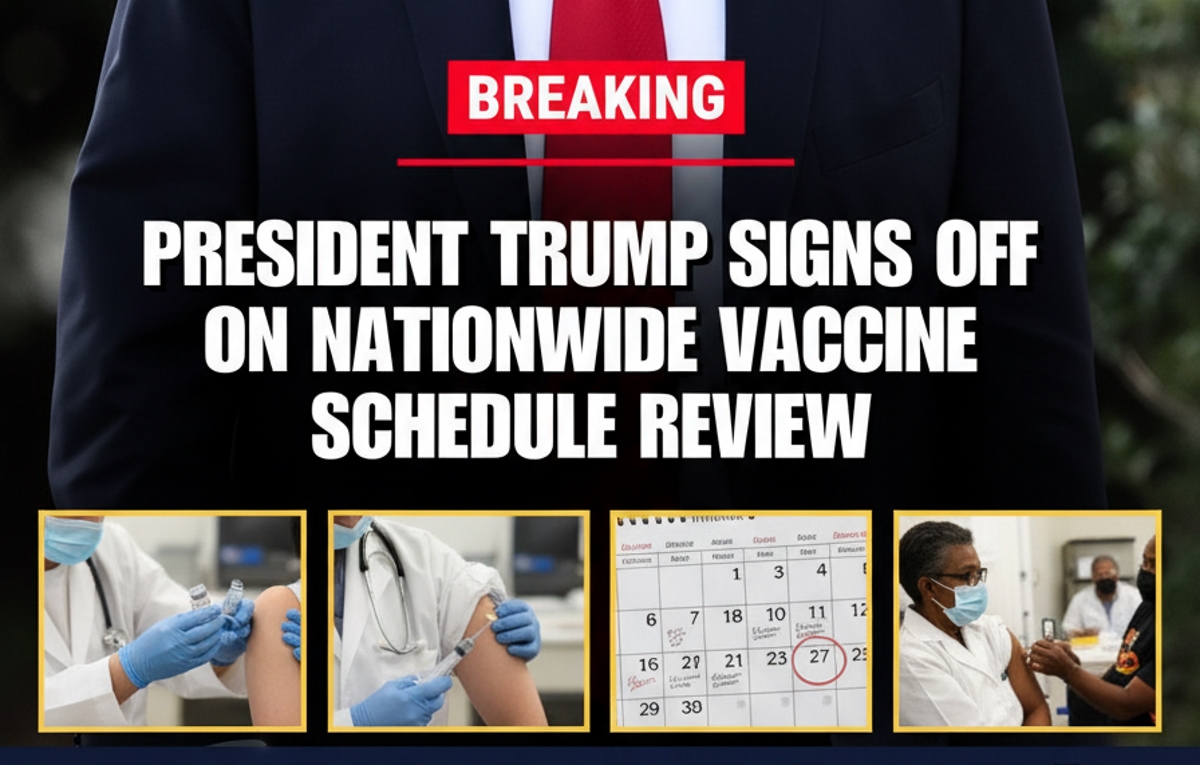
For nearly a decade, Donald Trump has shaped — and shaken — America’s vaccine conversation in ways public-health experts still call unprecedented, a controversy that resurfaced this week after commentators revisited earlier coverage of his shifting vaccine rhetoric and the political storms it triggered. What began as a handful of unfiltered tweets years before his presidency evolved into a national conflict, pulling scientists, governors, parents, and late-night hosts into a debate that sits at the heart of the country’s cultural divide.
The renewed attention stemmed from a policy roundtable where analysts referenced Trump’s earlier comments promoting “spacing out shots,” a phrase documented inside a Washington Post fact-check that traced his habit of linking childhood vaccines to autism — a claim repeatedly disproven by medical research. It didn’t take long for those remarks to dominate online discussions again, with critics pointing out how easily political messaging can distort scientific consensus.
The debate reignited in real time as users circulated screenshots of Trump’s old posts, especially the messages examined through a Politico review of his autism claims that chronicled how quickly his comments moved from fringe conversation to mainstream political discourse. One media historian captured the moment in a viral tweet:
You can’t understand America’s vaccine fight without understanding Trump’s role in it. He mainstreamed doubts that were once on the margins. — Dr. K. Latham (@KLathamArchive) Dec 8, 2025
Public-health officials say the controversy surrounding Trump’s vaccine stance didn’t begin during COVID — it began much earlier. His comments from the mid-2010s, chronicled in a CNN breakdown of the 2015 GOP debate, showed him warning parents about imagined dangers despite overwhelming scientific evidence to the contrary. Critics argue those moments planted seeds of distrust that later exploded during the pandemic.
Yet the story grew more complicated when Trump, as president, later embraced Operation Warp Speed, the vaccination program highlighted in an NBC analysis of his administration’s efforts to accelerate COVID-19 vaccine development. His public appearances promoted the shots; his messaging praised their effectiveness; his advisers pushed to get Americans vaccinated as quickly as possible. But those moments were quickly overshadowed by conflicting statements made during rallies and post-presidency interviews, leaving voters confused about where he actually stood.
The contradictions intensified when he faced booing from his own supporters after acknowledging he received a booster — a moment recapped in a BBC segment examining vaccine backlash on the right. Trump praised the vaccine one moment, then downplayed mandates the next, creating a political tightrope that analysts say continues to define his public messaging today.
One political scientist summed it up online:
Trump was both the vaccine salesman and the vaccine skeptic. That contradiction didn’t confuse voters — it split the country. — A. Moreno (@AMorenoResearch) Dec 8, 2025
Behind the scenes, advisers attempted to create a coherent narrative, drawing from talking points later referenced in a Wall Street Journal policy preview that outlined how Republican candidates navigated vaccine messaging ahead of the election cycle. Many feared alienating Trump’s base while also trying to appeal to moderates who blamed misinformation for unnecessary deaths during the pandemic.
The debate expanded further as states clashed over mandates. Governors challenged federal guidance; legislators introduced bills to roll back school immunization requirements; and health officials warned of declining childhood vaccination rates — concerns documented inside a CDC surveillance report on immunization trends showing drops in MMR and DTaP uptake. Trump’s comments often appeared at the center of these arguments, used by both critics and supporters as evidence that their position aligned with broader public sentiment.
Even late-night hosts reentered the fray, resurfacing clips tied to Trump’s earlier vaccine contradictions and weaving them into monologues reminiscent of a Los Angeles Times recap of Kimmel’s reaction to Trump being booed for mentioning boosters. The segments went viral again, fuelled by online debates about whether Trump’s shifting stance helped or hindered national vaccine acceptance.
One viewer captured the public whiplash in a widely shared post:
Trump built distrust in vaccines, then wanted credit for the vaccine, then backed away from mandates. No one — supporters or critics — knew which version was real. — J. Renner (@RennerReports) Dec 8, 2025
Meanwhile, public-health researchers stressed that the long-term effects of Trump’s messaging extended far beyond COVID. Analysts pointed to rising vaccine hesitancy numbers detailed inside a Pew survey on declining trust in science, warning that political rhetoric — not medical evidence — had become the dominant driver of public attitudes in many communities. Trump’s comments, both past and present, often appeared as case studies in academic reviews seeking to understand why vaccine resistance surged even as death tolls climbed.
As the renewed controversy circulated across media platforms, campaign strategists emphasized that vaccine messaging remains a volatile element in national elections. Trump’s stance continues to influence policy debates in states where lawmakers use his earlier comments to argue for or against immunization requirements, a pattern outlined in a Reuters overview of state-level vaccine battles. Whether his rhetoric will shift again remains uncertain — but its impact on public health is already measurable.
The political and cultural aftershocks are now part of a broader national reckoning. Researchers, educators, comedians, and parents continue to grapple with the role Trump played in reshaping how Americans think about vaccines — a transformation built not through legislation, but through tweets, interviews, speeches, and contradictions that rewired public perception on a scale experts say the country still hasn’t recovered from.