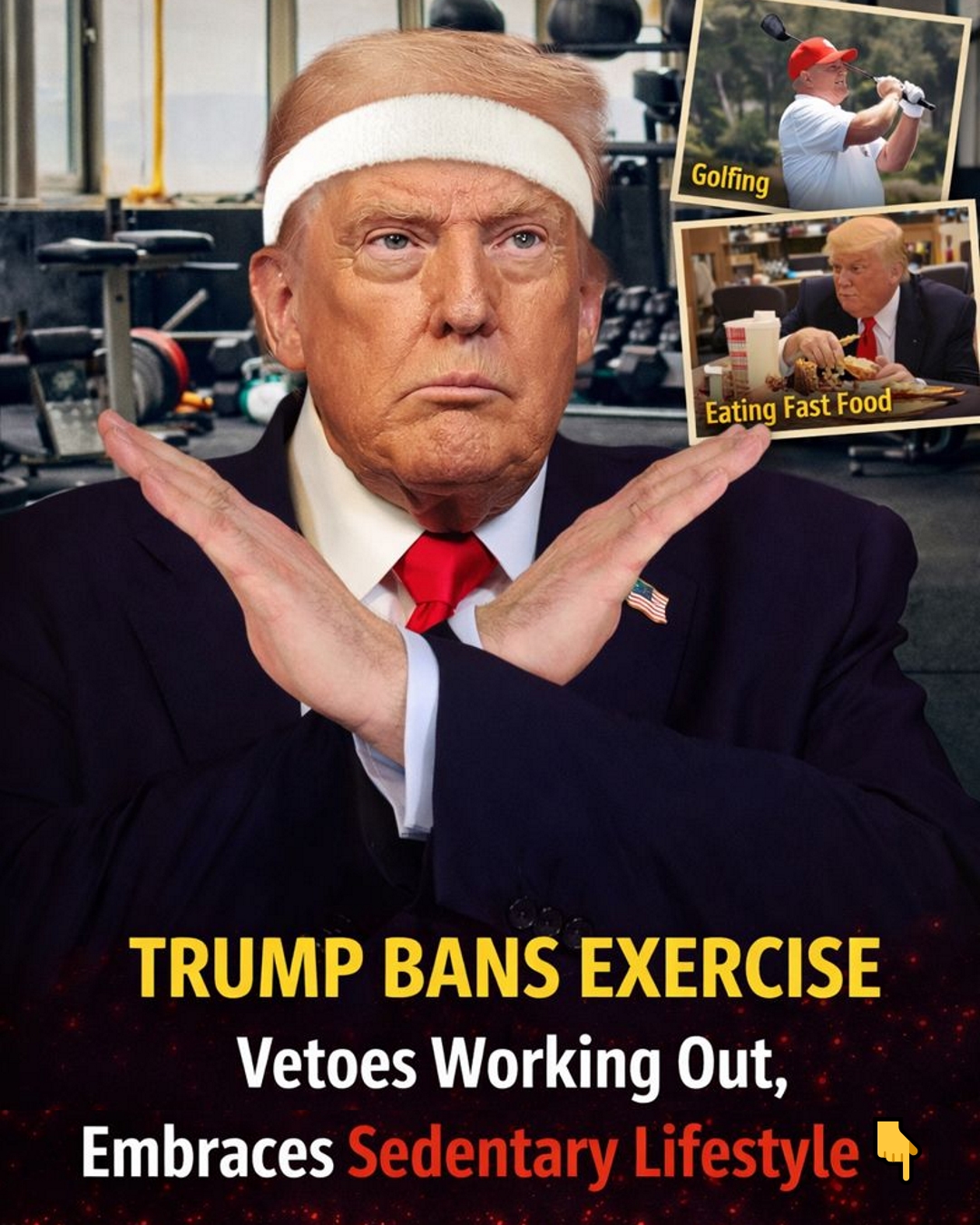
The image says it all. A headband, crossed arms, a gym backdrop — and a blunt message splashed across the frame. Once again, he is being pulled back into a conversation he has never tried to escape: his open disdain for exercise and his unapologetic embrace of a sedentary lifestyle.
This isn’t new. Trump has talked for decades about his belief that the human body has a finite amount of energy, and that strenuous exercise only drains it faster. In interviews long before politics consumed his life, he described workouts as unnecessary risk, a philosophy that still shocks doctors and fascinates critics.
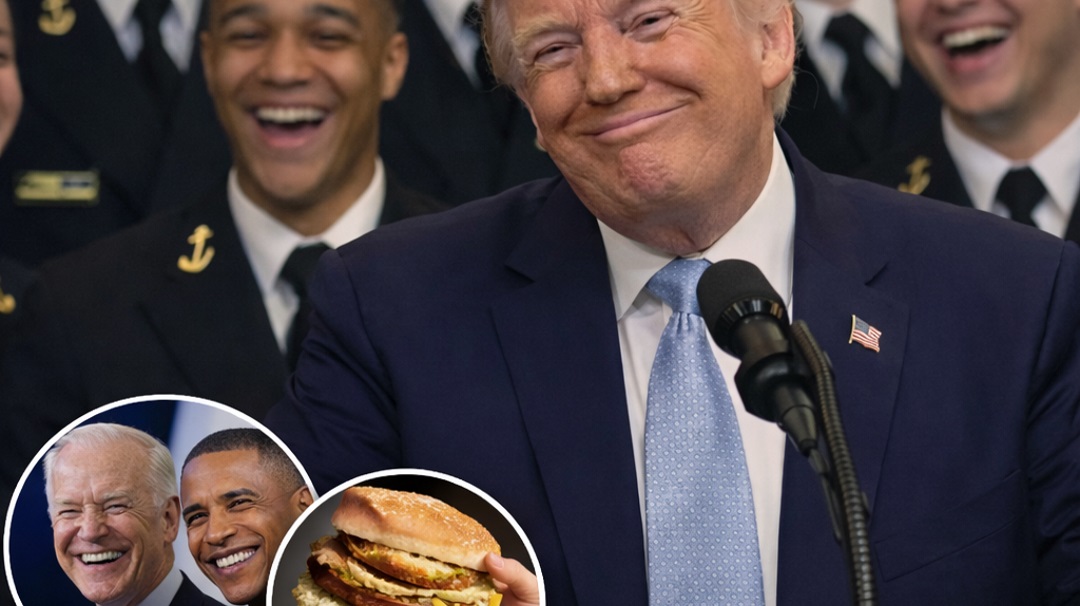
The image reignited the discussion instantly, spreading across feeds alongside clips of Trump golfing, riding carts, and famously favoring fast food. For supporters, it’s part of his authenticity. For critics, it’s a symbol of stubbornness that flies in the face of modern health science.
During his time in office, Trump’s physical habits were frequently dissected. His medical reports emphasized weight, cholesterol, and cardiovascular health, while advisers quietly downplayed the absence of traditional fitness routines. Coverage at the time highlighted basic activity guidelines that directly contradicted his personal philosophy.
Trump himself has never wavered. He’s repeatedly argued that elite athletes wear out faster, pointing to early retirements as proof. That logic, while not supported by medical consensus, has become a defining part of his public persona.
The contrast became even more striking as presidents before and after him leaned heavily into visible fitness. Morning jogs, cycling photos, gym routines — all staples Trump openly mocked. He once joked that he’d rather be “doing business” than lifting weights.
Critics argue that such messaging matters, especially when coming from a national figure. Public health experts have long warned that leaders influence behavior, whether intentionally or not. Articles breaking down exercise and aging circulated alongside the viral image, framing Trump as an outlier rather than an icon.
Supporters, however, see it differently. They point out Trump’s age, his busy schedule, and the fact that he remains mentally sharp and publicly active. To them, his lifestyle challenges what they see as rigid wellness dogma.
Social media amplified the divide. Memes celebrated his fast-food habits as relatable, while others framed them as reckless. The image’s bold phrasing — “bans exercise” — was dissected line by line, with some noting it as satire, others taking it as metaphor.
Trump has been saying this for YEARS. He doesn’t hide it. The outrage now feels performative.— PoliticalSignals (@PoliticalSignals) January 2026
Medical professionals were quick to step in. Cardiologists and geriatric specialists stressed that movement doesn’t need to mean marathons or gym culture. Even light activity — walking, stretching, mobility work — can dramatically reduce long-term health risks, a point emphasized in clinical breakdowns shared widely.
Yet Trump’s defenders countered that golf, even with a cart, still involves movement, coordination, and time outdoors. They also noted that his diet, while infamous, has been exaggerated for comic effect.
The deeper issue isn’t really about treadmills or dumbbells. It’s about image. Trump has always positioned himself against elite norms, and fitness culture is just another establishment he refuses to bow to. In that sense, his stance fits perfectly within his broader political brand.
The Trump exercise debate isn’t about health. It’s about symbolism — and people project everything onto it.— MediaFrame (@MediaFrameHQ) January 2026
As the image continues circulating, it’s clear why it resonates. It compresses decades of quotes, habits, and controversies into a single, confrontational frame. Whether viewed as honesty or defiance, Trump’s rejection of exercise remains one of his most enduring and oddly compelling traits.
In a political era obsessed with optics, this debate shows no signs of slowing down — because it was never really about fitness to begin with.