
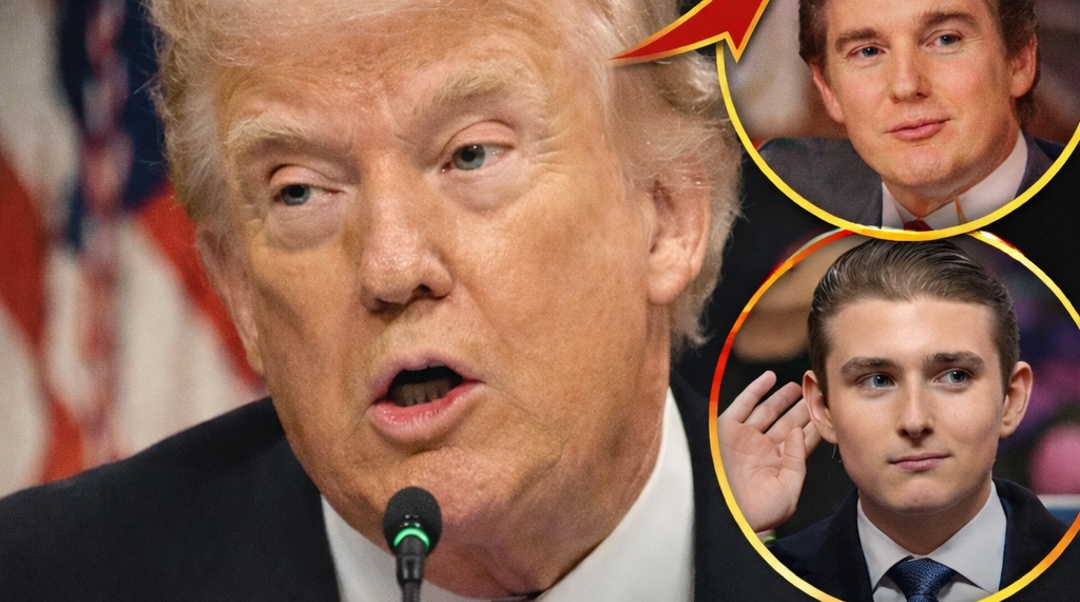
A renewed online debate about military service and political leadership has once again placed former President Donald Trump’s Vietnam-era draft deferments under public scrutiny. The discussion intensified this week after a petition circulating on the internet referenced Trump’s history with the military draft while also mentioning his youngest son, Barron Trump.
The petition itself holds no legal authority, but it has helped reignite a conversation that has followed Trump for decades: why he never served in the military during the Vietnam War.
Trump, who came of age during one of the most contentious periods in American history, was eligible for the draft in the late 1960s. At the time, the United States was heavily involved in the Vietnam War, and thousands of young men were being called into military service each month.
Public records show that Trump received several draft deferments while attending college. Like many students of that era, he was granted educational deferments that postponed his eligibility while he studied at the University of Pennsylvania’s Wharton School.
After graduating, he was later classified as medically unfit for service due to a diagnosis of bone spurs in his heels.
The medical exemption ultimately prevented him from being drafted. However, the circumstances surrounding that diagnosis have been debated for years, particularly during Trump’s presidential campaigns when critics revisited the issue.
Trump himself has addressed the matter in past interviews, acknowledging the medical deferment while emphasizing that the decision was made by military authorities at the time.
“I had a very strong foot problem,” he once said when discussing the classification.
For many Americans, the topic of Vietnam draft deferments remains emotionally charged.
More than 2.2 million Americans served in Vietnam, and the draft shaped the lives of an entire generation. Some young men went to war, others received deferments, and still others protested the conflict entirely. The choices people made during that period have often resurfaced in political debates decades later.
Trump is far from the only public figure whose draft history has been examined.
Several prominent political leaders from both parties avoided service through deferments or exemptions during the Vietnam era. The issue has periodically become part of campaign rhetoric, particularly when questions of leadership, patriotism, or national service arise.
The recent online petition mentioning Barron Trump appears to have emerged from that broader conversation.
Barron, who was born in 2006 and remains a private figure compared with other members of the Trump family, is still years away from the age when most Americans begin considering military service. Under current U.S. law, young men must register with the Selective Service System at age 18, but the United States has not operated an active military draft since 1973.
That means registration does not automatically lead to enlistment.
The U.S. military today relies entirely on volunteers. Unless Congress reinstates the draft — something that has not occurred in more than five decades — young Americans are not compelled to serve.
Military historians note that debates about service often reflect broader political divisions rather than specific policy proposals.
Questions about who has served, who has not, and what that means for political leadership have surfaced repeatedly throughout American history. From World War II veterans in Congress to leaders who built careers outside the military, the backgrounds of presidents and candidates have varied widely.
For Trump, the Vietnam-era deferments remain one of many topics that continue to attract attention long after the events themselves took place.
Whether the latest round of discussion will fade or evolve into a larger political conversation remains unclear. But the renewed focus highlights how moments from decades past can quickly reenter public debate in the age of viral online campaigns.
For many Americans, the questions surrounding military service — and the responsibilities that come with it — remain as powerful today as they were during the Vietnam War itself.