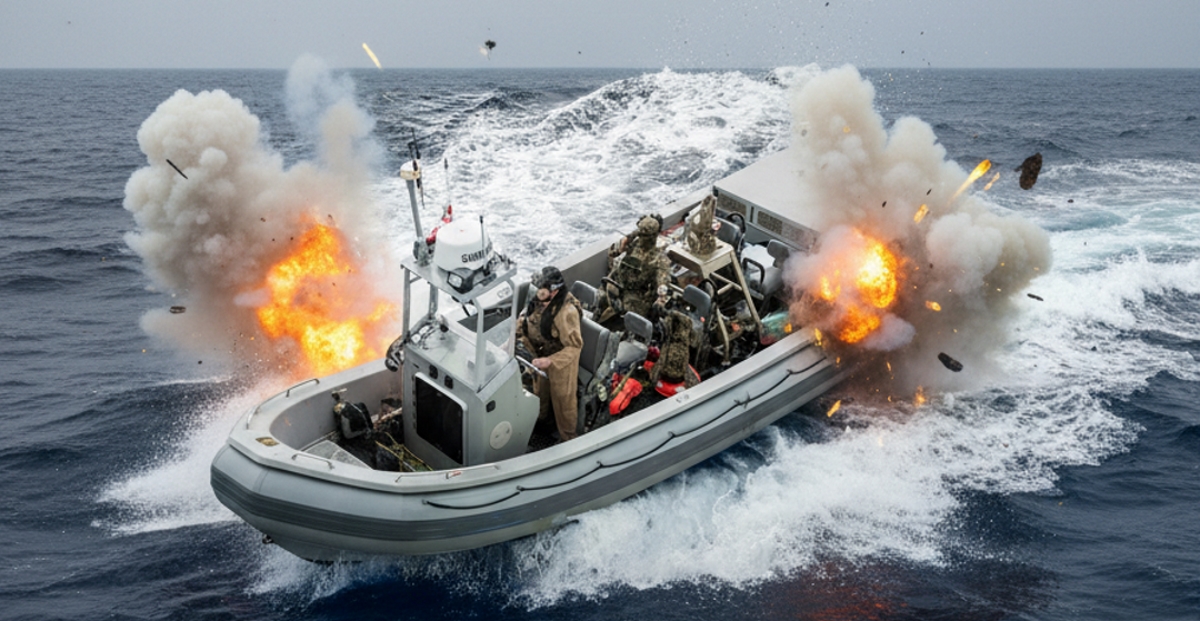
The U.S. military confirmed it carried out strikes on three additional boats in the Pacific Ocean, killing eight people in an operation that has raised urgent questions about escalation, rules of engagement, and what exactly is unfolding far from public view. The strikes, disclosed with limited detail, immediately drew scrutiny from defense analysts and foreign policy observers watching a region already thick with tension.
According to Pentagon officials, the boats were identified as hostile targets during a maritime operation, though specifics about their origin, mission, or affiliation remain tightly controlled. The lack of transparency has fueled speculation, particularly as this marks the latest in a string of recent naval actions that appear to be expanding in scope.
Defense briefings described the vessels as posing an “imminent threat,” language frequently used in prior operations analyzed in recent operational reviews examining how threat determinations are made at sea. Officials did not clarify whether the boats were armed, crewed by militants, or linked to a specific state or group.
The Pacific has increasingly become a focal point for U.S. military activity, as naval traffic, territorial disputes, and intelligence operations intersect. Strategic planners have warned for years that the region’s vastness can mask flashpoints, a concern outlined in security assessments tracking emerging maritime risks.
When lethal force is used with minimal explanation, escalation risks multiply quickly. — Sam Roggeveen (@samroggeveen) Dec 2025
Military officials emphasized that the strikes were conducted in accordance with international law, a claim routinely made in similar incidents. Past cases reviewed in legal analysis show that maritime self-defense claims often hinge on intelligence that remains classified long after operations conclude.
Human rights groups responded with alarm, calling for greater disclosure about the identities of those killed. Advocates stressed that deaths at sea are notoriously difficult to investigate, a challenge documented in monitoring reports examining civilian harm in naval engagements.
The strikes follow earlier incidents involving small boats and maritime threats, signaling what analysts say may be a shift toward more aggressive interdiction. That pattern has been discussed in defense research warning that repeated kinetic actions can normalize force without broader public debate.
Each strike lowers the threshold for the next one. That’s how conflicts quietly widen. — Ben Rhodes (@brhodes) Dec 2025
Regional governments offered little immediate response, though diplomatic channels were reportedly active behind the scenes. Officials familiar with Pacific security dynamics noted that silence can itself be strategic, a tactic explored in geopolitical analysis of crisis signaling.
U.S. commanders defended the operation as necessary to protect naval assets and commercial shipping lanes. The Pacific hosts some of the world’s most critical maritime routes, vulnerabilities highlighted in threat assessments detailing how small craft can pose outsized risks.
Still, the absence of publicly identified adversaries has unsettled lawmakers and observers alike. Congressional oversight committees have previously pressed the Pentagon for clearer explanations in similar cases, concerns raised in oversight reporting tracking accountability debates.
The public deserves to know who is being targeted and why lethal force is used. — Sen. Chris Murphy (@ChrisMurphyCT) Dec 2025
Military analysts caution that even limited engagements can carry strategic consequences. Miscalculation at sea has historically triggered larger confrontations, a lesson revisited in historical studies examining how minor clashes spiral.
The Pacific theater is already strained by overlapping military exercises, surveillance operations, and unresolved territorial disputes. Experts warn that adding lethal encounters to that environment increases the risk of misinterpretation, a danger outlined in deterrence research focused on crowded waterways.
For now, the Pentagon has signaled no pause in operations, indicating that force protection remains a top priority. Officials insist the strikes prevented a greater threat, even as questions about proportionality and identification linger.
What remains clear is that eight people are dead, three boats lie destroyed, and a distant stretch of ocean has once again become the site of lethal force carried out largely beyond public scrutiny. As similar incidents accumulate, the line between isolated defense and sustained escalation grows harder to define.