
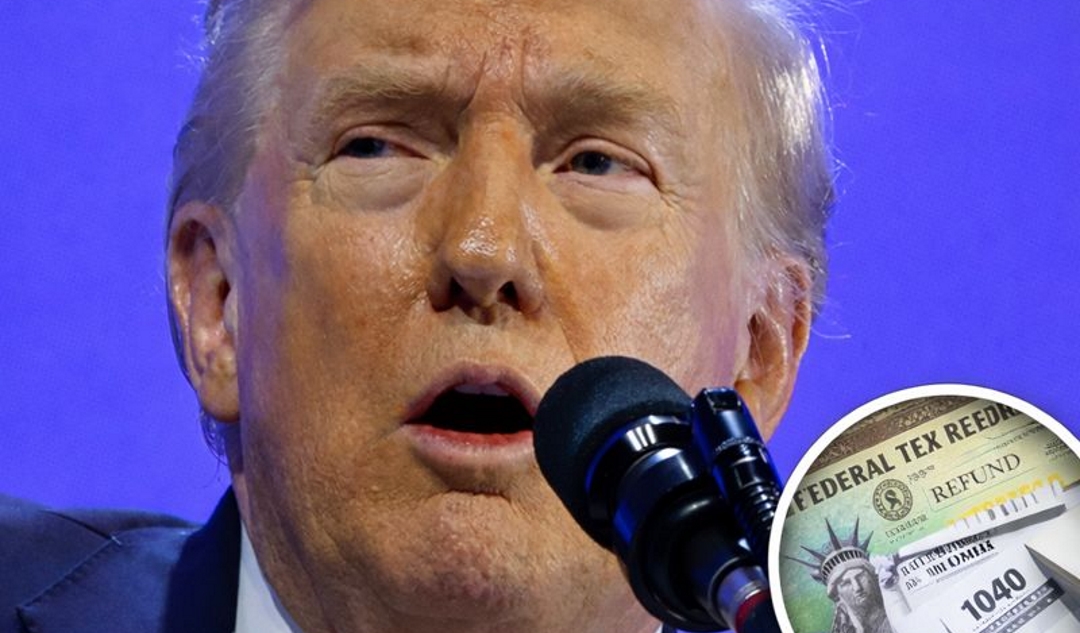
Claims that US taxpayers are about to receive the “largest tax refund in history” are circulating widely after former president Donald Trump once again touted the impact of what he calls his “One Big Beautiful Bill.” The statement has reignited debate over tax policy, government spending, and what Americans should realistically expect when filing their returns.
Trump’s comments center on the idea that sweeping tax changes introduced during his presidency — and proposals he continues to promote — would dramatically increase take-home pay and refunds for millions of households. Supporters argue the cuts stimulated growth and left workers with more money in their pockets, while critics warn the math does not match the rhetoric.
The original 2017 Tax Cuts and Jobs Act did reduce federal income tax rates for many Americans and nearly doubled the standard deduction. At the time, the Trump administration framed the legislation as a long-term win for middle-class families, promising economic expansion and sustained wage growth.
However, tax experts have repeatedly noted that lower withholding often resulted in smaller refunds for many filers, even if their overall tax burden declined. Refund size, they stress, is not the same thing as total tax savings — a distinction that frequently gets lost in political messaging.
Recent claims of a record-setting refund wave appear tied to renewed campaign rhetoric rather than the rollout of a new, enacted law. As of now, no legislation has been passed that would suddenly trigger historically large refunds across the board.
Analysts point out that refunds depend on several variables, including income levels, withholding choices, credits claimed, and changes in tax law. Without a major new statute, there is no mechanism for a sudden, universal refund increase.
That said, some taxpayers could still see higher refunds for unrelated reasons. Expanded credits at the state level, adjusted withholding, or changes in personal circumstances — such as having children or qualifying for education credits — can all affect refund totals.
Economists also caution that framing refunds as a financial windfall can be misleading. A large refund often means a taxpayer overpaid throughout the year, effectively giving the government an interest-free loan. From a financial planning perspective, many experts recommend adjusting withholding so paychecks are larger and refunds smaller.
Trump’s renewed messaging appears aimed at reinforcing his broader economic narrative: that his policies favor workers, reduce taxes, and outperform those of his political rivals. The phrase “One Big Beautiful Bill” has become shorthand for a vision of aggressive tax cuts paired with promises of economic revival.
Critics counter that the long-term cost of such cuts would add significantly to the national debt unless paired with major spending reductions. Independent budget analyses of past proposals have shown trillions added to deficits over time.
Public reaction has been mixed. Some Americans welcome any promise of lower taxes or larger refunds amid inflation and rising living costs. Others remain skeptical, citing past experiences where expectations did not align with actual refund amounts.
The Internal Revenue Service has not announced any changes that would support claims of record-breaking refunds tied to new federal legislation. Current filing season guidance remains consistent with prior years.
For accurate information on how refunds are calculated and what taxpayers can expect, filers are encouraged to consult official IRS guidance rather than political statements. The IRS provides detailed explanations of credits, deductions, and withholding on its official site.
You can review current federal tax rules and refund information directly through the Internal Revenue Service, which outlines how refunds are determined and when payments are issued.
Independent analysis of the long-term effects of Trump-era tax policies can also be found via Congressional Budget Office reports, which assess fiscal impact without political framing.
As the election cycle intensifies, tax policy is likely to remain a central talking point. Experts advise voters to separate enacted law from campaign promises and to focus on verified policy details when planning their finances.
While the idea of the “largest tax refund in history” is attention-grabbing, the reality is far more complex. Until new legislation is passed and implemented, refund outcomes will continue to depend on individual circumstances rather than sweeping political claims.