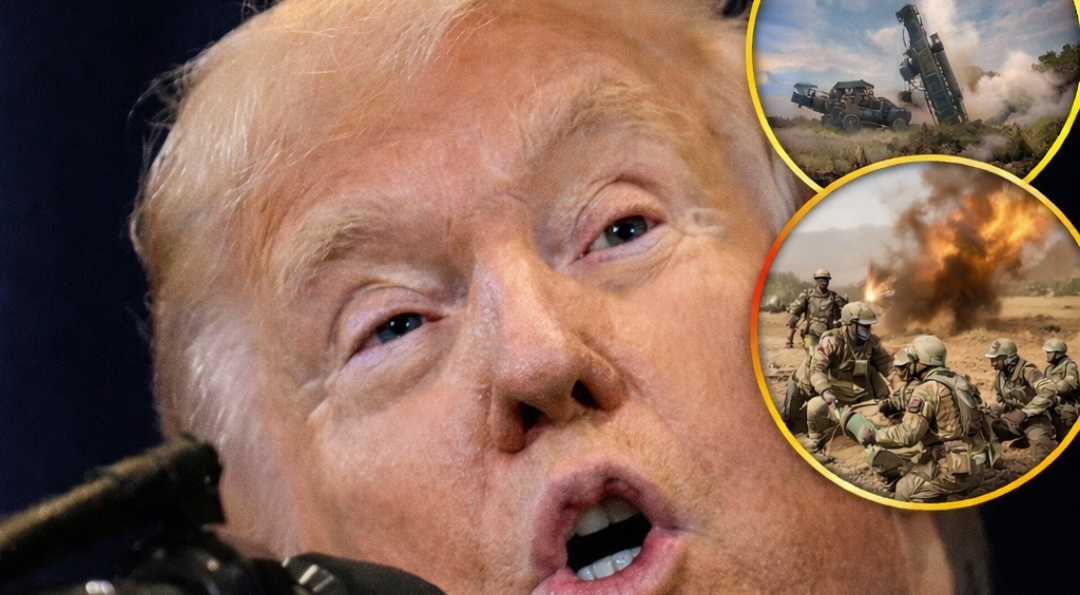
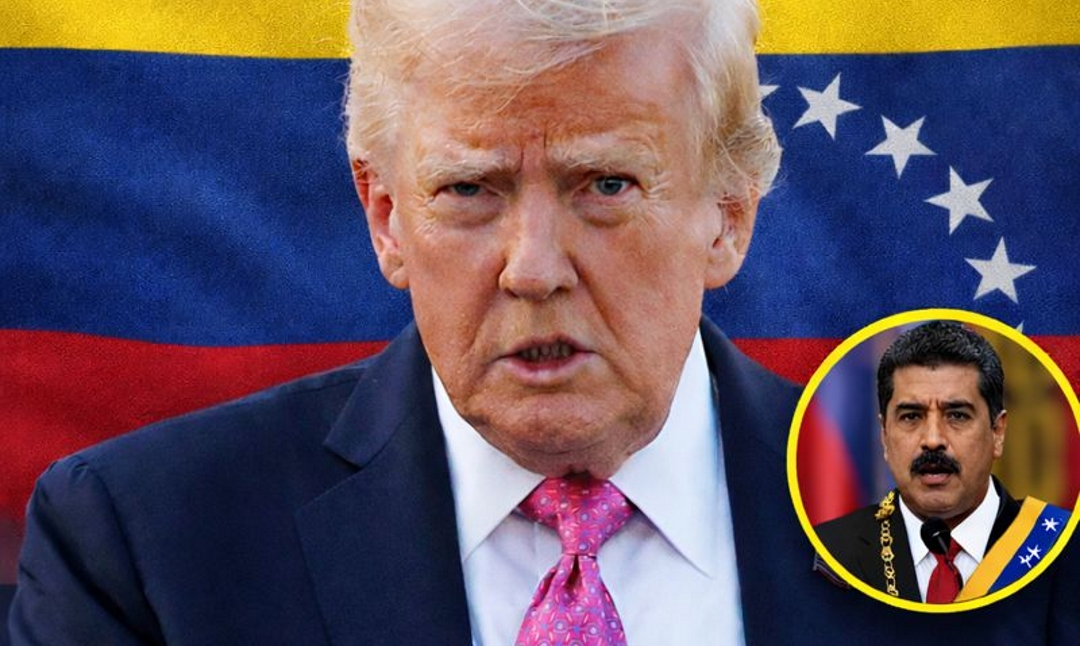
The image is engineered to provoke. Donald Trump pointing straight at the viewer, the Venezuelan flag behind him, cut-out circles showing soldiers, cash, and President Nicolás Maduro. The caption claims Trump has announced plans to “run” Venezuela. That assertion is spreading fast — and it’s not accurate.
No official statement, executive order, campaign platform, or verified interview shows Donald Trump saying he intends to govern Venezuela. What the image does instead is remix years of aggressive rhetoric, past U.S. policy toward Caracas, and Trump’s signature bravado into a claim that collapses context into a single, misleading line.
During Trump’s first term, the United States pursued maximum pressure on Venezuela through sanctions, diplomatic isolation, and public support for the opposition. In 2019, the U.S. formally recognized Juan Guaidó as interim president and rejected Nicolás Maduro’s legitimacy — a move detailed in coverage explaining the recognition strategy. That was not a plan to “run” the country, but to force political change from the outside.
Trump’s language at the time was intentionally confrontational. He repeatedly said “all options are on the table,” a phrase that fueled speculation about military intervention but never resulted in U.S. troops entering Caracas. Analysts later noted that the rhetoric outpaced the policy, a gap examined in reporting on the limits of that pressure campaign.
The current viral image appears to pull from those years — plus Trump’s habit of speaking in exaggerated hypotheticals — to suggest a new, unilateral declaration. But there is no corroborating evidence. No U.S. official has announced an American takeover, trusteeship, or administration of Venezuela. International law would make such a move extraordinarily unlikely without a multilateral mandate.
What Trump has actually said in recent appearances is more familiar: that Venezuela is “destroyed,” that socialism “failed,” and that the U.S. should pursue tougher leverage. He has framed the country as an example in domestic political arguments, not as a nation he plans to personally govern. That pattern has been dissected in analysis of how Venezuela is used rhetorically in U.S. politics.
That image claiming Trump wants to “run Venezuela” is misleading. It’s old rhetoric mashed into a fake announcement. — Global Context (@GlobalContextNow) July 2026
The inclusion of money and soldiers in the graphic further muddies the waters. Yes, U.S. sanctions froze Venezuelan assets and restricted oil revenues. Yes, the Pentagon monitored the region closely. But sanctions are not governance, and pressure is not administration. Experts have long warned that conflating the two creates confusion about what U.S. power can legally do, a point raised in briefings on the limits of intervention.
Why does this framing keep resurfacing? Because it plays to extremes on both sides. For Trump supporters, it suggests decisive strength and dominance. For critics, it signals imperial overreach. Both reactions generate engagement — and engagement keeps the image circulating.
Venezuelans themselves are often erased in these viral narratives. Inside the country, daily life is shaped by inflation, migration, and political repression — not by imagined U.S. takeovers. International observers have emphasized that durable change would require negotiated transitions, not foreign control, a reality underscored in reporting on stalled negotiations.
U.S. politicians talk about Venezuela like it’s a prop. Real people live with the consequences of that rhetoric. — Latin America Watch (@LatAmWatch) July 2026
The bottom line is straightforward. Trump has criticized Venezuela loudly and consistently. He has advocated harsh pressure. He has not announced plans to “run” the country. The image turns familiar political theater into a false declaration by stripping away context and accountability.
As election-season visuals multiply, this one serves as a reminder to slow down before sharing. A dramatic graphic is not a policy document. A bold caption is not an official announcement. And in the case of Venezuela, the difference matters — for credibility, for diplomacy, and for the people whose lives are too often reduced to a viral claim.