
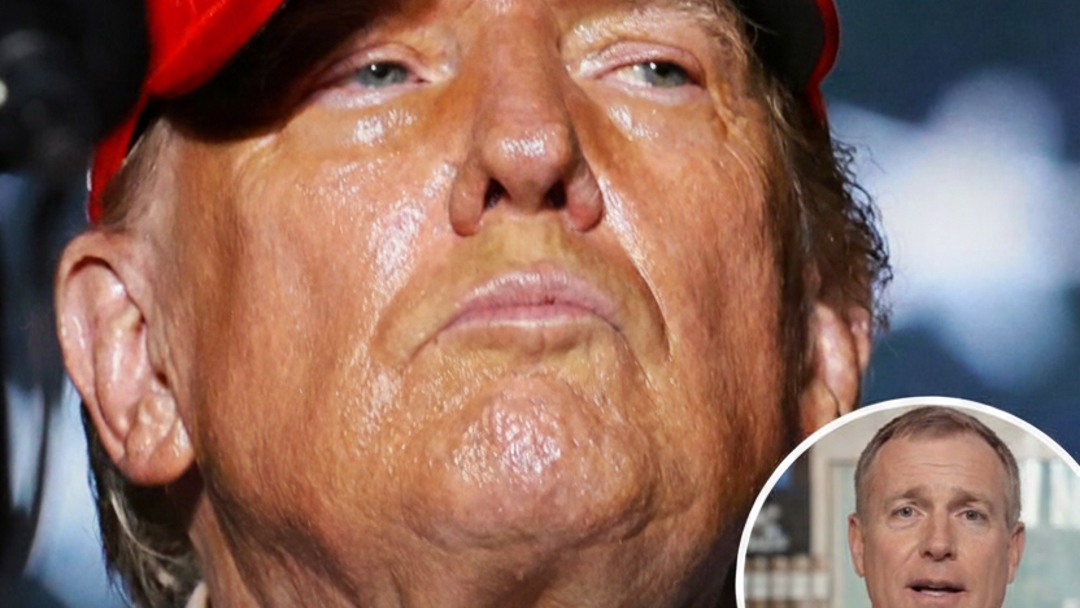
A viral claim suggesting Donald Trump has only a limited number of days left to live surged across social media this week, spreading rapidly through political feeds, reaction videos, and sensational headlines. Framed as an “expert revelation,” the assertion was presented with an air of certainty that immediately drew attention — and criticism — from medical professionals and commentators alike.
The claim appeared in short video clips and reposted graphics, often accompanied by ominous music, slowed footage, and close-up images of Trump taken at recent public appearances. The presentation leaned heavily on shock value, offering a precise number rather than a medical explanation, a tactic that helped the rumor cut through timelines already saturated with election-related content.
Much of the speculation was fueled by heightened scrutiny of Trump’s physical appearance during speeches and events. Online users pointed to swelling in his legs, discoloration on his hands, and moments where he appeared fatigued, treating these observations as evidence of an undisclosed medical crisis rather than isolated details captured out of context.
As the discussion intensified, the White House addressed the health chatter directly. Officials confirmed that Trump had recently undergone a medical evaluation after noticing mild leg swelling. According to the briefing, doctors diagnosed him with chronic venous insufficiency, a common circulatory condition particularly prevalent among older adults. The evaluation reportedly ruled out more serious concerns such as blood clots, heart failure, or arterial disease.
Medical experts quickly emphasized that chronic venous insufficiency, while uncomfortable, is generally manageable and not considered life-threatening when properly treated. Specialists noted that the condition can cause swelling, skin changes, and fatigue, but does not support dramatic claims about imminent death. Similar clarifications were echoed in mainstream coverage examining how routine health disclosures can spiral into online panic when stripped of context as medical details were reframed into viral speculation.
The hand bruising that also became a focal point of online commentary was explained as consistent with frequent handshaking combined with aspirin use — a detail doctors say is neither unusual nor alarming. Still, these explanations struggled to keep pace with the viral narrative, which had already shifted from concern into countdown.
Health professionals pushed back strongly against the way the claim was framed. Prognoses, they stressed, are rarely precise even when physicians have full access to a patient’s medical history, imaging, and lab results. Delivering an exact number of days without direct examination is not only irresponsible, they argue, but misleading by design.
The episode fits into a broader pattern that has followed Trump for years, where speculation about his health periodically explodes online regardless of official statements. False death rumors and exaggerated medical claims have circulated repeatedly, often reignited by misinterpreted photos or anonymous commentary presented as insider knowledge. Analysts studying misinformation say these stories thrive because they offer emotional certainty rather than factual complexity as similar hoaxes have previously spread unchecked.
What makes the latest claim particularly potent is its format. By invoking an “expert” and assigning a specific timeline, the story mimics the language of authority while discarding the standards of medicine. Viewers are conditioned to trust numbers, especially when delivered confidently, even when those numbers have no clinical foundation.
Critics also warned that this type of speculation has broader consequences beyond politics. When common medical conditions are portrayed as fatal countdowns, it distorts public understanding of health and fuels unnecessary fear. Older adults with similar diagnoses may see themselves reflected in the headlines and assume the worst, despite the reality being far less dramatic.
The White House response was intended to shut down misinformation before it escalated further, but online dynamics rarely reward restraint. Sensational claims travel faster than clarifications, and once a rumor is emotionally embedded, factual updates often struggle to regain control of the narrative.
For supporters and critics alike, the controversy underscores how modern political discourse has become entangled with viral health speculation. In an era where every pause, bruise, or photograph can be transformed into evidence, public figures exist under constant medical surveillance conducted by strangers with no access to facts.
As the election cycle accelerates, experts warn that similar claims are likely to resurface, each iteration louder and more extreme than the last. The real story, they argue, is not about a fabricated timeline, but about how quickly misinformation can masquerade as diagnosis — and how easily certainty replaces truth when outrage becomes currency.
In the end, the viral “days left” claim reveals more about the mechanics of online attention than it does about Trump’s health. It shows how fear is packaged, how authority is mimicked, and how quickly a rumor can become accepted fact when it tells people exactly what they think they want to hear.