
In the fast-moving world of social media politics, dramatic claims can spread widely long before they are tested against evidence.
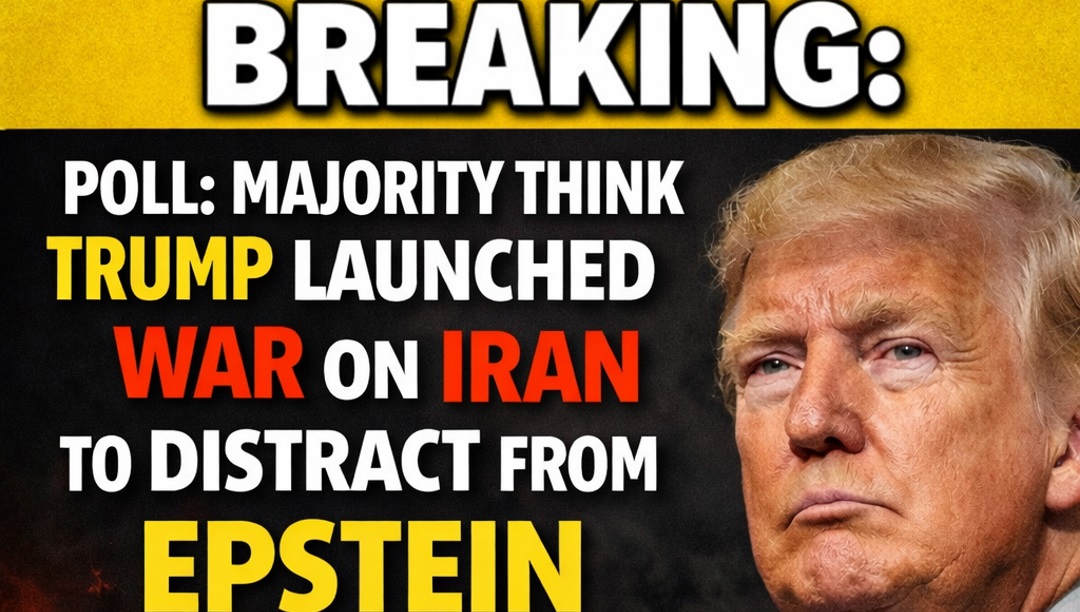
One recent example involves viral graphics suggesting that a majority of Americans believe former President Donald Trump initiated conflict with Iran as a political distraction connected to controversies surrounding Jeffrey Epstein.
There is no publicly verified national poll showing such a finding.
Media researchers say this kind of claim reflects a familiar pattern in the digital era: emotionally charged political narratives presented in the visual style of breaking news, even when they originate from advocacy groups or unverified sources rather than established polling organizations.
That distinction matters because legitimate polling follows transparent methodology — including sample size, margin of error, and survey wording — which allows results to be independently evaluated.
You can see how reputable polling organizations explain their methodology here:
How scientific polling is conducted
Foreign policy decisions themselves typically involve lengthy processes that include intelligence briefings, military assessments, diplomatic considerations, and consultations with advisors. Experts say these decisions rarely follow the simple political motives often suggested in viral posts.
At the same time, public skepticism toward government motives is not new.
Historians note that during periods of international tension, speculation about political motives often increases, particularly when military actions coincide with domestic political pressure. This pattern has appeared across multiple administrations from both political parties.
The Epstein case, meanwhile, continues to generate attention years after his death in 2019, largely because of the high-profile nature of individuals who once moved in his social circles. Multiple investigations and document releases have fueled ongoing public curiosity.
Importantly, legal experts emphasize a key principle: association mentioned in historical records does not by itself establish criminal involvement.
Fact-checking organizations have repeatedly warned that combining unrelated events into a single narrative is one of the most common forms of online political misinformation.
You can read more about how misinformation spreads during political debates here:
Brookings research on online misinformation
For voters trying to navigate such claims, media literacy experts recommend a few basic checks: identifying the original source, confirming whether credible outlets have reported the same information, and verifying whether data such as polls can be independently confirmed.
These steps have become increasingly important as political messaging has evolved beyond traditional speeches into viral graphics designed for rapid sharing.
The broader issue, analysts say, may be less about any single claim and more about how political information now travels. Opinion, speculation, verified reporting, and satire often appear side by side in the same feeds, sometimes without clear distinction.
That environment can make dramatic narratives feel established before verification catches up.
Ultimately, political scientists say the most reliable understanding of complex issues like foreign policy or legal investigations rarely comes from single viral claims, but from accumulated reporting, official documentation, and multiple independent sources.
In a media environment built for speed, they note, the most important habit may also be the simplest:
Slowing down long enough to separate what is claimed from what is actually known.