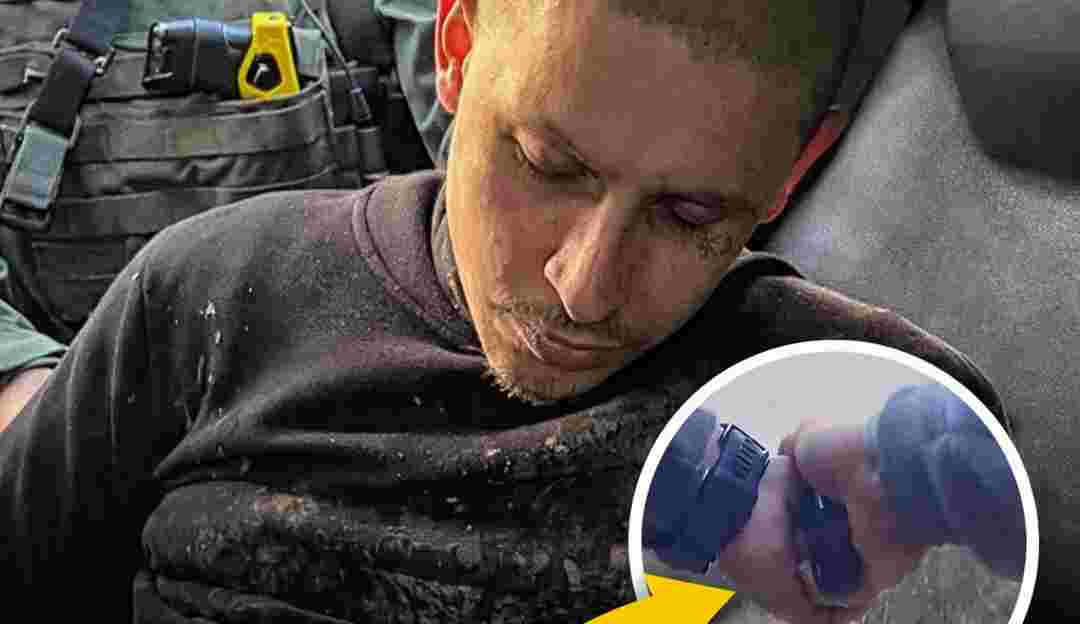
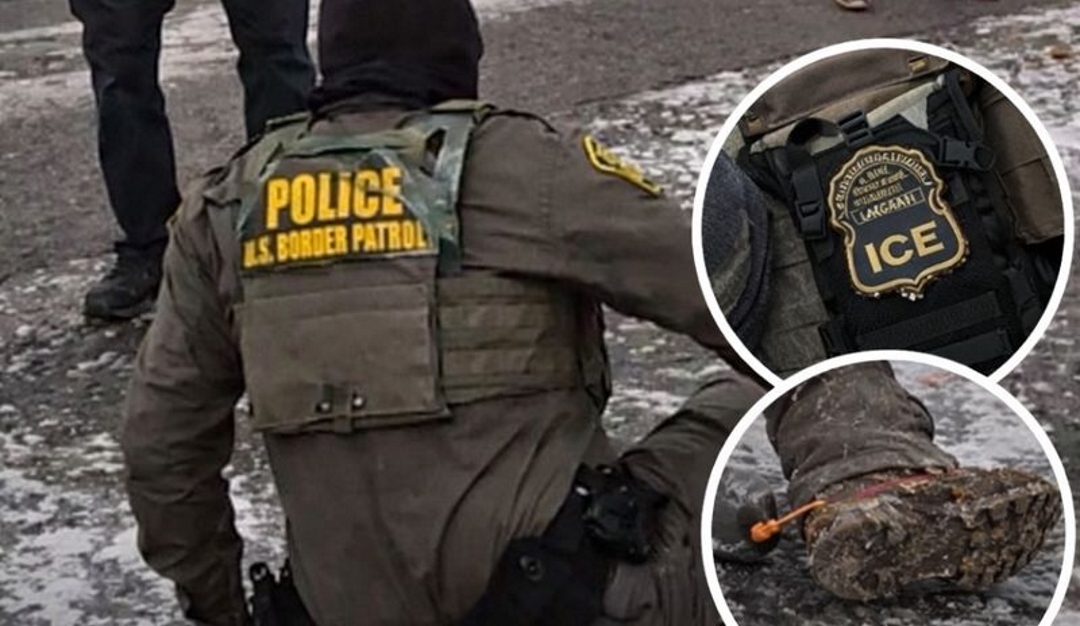
The image spread faster than anyone expected. An ICE agent, dressed in heavy tactical gear, sits awkwardly on an icy roadway after slipping during an enforcement operation. At first glance, it looks like a simple fall — the kind of mishap winter roads deliver every year. But within hours, the photo ignited a digital inferno.
What stopped people cold wasn’t the fall itself. It was the detail viewers couldn’t unsee once it was pointed out. The agent’s boot, caked with ice and debris, appeared fitted with a makeshift traction device — a piece of cord or improvised grip — sparking a furious debate over preparedness, safety, and what ICE officers are actually equipped with in the field.
The moment gained traction across social media after being reposted alongside commentary questioning whether federal agents are being sent into dangerous situations without proper winter gear. Critics argued the image symbolized deeper problems inside immigration enforcement, echoing long-running concerns raised in civil liberties discussions and workplace safety complaints.
Supporters of ICE pushed back immediately. They framed the reaction as bad-faith outrage, noting that law enforcement officers routinely improvise in extreme conditions. Some pointed to similar challenges faced by police departments nationwide, often discussed in law enforcement safety forums, where budget constraints and weather realities collide.
But the internet had already decided this wasn’t just about slipping on ice.
Zoomed-in screenshots circulated rapidly, with arrows, circles, and captions dissecting the agent’s footwear. Comment sections filled with accusations that officers were undertrained, underfunded, or recklessly deployed. Others suggested the improvised traction was evidence of officers anticipating dangerous conditions — a sign of experience rather than negligence.
Context matters, and that’s where things became murky. The image appears to come from a winter operation during heightened immigration enforcement, a topic already inflamed by recent policy battles. With emotions high, the fall became a visual metaphor, tied to arguments over federal authority, immigration raids, and public accountability — themes explored frequently in policy analysis circles.
Everyone laughing at an ICE agent slipping on ice is missing the point. Why are they out there like this to begin with? — OpenLens (@OpenLensMedia) January 2026
Others took the opposite stance, accusing critics of dehumanizing officers by turning a potentially dangerous fall into a meme. Several users reminded audiences that falls in full tactical gear can cause serious injury, particularly when carrying equipment and weapons.
Medical professionals even weighed in, explaining how ice-related falls are among the most common causes of line-of-duty injuries during winter operations — a reality documented in occupational safety research.
ICE itself did not issue an immediate statement addressing the viral image. That silence only intensified speculation. Without official clarification, narratives hardened quickly, each side projecting its own conclusions onto the frozen asphalt.
For immigration advocates, the image reinforced claims that enforcement actions are rushed, chaotic, and unnecessarily dangerous — not only for migrants, but for officers themselves. Some argued that the slip symbolized systemic dysfunction, linking it to broader critiques found in enforcement trend breakdowns.
For others, the outrage felt performative. They noted that a single photograph, stripped of context, was being used to attack individuals doing their jobs in brutal conditions. To them, the fixation on a boot lace or traction cord missed the reality of winter policing altogether.
This isn’t funny. Ice + gear + weapons = serious risk. Internet pile-ons don’t change that. — NorthWatch (@NorthWatchOrg) January 2026
As the image continues circulating, it’s become clear that the “one detail” everyone noticed isn’t just about footwear. It’s about what people believe ICE represents — authority or overreach, protection or harm, order or chaos.
In the end, the fall lasted seconds. The argument it sparked may last far longer. One slip on an icy road has turned into a digital referendum on enforcement, accountability, and how quickly a moment can be transformed into a symbol in America’s most volatile debates.