
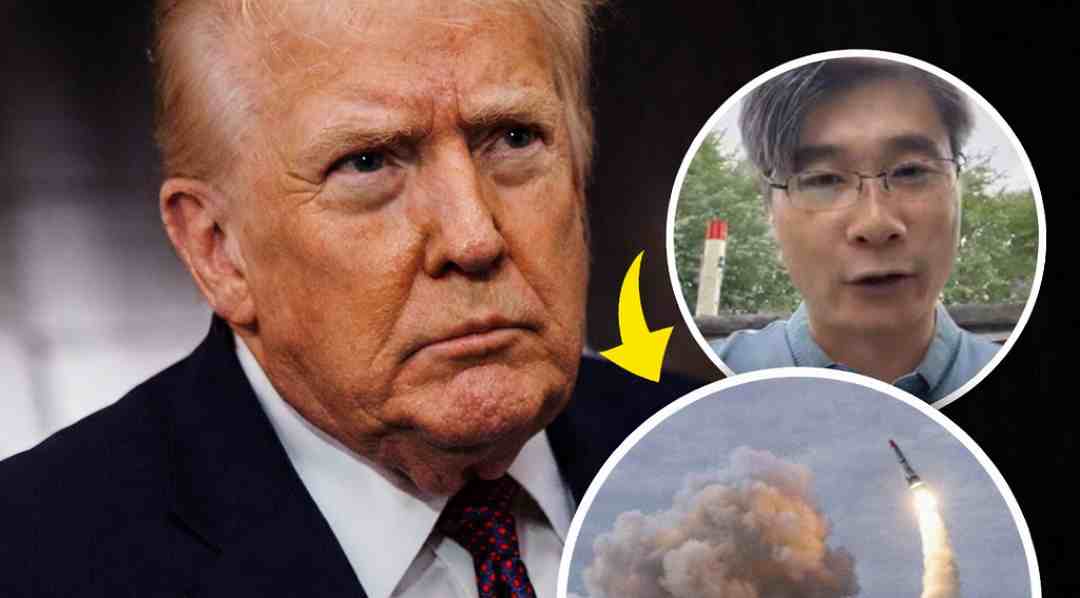
At a time when geopolitical tensions already dominate headlines, predictions about how conflicts might unfold often spread far beyond traditional policy circles.
Recently, attention has focused on a Chinese commentator sometimes referred to online as “China’s Nostradamus,” a nickname given by followers who believe his past geopolitical commentary has accurately anticipated global developments.
His latest remarks — widely shared across video platforms and discussion forums — attempt to forecast how tensions involving Iran and the United States could eventually de-escalate.
But foreign policy experts say such predictions should be understood as opinion rather than intelligence.
Unlike official assessments produced by governments or research institutions, viral geopolitical predictions often rely on interpretation rather than classified information or formal diplomatic analysis. Their popularity, analysts say, reflects public anxiety more than predictive accuracy.
The man at the center of the discussion built his following through commentary videos analyzing global power shifts, U.S.–China rivalry, and Middle East tensions. Supporters often point to earlier statements they believe proved insightful, while critics argue that broad predictions can appear accurate simply because they are open to interpretation.
This phenomenon is not new.
Throughout history, periods of uncertainty have often produced figures claiming special insight into world events. From Cold War analysts to modern social media commentators, audiences frequently gravitate toward voices that appear confident during unstable times.
You can read more about how geopolitical forecasting works in professional research environments here:
Council on Foreign Relations global conflict analysis
The renewed attention also reflects how social media has changed the way geopolitical narratives spread. Analysts say platforms now allow independent commentators to reach audiences comparable to traditional media outlets, sometimes without the same editorial verification processes.
That speed can blur the line between analysis, speculation, and entertainment.
Meanwhile, official positions regarding Iran remain grounded in diplomatic statements, security assessments, and ongoing negotiations rather than individual predictions.
International relations scholars note that conflicts involving Iran involve multiple actors, including regional governments, global alliances, and economic pressures that make simple forecasts difficult.
You can review background on U.S.–Iran relations here:
U.S. State Department background on Iran relations
For everyday audiences, however, the appeal of a single voice offering a clear outcome can be powerful. Psychologists who study information consumption say people often seek certainty during uncertain geopolitical periods, making confident predictions especially shareable.
That does not necessarily make them reliable.
Defense analysts emphasize that most real conflict outcomes are shaped by logistics, alliances, economics, and domestic politics — factors that rarely follow simple narratives.
Even intelligence agencies themselves often avoid definitive predictions, instead focusing on scenario planning and probability assessments.
You can see how strategic forecasting differs from speculation here:
RAND research on geopolitical risk analysis
For now, the viral predictions appear to function more as a reflection of public concern than as indicators of policy direction.
What they demonstrate most clearly is how modern conflicts are fought not only through diplomacy and strategy, but also through narratives competing for attention in the global information space.
And in that environment, the loudest predictions often say less about what will happen next — and more about what audiences most want to understand.