
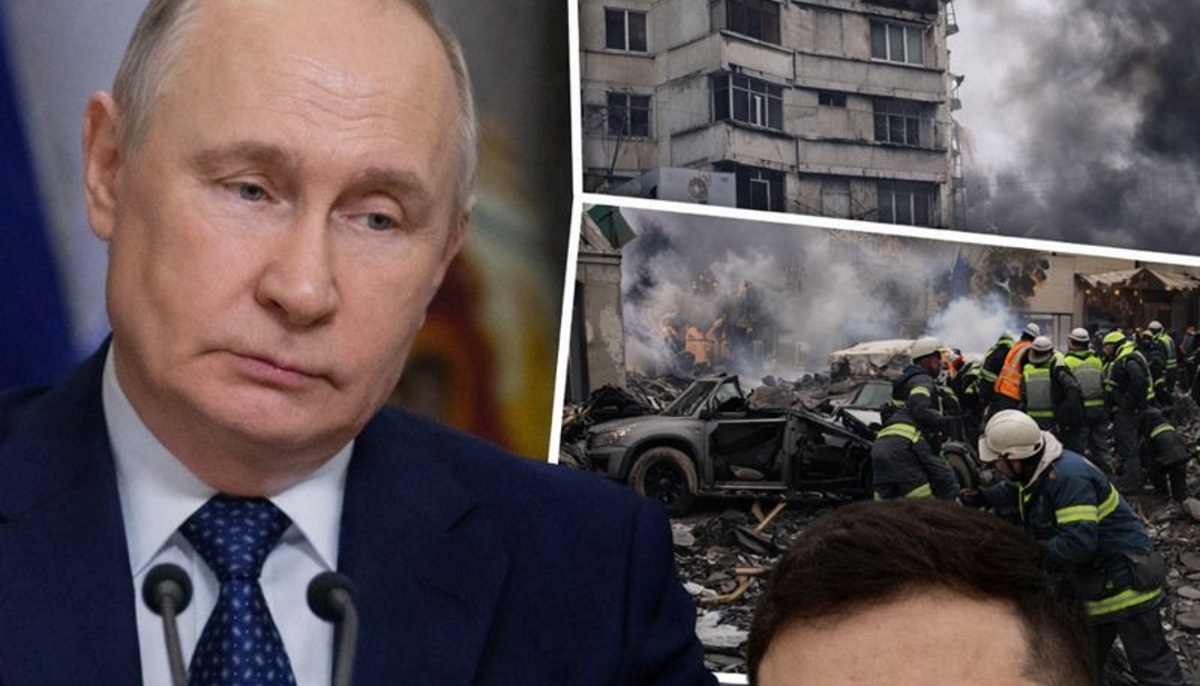
The night over Kyiv shattered into chaos as waves of explosions tore through the capital, marking one of the most intense escalations in months. Air raid sirens blared for hours while residents sheltered underground, listening to impacts that rattled buildings far beyond the city center.
Ukrainian officials said the strikes targeted energy infrastructure, residential neighborhoods, and transportation corridors, leaving large sections of the city without power or heat. Emergency crews worked through the darkness, pulling survivors from damaged buildings as smoke hung low over entire districts.
By morning, the scale of destruction was visible. Burned-out cars lined streets, windows were blown out for blocks, and families sifted through debris where apartments once stood. One resident described waking up to “a wall of fire,” a scene echoed across social media as images spread rapidly.
Military analysts noted that the attack appeared designed to overwhelm air defenses through sheer volume, a tactic increasingly seen as the conflict drags on. Reports shared through late-night battlefield updates suggested drones and missiles were launched simultaneously from multiple directions.
Ukrainian leadership condemned the strikes as deliberate terror against civilians, accusing Moscow of escalating to break morale ahead of critical diplomatic moments. In a televised address, officials vowed retaliation and renewed calls for advanced air defense systems.
Western leaders responded swiftly, issuing statements of condemnation and pledging continued support. Emergency meetings were convened as footage from Kyiv circulated alongside reminders of earlier warning signs that the conflict was entering a more volatile phase.
Behind the scenes, diplomats acknowledged growing anxiety about miscalculation. Each escalation narrows space for de-escalation, raising fears that the war could spill further beyond Ukraine’s borders.
For ordinary Ukrainians, those geopolitical calculations feel distant compared to the immediate struggle to survive. Schools remained closed, public transit was disrupted, and hospitals operated on backup generators as doctors treated the injured.
Volunteers rushed supplies into affected neighborhoods, distributing water, blankets, and food. Many referenced recent humanitarian assessments warning that repeated infrastructure attacks could push millions closer to crisis conditions during winter.
Russia has not fully detailed its objectives behind the latest barrage, though state media framed the strikes as retaliation. Ukrainian officials countered that such narratives ignore the human cost unfolding in real time.
Security experts say the pattern suggests a dangerous normalization of mass strikes on urban centers. What once sparked international outrage now risks becoming routine, a shift that alarms human rights organizations tracking civilian casualties.
In Kyiv, residents emerged cautiously as daylight revealed the damage. Some taped plastic over shattered windows; others stood silently, staring at collapsed walls. Despite exhaustion, many expressed defiance, insisting the attacks would not force them to abandon their city.
As leaders trade statements and analysts debate strategy, the capital remains on edge. Air defenses stay active, shelters remain open, and families sleep with emergency bags packed, bracing for what may come next.
The latest strikes underscore a grim reality: the war is not winding down. Instead, it is grinding forward, reshaping lives night by night, while the world watches another chapter of devastation unfold.