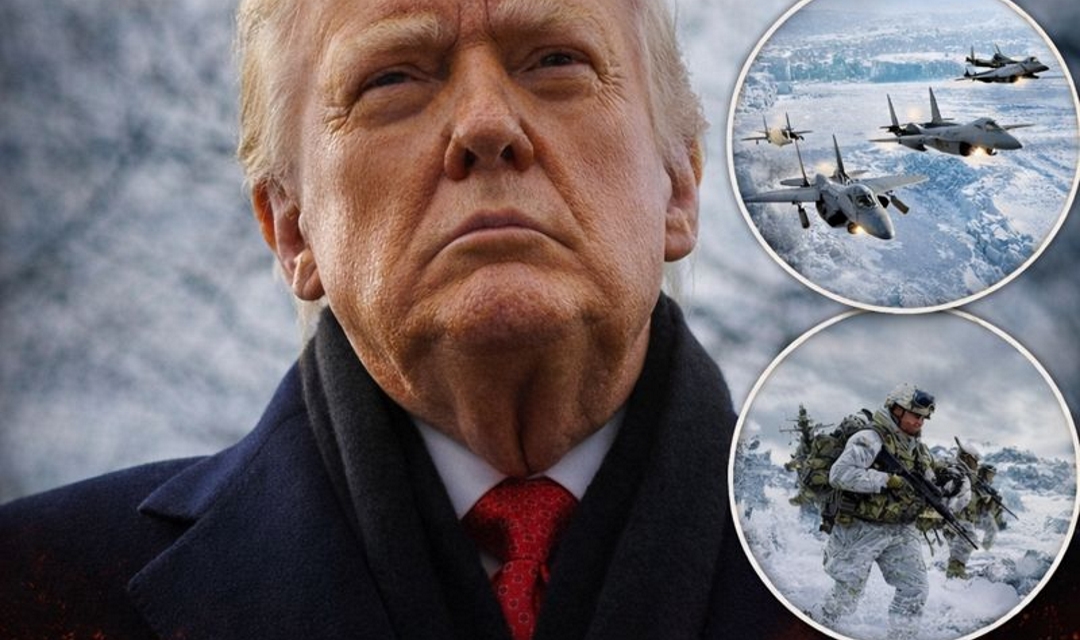
The idea once sounded like an offhand remark, the kind that would flare up on cable news and then quietly fade. But as geopolitical tensions sharpen worldwide, renewed discussion around what would happen if Donald Trump seriously pursued control over Greenland has stopped sounding hypothetical.
Greenland is not just a frozen landmass at the edge of the Arctic. It sits at the crossroads of global power, trade routes, and military strategy, a fact quietly acknowledged for decades in strategic defense planning long before headlines ever caught up.
The island is an autonomous territory of Denmark, a NATO ally, which means any aggressive move would immediately raise alliance questions. Diplomatic experts warn that even symbolic pressure could strain transatlantic relationships already under stress, especially as Arctic influence becomes more valuable by the year.
What makes Greenland especially sensitive is its role in early-warning defense systems. The U.S. already operates critical infrastructure there, a reality explored quietly in defense research circles. Any escalation beyond cooperation would instantly be viewed through a military lens.
Analysts say the real danger isn’t invasion — it’s miscalculation. A political push framed as economic or strategic could be interpreted by rivals as territorial expansion, triggering responses far beyond the Arctic. Russia and China have both increased their polar activity, a trend mapped out in Arctic Council briefings.
Inside Washington, even discussing such a move would likely fracture opinion. Supporters might argue it strengthens national security, while critics would warn of destabilizing precedent. Legal scholars note that territorial acquisition in the modern era doesn’t resemble past land purchases, a distinction often misunderstood outside academic circles.
The optics alone could be enough to escalate tensions. Military analysts point out that repositioning assets near Greenland would almost certainly prompt counter-movements, particularly as NATO nations reassess their own northern defenses. The Arctic is no longer remote — it’s crowded.
The Arctic is becoming a frontline of great-power competition, not a frozen backwater. — Security Analyst (@GeoDefense) January 2026
Economically, Greenland holds enormous untapped resources, from rare earth minerals to future shipping lanes. Climate change has accelerated interest, a factor outlined in global economic outlooks that view the region as both opportunity and flashpoint.
For Greenland’s own population, the debate isn’t abstract. Local leaders have consistently emphasized sovereignty and environmental protection, wary of becoming a pawn in global rivalries. Any external pressure risks inflaming domestic resistance rather than securing cooperation.
What fuels current anxiety is timing. With multiple conflicts simmering worldwide, even symbolic actions can ripple outward. Diplomatic veterans warn that in moments of global instability, signals matter as much as actions — and misread intentions can harden into irreversible standoffs.
Some defense planners argue that renewed discussion alone has already achieved something unintended: reminding adversaries how strategically vital the Arctic has become. That realization, experts say, could accelerate militarization whether or not any concrete move is made.
You don’t need troops to escalate tensions — sometimes rhetoric does the job. — Global Affairs Watch (@GlobalAffairs) January 2026
Ultimately, the question isn’t whether Greenland could be “taken,” but what such a push would unleash. In a world already balancing on fragile alliances, even testing the idea risks shifting the global chessboard in ways no single leader can fully control.
As Arctic ice melts and competition heats up, Greenland sits quietly at the center of a future many governments are racing to shape — and fearing others might shape first.