
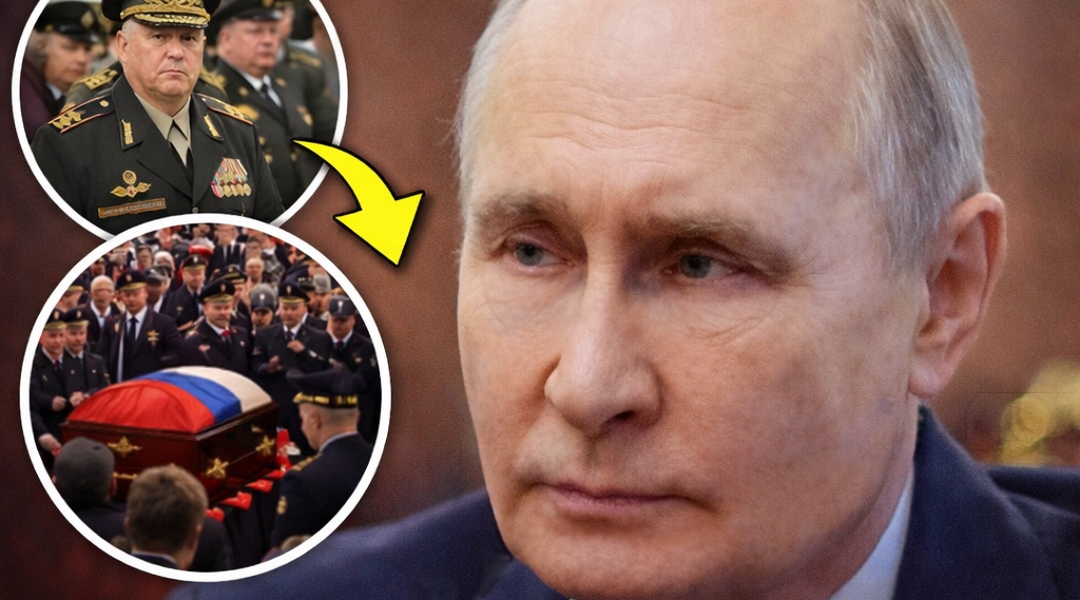
Speculation about the health of world leaders often spreads quickly, particularly during periods of geopolitical tension. Recent online discussions about Russian President Vladimir Putin have followed that familiar pattern, fueled by brief video clips and public appearances that some viewers have interpreted as signs of possible health concerns.
The Kremlin has repeatedly denied rumors about Putin’s health, and there has been no official confirmation of any serious medical condition.
Still, the conversation has prompted renewed interest in a rarely discussed question: what would actually happen if Russia’s long-time leader were suddenly unable to continue in office?
Russia’s constitution provides a clear — at least on paper — answer.
Under Article 92 of the Russian Constitution, if the president is unable to perform his duties, the prime minister temporarily assumes presidential powers until elections can be organized. This transfer is intended to ensure continuity of government during unexpected transitions.
You can review the relevant constitutional provisions here:
English translation of the Russian Constitution
Currently, that would place Prime Minister Mikhail Mishustin in the role of acting president if such a situation arose.
Political analysts caution, however, that real-world transitions of power in Russia have historically involved complex internal dynamics beyond the formal legal framework. Informal influence networks, security structures, and elite consensus have often played major roles in leadership stability.
Putin, who has dominated Russian politics for more than two decades as either president or prime minister, has built a highly centralized governing structure. That reality makes any hypothetical transition a subject of intense interest among international observers.
You can read a background profile of Russia’s modern political structure here:
Overview of Vladimir Putin’s political career
Rumors about leaders’ health are not unusual in global politics. From the Soviet era through modern governments, limited transparency around medical information has often created space for speculation, particularly when leaders maintain demanding public schedules well into older age.
Experts in political stability say such discussions often say more about uncertainty in international relations than about any individual’s condition.
In Russia’s case, the stakes of leadership continuity are particularly high because of the country’s role in global energy markets, nuclear policy, and the ongoing war in Ukraine.
Even hypothetical scenarios about leadership change can influence financial markets and diplomatic planning, which is why governments typically plan contingency strategies long before they are ever needed.
Security scholars say most major countries maintain classified continuity plans designed to avoid instability during sudden transitions of power.
At the same time, observers note that there is no indication of any immediate transition in Russia’s leadership.
The Kremlin continues to present Putin as actively engaged in governance, holding meetings, attending public events, and issuing policy directives. Without verified medical disclosures, outside assessments remain speculative.
For ordinary Russians, daily life remains shaped far more by economic conditions and the war’s long-term effects than by rumors about leadership health.
For foreign governments, however, even hypothetical leadership questions are closely watched because of the potential impact on diplomatic strategy and security planning.
Ultimately, experts say the most important distinction is between speculation and confirmed developments.
While discussions about succession are a normal part of political analysis, any actual change in leadership would be determined not by internet rumors but by constitutional procedures and internal political decisions.
Until then, the question remains a theoretical exercise — one shaped as much by global uncertainty as by any confirmed change inside the Kremlin.