
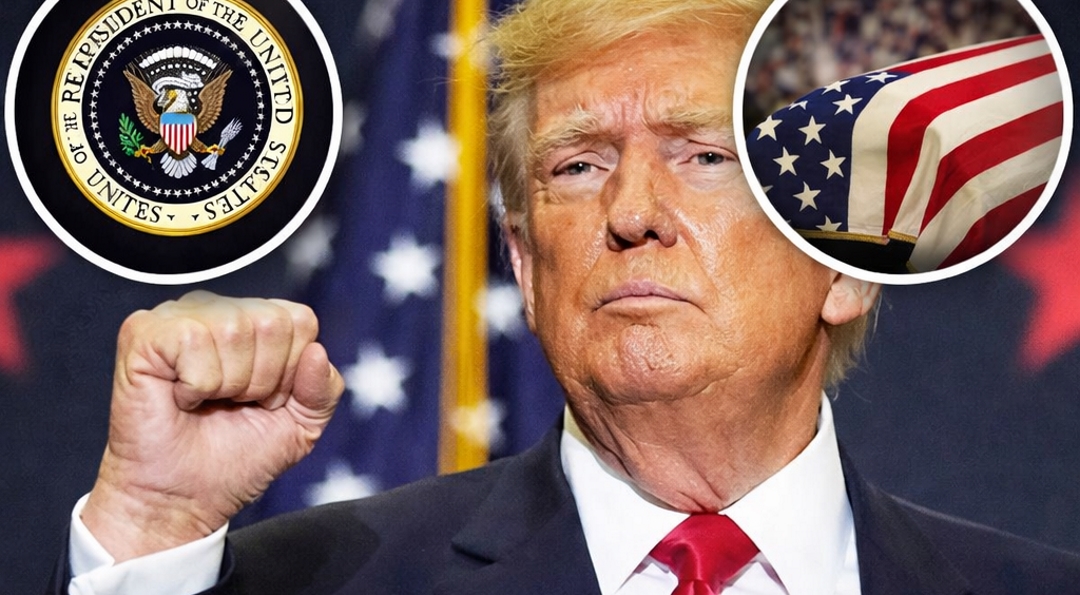
It’s a scenario most people don’t want to think about, but the United States has a detailed, pre-written plan for it. The reason is simple: the country can’t pause. Markets move, the military remains on duty, foreign leaders react in real time, and millions of people need to know—immediately—who is in charge and what happens next.
If a president dies while serving, the first outcome is not a special election and not a temporary caretaker. The vice president becomes president. Not “acting” president. Not “interim” president. The transfer is automatic under the Constitution, and the entire system is built to make the moment as clean as possible, even when the national mood is anything but.
The legal basis is spelled out in the 25th Amendment, which makes clear that when the president dies, the vice president “shall become President.” You can read the full text in the National Archives’ official presentation of the 25th Amendment, which is the core rule that prevents a power vacuum the instant a tragedy becomes real.
In practice, confirmation of the president’s death would come from medical authorities and senior officials, and then the vice president would be sworn in as soon as feasible. The oath is not what makes them president—the Constitution does that automatically—but the oath is the public marker that the transfer is complete and the new president is formally assuming the duties of office.
The swearing-in can happen anywhere. If it needs to happen in a secure location or on short notice, it will. That flexibility exists because time matters. The country needs one clear commander in chief, and it needs that clarity fast. Historically, vice presidents have been sworn in in extraordinary circumstances, and the modern system is designed to handle it with the same speed, only with tighter security and instant communications.
Once the vice president becomes president, the next urgent question is the vice presidency. That position would now be vacant. Unlike the presidency, it is not automatically filled by a line of succession. Instead, the new president would nominate a vice president, and that nominee would need to be confirmed by a majority vote in both the House and the Senate. Until that confirmation happens, there is simply no vice president.
This is where the broader succession law matters. If the new president were to become unable to serve before a vice president is confirmed, the next people in line would be officials specified by statute. The order is defined by federal law, beginning with the Speaker of the House and the president pro tempore of the Senate, followed by eligible Cabinet secretaries in a specific order. The structure is laid out clearly in the U.S. Code section governing presidential succession, which is essentially the government’s emergency chain of command.
None of that requires a public vote. It’s not about politics in that moment; it’s about continuity. The country’s legitimacy depends on the idea that a catastrophe can happen and the government still functions without improvising rules on the fly.
Behind the scenes, the federal government would also trigger a tightly choreographed security and continuity response. The Secret Service would immediately adjust protection levels and command structure around the new president. Intelligence briefings would continue without interruption. Military command and nuclear command-and-control procedures are built around identifying the lawful commander in chief at all times, and the entire transition is designed to preserve that certainty.
Public communication would follow a pattern, too. There would typically be an official announcement, followed by statements from senior leaders, and then the new president would address the nation as soon as appropriate. That first address usually has two jobs: confirm stability and acknowledge grief. One part is procedural reassurance. The other part is emotional reality, because a country can be stable and shaken at the same time.
You’ll often hear people assume the country would immediately hold a special presidential election. That’s not how it works. Elections still happen on the normal calendar. The new president serves out the remainder of the term, unless they resign, die, or are removed through separate constitutional processes.
There’s also a difference between death and incapacity, and people often blur them. If a president is alive but unable to perform duties, the 25th Amendment creates pathways for the vice president to become “acting president” temporarily. But death is different. Death triggers full succession, not a temporary handover.
What makes all of this feel so stark is the human side. A death in office would be a national trauma and a private tragedy at once, unfolding under cameras and inside a grieving circle of family and staff. But the system is intentionally unemotional in its mechanics because it has to be. It cannot rely on calm. It has to work even when everyone is panicked.
So if a president were to die in office, the answer is not chaos. It’s a transfer. The vice president becomes president immediately, the government keeps running, and the nation mourns while the system does what it was built to do: keep the seat of power from ever sitting empty.