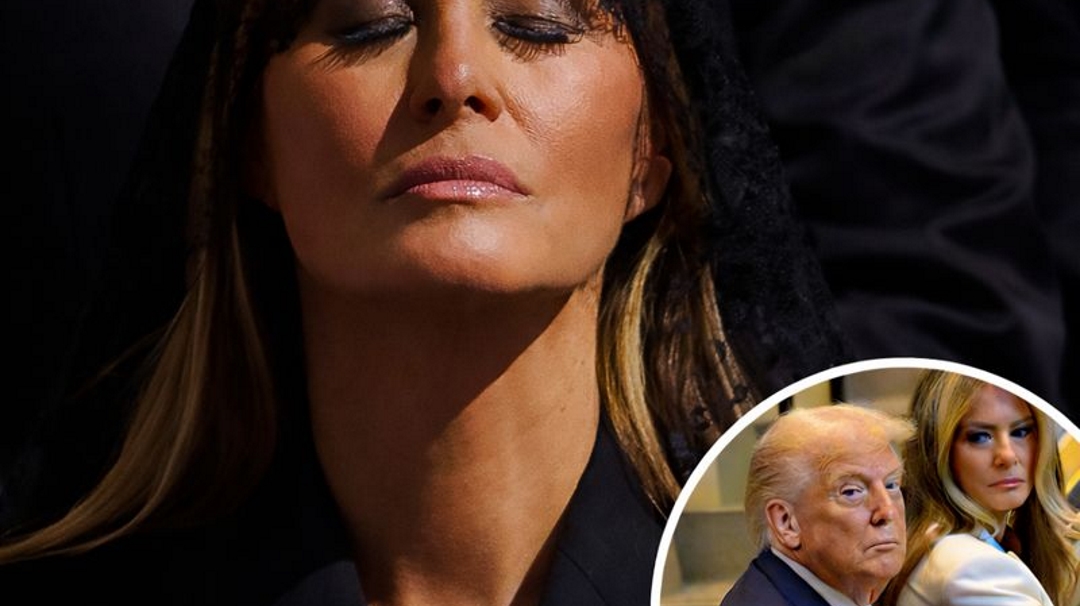
Even during moments of intense controversy — including legal cases, public allegations, and political backlash — Melania maintained a consistent public posture. She neither defended nor condemned her husband loudly, choosing instead a controlled silence that insiders say was deliberate.
The former aide suggested that Melania views marriage less as an emotional performance and more as a contract with defined benefits and protections. Divorce, in that framework, would be disruptive rather than liberating.
Legal analysts and biographers have previously noted that high-profile marriages of power often function differently than public expectations. In Melania’s case, remaining married provides continuity, privacy leverage, and insulation from the chaos that could follow a high-profile split.
There is also the matter of public perception. A divorce from Donald Trump would instantly thrust Melania into a different kind of spotlight — one she has consistently avoided. Staying married allows her to control when, how, and if she engages with public life at all.
Observers point out that Melania has never positioned herself as a political actor. Her initiatives as first lady were limited, carefully chosen, and often detached from partisan battles. Remaining married, according to those close to her, ensures she can continue to step back from public engagement entirely.
The aide’s claim has been echoed by journalists who have covered the Trump family closely. Several have noted that Melania’s strength lies in her ability to endure quietly, without spectacle, while maintaining leverage behind the scenes.
In recent years, as Donald Trump has faced mounting legal challenges and an increasingly volatile political environment, Melania has remained largely out of view. That absence, insiders say, is not accidental but intentional — a form of control rather than retreat.
Public fascination with whether she will “leave” often misunderstands her priorities, the aide suggested. The question assumes emotional rupture, when the reality may be strategic permanence.
Reporting from journalists who covered Melania’s tenure in the White House supports the idea that she has always operated on her own terms, even when those terms were misunderstood by the public.
Further background on Melania Trump’s approach to life in the White House and her guarded public persona has been documented in long-form reporting by political correspondents who covered her closely.
Analysis of power marriages and why public separation is often less appealing than it appears can also be found in broader examinations of political partnerships.
Ultimately, the former aide’s claim reframes the conversation. It suggests that Melania Trump’s decision to stay is not rooted in obligation or fear, but in calculation — a belief that remaining exactly where she is offers the greatest control over her life, her privacy, and her future.
Whether that calculation ever changes remains unknown. But for now, those who know her best insist the choice is intentional — and not one she plans to revisit.