
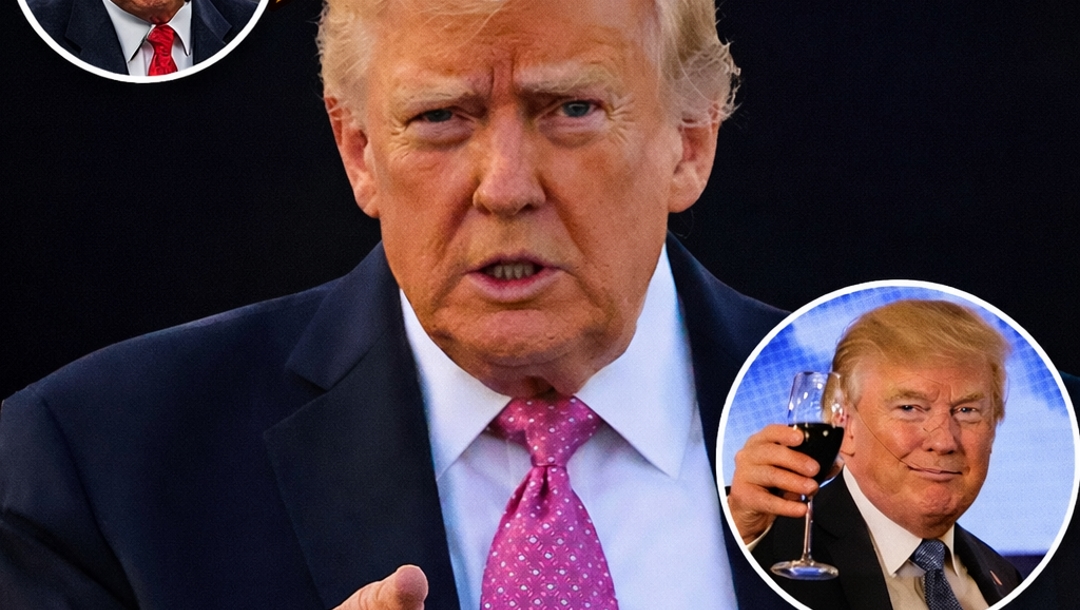
For decades, one detail about Donald Trump has quietly stood out among the many headlines surrounding him: he says he has never had a drop of alcohol.
In interviews, speeches, and casual conversations over the years, the former president has repeated the claim consistently. While critics and supporters often debate his policies, business dealings, or political rhetoric, this personal habit has remained one of the few aspects of his life that has rarely changed.
The reason behind it, Trump says, is deeply personal.
To understand the choice, he often points back to his older brother, Fred Trump Jr. Unlike Donald, Fred initially followed a different path from the family’s real estate business. He pursued aviation and worked as a pilot, a career that once seemed full of promise.
But according to Trump, his brother struggled with alcohol for years. The addiction eventually affected his health and career, leaving a lasting impact on the entire family.
Fred Trump Jr. died in 1981 at the age of 43.
Donald Trump has frequently described the loss as a turning point in how he viewed alcohol. In interviews, he has said watching his brother’s struggle convinced him early in life that drinking was not something he ever wanted to risk.
“He had a problem with alcohol,” Trump said during one public appearance. “And I learned from that.”
The experience, he has explained, left a powerful impression during his formative years. While many social and business environments revolve around drinking, Trump says he simply chose not to participate.
Instead, he became known for ordering soda or other non-alcoholic drinks at events where others were raising glasses.
Friends and associates who worked with him in New York during the 1980s and 1990s have often confirmed that pattern. Even in settings where alcohol was abundant — charity galas, business dinners, or celebrity gatherings — Trump typically stuck to soft drinks.
That choice has occasionally surprised people who assume otherwise because of his larger-than-life public persona.
The culture surrounding wealth and nightlife in cities like New York and Las Vegas often involves expensive wines, cocktails, and celebratory toasts. Yet Trump’s personal rule reportedly remained firm even during the height of his business career.
Public health experts often point to family history as a major factor in how individuals approach alcohol consumption. Witnessing addiction firsthand can lead some people to avoid drinking altogether, seeing abstinence as the safest path.
Trump has suggested that was exactly his thinking.
The story also adds an unexpected layer to the relationship between the two brothers. While Fred Trump Jr. pursued a very different life from the rest of the family, Donald has often credited him with teaching him lessons that shaped his own choices.
“He had a tremendous personality,” Trump once said about his brother. “He was an incredible guy.”
Family tragedies often leave quiet marks on public figures, even when the rest of their lives unfold in the spotlight. For Trump, the experience appears to have turned into a rule he never broke.
During his presidency, White House dinners and international state events sometimes featured elaborate wine selections. Yet Trump was often photographed raising a glass of water or soda while guests around him drank wine.
For supporters, the story reinforces an image of discipline and personal control. For critics, it is simply one more detail about a complex public figure whose life has long attracted scrutiny.
Regardless of political interpretation, the decision itself remains unusually consistent.
In a culture where alcohol is commonly associated with celebration, networking, and relaxation, choosing never to drink at all is relatively rare — especially in high-profile business and political circles.
But for Trump, the reasoning has always returned to the same place.
A lesson learned from watching someone close to him struggle.
Whether people find the story surprising or not, it reveals a side of the former president that rarely dominates headlines: a personal decision shaped not by politics or publicity, but by a family experience that left a lasting imprint.