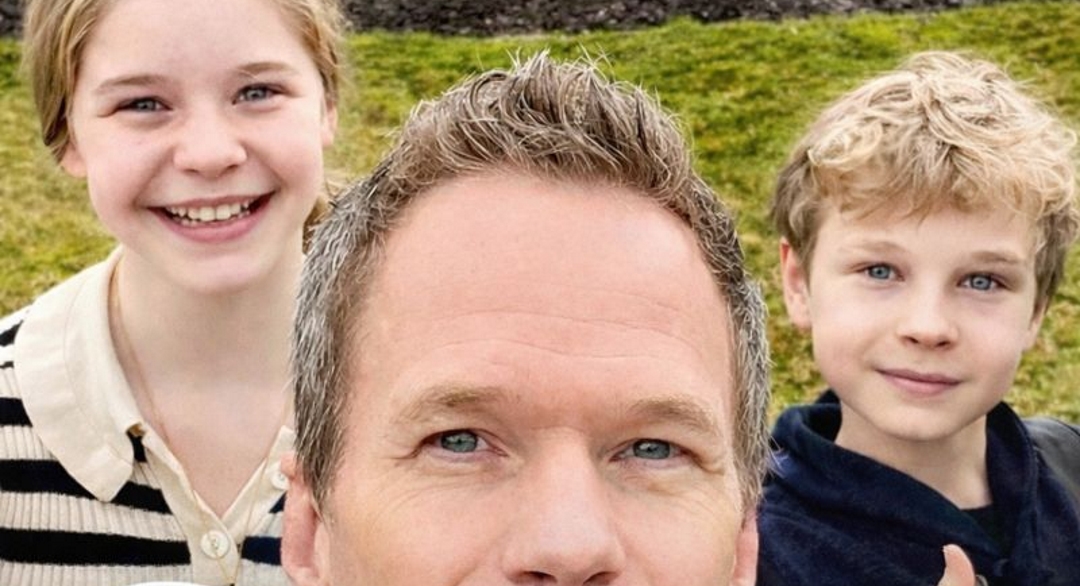
For years, Neil Patrick Harris has spoken openly about fatherhood, love, and the choices he and his husband made when starting their family. But one decision still stops people in their tracks every time he mentions it: he has deliberately chosen not to find out which of his twins is biologically his.
The actor, who shares twins Gideon and Harper with his husband David Burtka, has said the answer simply does not matter to him. In his mind, biology carries no extra weight when it comes to love, responsibility, or parenthood.
Harris has explained in multiple interviews that learning which child shares his DNA would introduce something he doesn’t want inside their home — hierarchy. Even unconsciously, he worries that knowledge could create subtle differences in how parents or outsiders perceive the children.
He has been consistent about this stance since the twins were born in 2010 via surrogate, a process he has previously described in detail during conversations about early days of parenthood.
Both Harris and Burtka provided genetic material during the surrogacy process, but they intentionally never requested records identifying which embryo resulted in which child. To them, the twins are simply their children — equally, fully, without qualifiers.
“We are their parents,” Harris has said, adding that the rest feels irrelevant. That philosophy has resonated strongly with many LGBTQ+ families navigating similar decisions, especially those who’ve spoken publicly about modern family-building.
Still, the public fascination hasn’t faded. Fans frequently ask which twin “belongs” to which father, a question Harris has gently but firmly pushed back against. He’s called it intrusive, not malicious — but rooted in outdated ideas about family.
On social media, the conversation often sparks admiration.
Neil Patrick Harris saying biology doesn’t matter between his twins is one of the most grounded parenting takes I’ve ever heard. — Alex R. (@alexwriteslife) August 2024
Harris has also pointed out that once children grow up, that information would belong to them — not their parents. If either twin ever wants to know their biological origin, he has said that choice should be theirs alone.
This approach aligns with broader shifts in how people talk about parenthood today. Experts in child psychology have long argued that attachment, consistency, and emotional safety matter far more than genetics, a view supported by research on family bonds.
Inside their home, Harris and Burtka emphasize shared routines, shared affection, and shared discipline. From school drop-offs to Broadway rehearsals, Harris has often joked that parenting twins is less about identity and more about survival.
He has also addressed the assumption that one child must be “more like him” or “more theatrical.” In reality, he says both kids share traits with both parents, reinforcing his belief that nature and nurture are hopelessly intertwined.
Critics occasionally argue that avoiding the information is unrealistic or unnecessary. Harris’s response has been calm but firm: knowing wouldn’t add value — it would only add noise.
That perspective has struck a chord beyond celebrity culture. Many parents in blended families, adoptive households, and donor-conceived families have echoed similar sentiments, pointing to changing definitions of family in modern society.
In interviews, Harris often returns to the same idea: love isn’t divisible. There is no version of fatherhood where DNA earns extra points.
The way Neil Patrick Harris talks about his kids is such a reminder that being a parent isn’t about biology — it’s about showing up. — Parenting Today (@ParentingHQ) August 2024
As his children grow older, Harris says the family will continue to have honest conversations — just without letting genetics define their roles. He’s clear that curiosity is natural, but labels are optional.
In a world still obsessed with biological lines, Harris’s choice feels quietly radical. It reframes parenthood not as something proven by blood, but something built daily through care, sacrifice, and presence.
For him, the question isn’t which twin is biologically his. It’s why anyone thinks it should matter at all.