Academic experts also stress that translations play a major role in shaping meaning. The original French text is layered with outdated language, puns, and references that are often mistranslated or selectively interpreted. Small changes in wording can dramatically alter how a verse is understood.
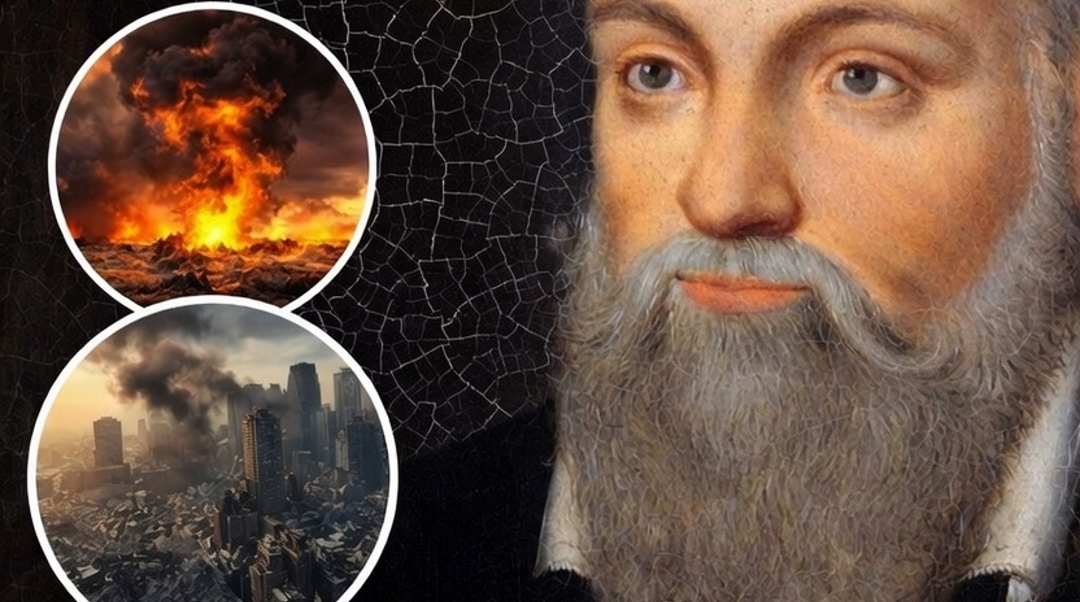
According to historical analysis of Nostradamus’ work, his writings were never intended to function as a literal timeline of future events. Instead, they reflect a mix of astrology, classical references, and observations of human behavior — patterns that repeat regardless of era.
Despite that, social media has accelerated the spread of dramatic interpretations. Short videos and viral posts often strip away nuance, presenting claims as revelations rather than theories. The result is a feedback loop where fear-based content spreads faster than careful scholarship.
Psychologists note that people are more likely to engage with ominous predictions during times of uncertainty. When the future feels unstable, prophecies offer the illusion of clarity, even if that clarity is frightening. It gives chaos a narrative.
Importantly, Nostradamus himself lived during a period of constant crisis — plagues, religious wars, famine, and political upheaval. Many of his verses reflect the anxieties of his own time rather than visions of a distant future. Interpreting them as precise forecasts ignores that historical context.
Modern scholars also warn against assigning specific years like 2026 to his work. Nostradamus rarely, if ever, provided clear dates. Year-based predictions usually emerge from creative math, selective interpretation, or outright invention.
As historians have repeatedly explained, Nostradamus’ reputation as a prophetic mastermind owes more to hindsight than foresight. His writings endure not because they predict the future accurately, but because they are open enough to be reshaped endlessly.
The danger of modern Nostradamus hype isn’t just misinformation — it’s how easily fear becomes entertainment. Predicting death, disaster, and collapse draws clicks, but it can also heighten anxiety and distract from real, evidence-based discussions about global risks.
Climate change, geopolitical instability, and technological disruption are real challenges facing the world. Framing them as inevitable prophecies rather than solvable problems can encourage fatalism instead of action.
That doesn’t mean fascination with Nostradamus is going away. His work has survived for nearly 500 years precisely because it invites interpretation. But experts urge readers to treat sensational claims with skepticism, especially when they promise certainty about specific dates or individuals.
As 2026 approaches, it’s almost guaranteed that Nostradamus will be invoked again — whether something major happens or not. If nothing dramatic occurs, the predictions will quietly fade. If something does, the verses will be retroactively “decoded” to fit the outcome.
In the end, Nostradamus tells us far more about ourselves than about the future. His prophecies act like mirrors, reflecting the fears, hopes, and obsessions of each generation that reads them.
And while the idea of ancient warnings about modern catastrophe is undeniably compelling, history suggests the real danger lies not in the predictions — but in how eagerly we choose to believe them.