
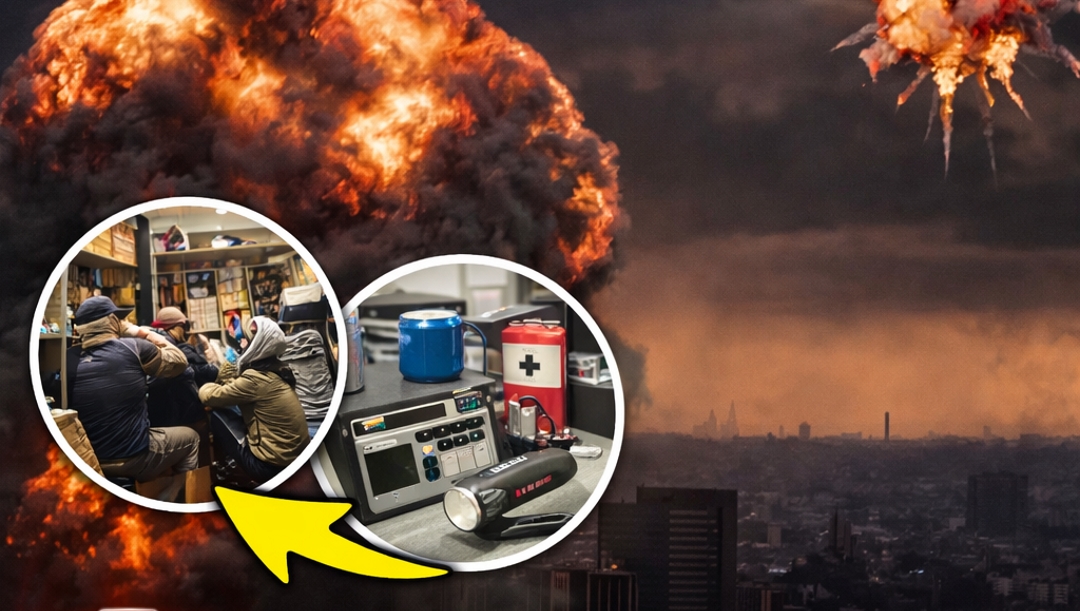
Across parts of Europe and Asia, government agencies have quietly begun updating public guidance on what civilians should do if a major crisis disrupts daily life.
The advice is not framed as a prediction of war. Instead, officials describe it as preparedness — the same logic used for earthquakes, hurricanes, or large-scale power outages.
But the timing has captured attention.
In several countries, emergency management agencies have recently reminded households to maintain basic survival supplies, including water, non-perishable food, flashlights, backup batteries, and battery-powered radios capable of receiving official instructions if communications infrastructure fails.
Preparedness officials say the goal is simple: resilience during uncertainty.
Security analysts point out that modern conflicts, even when geographically distant, have demonstrated how quickly cyberattacks, energy disruptions, or supply chain interruptions can affect civilian populations far from any battlefield.
That shift has changed how governments think about civil defense.
Rather than focusing only on military readiness, some countries now emphasize what they call “whole society preparedness” — encouraging citizens to be capable of supporting themselves for several days if critical services are temporarily unavailable.
Sweden, for example, has distributed updated civil emergency guidance in recent years advising citizens how to respond during national emergencies. Finland and Norway have issued similar preparedness communications emphasizing personal readiness rather than alarm.
You can see an example of modern civil preparedness guidance here:
Sweden’s official civilian emergency preparedness handbook
Emergency planners say one item frequently emphasized is a reliable way to receive verified information.
That often means a battery or hand-crank radio — technology that may seem outdated but remains one of the most reliable tools when internet or cellular service is disrupted.
Disaster response experts say misinformation tends to spread fastest when communications are unstable, making trusted broadcast channels especially important during the first hours of a crisis.
International humanitarian organizations also recommend similar preparation steps for natural disasters, noting that the same kits used for storms or earthquakes apply to many types of emergencies.
Preparedness checklists from global relief organizations can be reviewed here:
Red Cross emergency kit recommendations
For civilians who remember Cold War-era civil defense messaging, the renewed focus on preparedness can feel unsettling. But experts stress the messaging is intended to reduce panic, not create it.
“The more prepared a population is, the less likely fear is to take over during disruptions,” emergency planning researchers often note in resilience studies.
In the United States, the Federal Emergency Management Agency similarly recommends households maintain emergency kits capable of sustaining families for at least 72 hours during disasters.
You can review FEMA’s household preparedness recommendations here:
Ready.gov basic disaster supply kit guidance
Defense analysts say the broader lesson from recent global conflicts is not necessarily that war is imminent elsewhere, but that modern crises often blur the lines between military, economic, and infrastructure risks.
Energy shortages, cyber incidents, and transportation disruptions have all demonstrated how interconnected systems can create ripple effects beyond conflict zones.
That reality has pushed preparedness conversations beyond government agencies into everyday households.
For many families, preparation simply means practical steps: extra bottled water, backup medication supplies, copies of important documents, and a plan for contacting relatives if networks go down.
Psychologists who study disaster behavior say preparation often reduces anxiety because it replaces uncertainty with practical action.
At the same time, officials consistently stress that preparedness messaging should not be confused with forecasts. Most guidance documents explicitly state they are precautionary measures, not warnings of specific threats.
For now, emergency planners say the message remains grounded in a familiar principle: preparation is most effective when it becomes routine rather than reactive.
And in an era defined by unpredictable disruptions — from pandemics to cyber incidents to extreme weather — governments increasingly appear to view civilian readiness not as alarmism, but as basic infrastructure for modern life.