
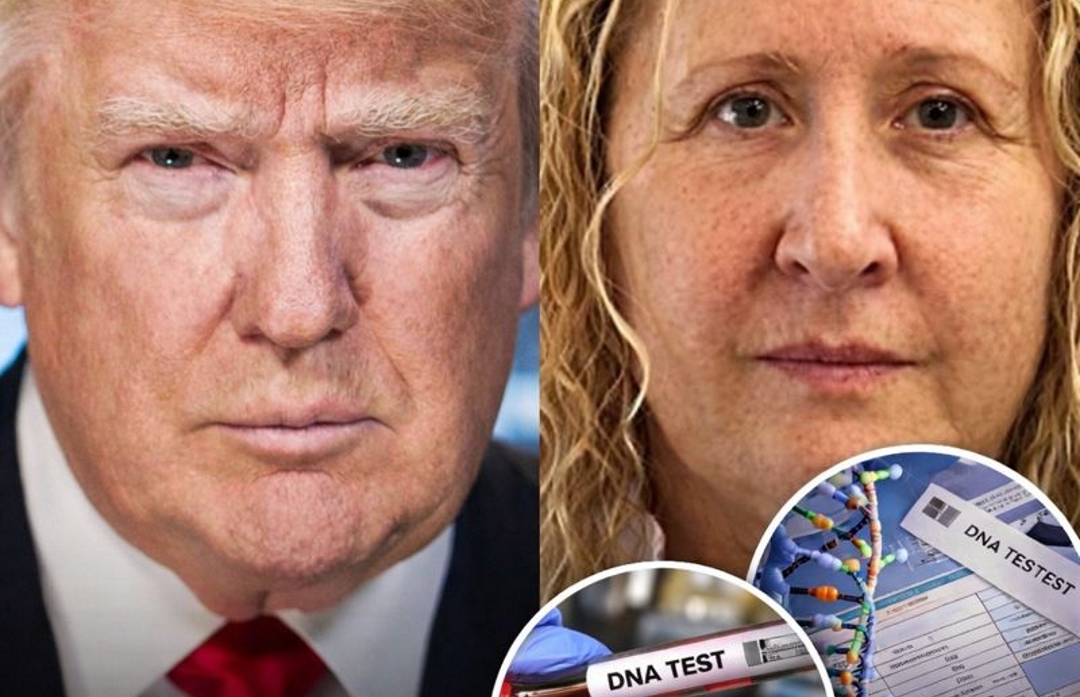
The claim has surfaced before, but this time it arrived with fresh documents, lab reports, and a renewed insistence that the evidence can no longer be dismissed. A woman who says she is Donald Trump’s biological daughter has released what she describes as new DNA findings, setting off another wave of scrutiny around a story that has lingered on the political fringes for years.
The materials, shared publicly this week, include genetic comparisons and testing summaries that she says point to a biological connection. While Trump has repeatedly denied the allegation and has never acknowledged any such relationship, the release has reignited debate over a case many believed had quietly faded away.
According to the woman, the latest testing was conducted independently and reviewed by multiple specialists. She claims the analysis builds on earlier samples and strengthens what she argues is a clear genetic link. Legal experts note that DNA claims of this nature often hinge not just on lab results but on chain-of-custody questions and verified reference samples, a complexity outlined in technical breakdowns of forensic testing standards.
The story first emerged years ago, surfacing periodically in tabloid reports, court filings, and online forums. Each time, it has sparked intense interest before receding again under denials and legal roadblocks. What’s different now, supporters argue, is the presentation of what they call more complete genetic evidence, paired with renewed calls for Trump to submit to independent testing.
Trump’s representatives have not commented directly on the new release. In past statements, his legal team dismissed the allegation as baseless and politically motivated. Allies have echoed that view, framing the renewed attention as another attempt to distract from larger political battles. Still, the circulation of the documents has triggered a fresh round of media analysis, including explanations of how paternity testing is interpreted and where claims can fall apart.
Extraordinary claims require extraordinary proof. DNA evidence always deserves scrutiny, not headlines alone. — Legal Affairs (@LegalAffairsNow) January 2026
The woman behind the claim says her motivation is personal rather than political. In interviews, she has described a lifelong search for answers and recognition, arguing that the issue goes beyond fame or money. She has also suggested that advances in genetic science make it harder for powerful figures to avoid such questions indefinitely, a point often raised in public discussions about modern DNA testing.
Critics, however, remain unconvinced. Some point out that without Trump’s direct participation or a court-ordered comparison using verified samples, the claims may never be conclusively resolved. Others argue that releasing partial data risks misleading the public, especially when complex genetic probabilities are reduced to simple headlines.
The legal path forward appears uncertain. Paternity cases involving public figures can take years, often bogged down by jurisdictional disputes and procedural challenges. Attorneys familiar with similar disputes note that even compelling genetic indicators do not automatically translate into legal recognition, a reality explored in summaries of family law standards.
Whether this goes anywhere legally depends on cooperation. Without it, we’re likely headed for another stalemate. — Courtroom Insight (@CourtroomView) January 2026
Public reaction has been sharply divided. Supporters argue the evidence deserves independent review and accuse critics of reflexively protecting power. Skeptics counter that extraordinary allegations tied to famous names often thrive on attention rather than proof. Social media has amplified both sides, with speculation spreading faster than verification.
For now, the release of the new DNA material has not changed Trump’s public stance, nor has it triggered any formal legal action. What it has done is reopen a story many assumed was finished, reminding observers how unresolved personal claims can resurface, especially when science, secrecy, and celebrity collide.
Whether the evidence leads to court proceedings or fades into the background once again may depend less on the documents themselves and more on whether any party with definitive reference DNA is willing to engage. Until then, the question remains suspended — not proven, not dismissed, but persistently lingering.