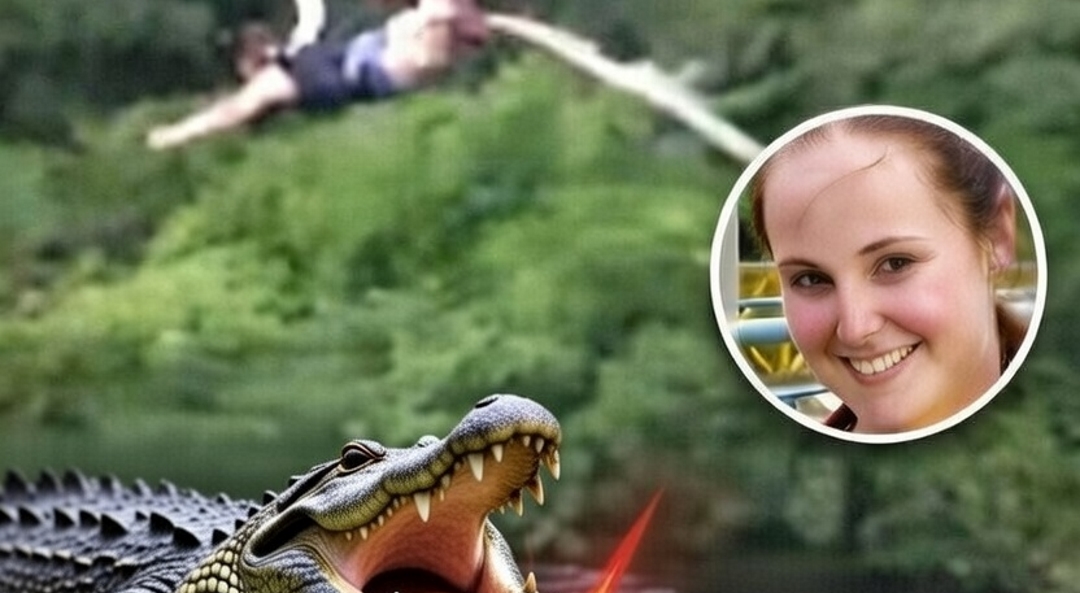
According to later accounts, she managed to stay afloat despite suffering internal injuries, bruising, and possible fractures. Still attached to part of the snapped cord, she fought to keep her head above water while trying to orient herself.
Rescue crews and nearby workers rushed to respond after realizing what had happened. From the jump platform above, staff could see her moving in the water far below, an image that reportedly left onlookers frozen in shock.
The delay between the fall and the rescue was critical. Every second increased the risk of crocodile attack, infection, or drowning. Despite her injuries, the woman continued to signal for help.
Miraculously, she was eventually pulled from the water alive. Emergency responders transported her to a hospital, where doctors confirmed she had survived injuries that could easily have been fatal.
Medical professionals later described her survival as extraordinary, noting that many victims do not survive falls from even half that height, let alone into dangerous wildlife territory.
Investigations that followed revealed serious safety failures. Questions were raised about equipment maintenance, weight calculations, and whether the bungee cord had been properly inspected before the jump.
The company responsible for the activity faced intense scrutiny, with critics arguing that extreme tourism often prioritizes profit over safety. Industry experts pointed out that bungee cords must be replaced regularly due to material fatigue.