
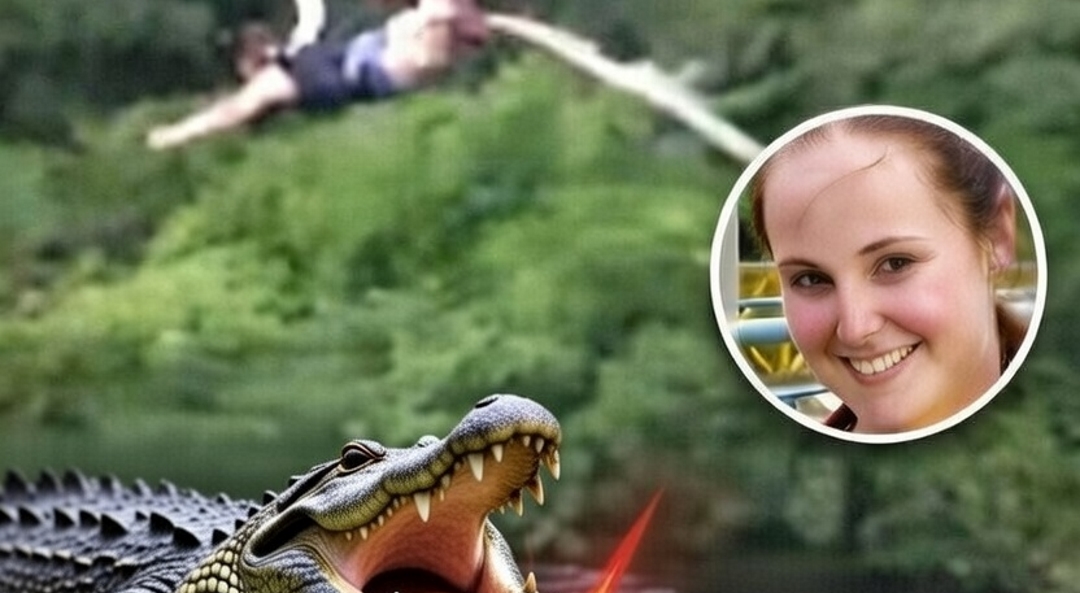
What began as a thrill-seeking adventure turned into a terrifying fight for survival when a woman plunged hundreds of feet into crocodile-infested waters after a bungee cord snapped mid-jump. The incident, which has resurfaced online and stunned viewers around the world, remains one of the most chilling extreme-sports accidents ever recorded.
The woman, a young tourist seeking an adrenaline rush, had signed up for what was advertised as a professionally managed bungee jump over a deep river canyon. The jump platform sat high above the water, with dense jungle surrounding the drop zone below.
Witnesses said the jump appeared routine at first. She leapt forward, arms outstretched, as the cord unfurled beneath her. Within seconds, however, the situation turned catastrophic.
The bungee cord, which should have recoiled and slowed her descent, failed under tension. Instead of snapping her back upward, it broke completely, sending her into free fall.
She plunged an estimated 360 feet into the river below, slamming into the water at high speed. The impact alone would have been enough to cause severe injuries, but what made the situation far worse was where she landed.
The river was known to be home to large crocodiles, a fact that had been downplayed or inadequately communicated to tourists. The woman surfaced in the water, injured and disoriented, surrounded by a real and immediate predator threat.
According to later accounts, she managed to stay afloat despite suffering internal injuries, bruising, and possible fractures. Still attached to part of the snapped cord, she fought to keep her head above water while trying to orient herself.
Rescue crews and nearby workers rushed to respond after realizing what had happened. From the jump platform above, staff could see her moving in the water far below, an image that reportedly left onlookers frozen in shock.
The delay between the fall and the rescue was critical. Every second increased the risk of crocodile attack, infection, or drowning. Despite her injuries, the woman continued to signal for help.
Miraculously, she was eventually pulled from the water alive. Emergency responders transported her to a hospital, where doctors confirmed she had survived injuries that could easily have been fatal.
Medical professionals later described her survival as extraordinary, noting that many victims do not survive falls from even half that height, let alone into dangerous wildlife territory.
Investigations that followed revealed serious safety failures. Questions were raised about equipment maintenance, weight calculations, and whether the bungee cord had been properly inspected before the jump.
The company responsible for the activity faced intense scrutiny, with critics arguing that extreme tourism often prioritizes profit over safety. Industry experts pointed out that bungee cords must be replaced regularly due to material fatigue.
Further reporting on similar accidents has shown that equipment failure, while rare, is often catastrophic when it occurs. An overview of bungee-jumping risks and safety standards published by National Geographic explains how strict oversight is essential to prevent deadly outcomes.
Wildlife experts also emphasized the added danger of performing stunts over habitats with large predators. Crocodiles are known to be highly territorial and capable of sudden, explosive attacks.
Surviving a high-impact fall is one thing; surviving while injured in predator-filled water is another entirely. Experts later said the woman’s ability to stay calm likely saved her life.
The incident reignited global debate about adventure tourism and informed consent. Travelers often assume that extreme activities are thoroughly regulated, especially when marketed to international visitors.
Consumer safety advocates argue that tourists may not fully understand the risks involved, particularly in regions where enforcement standards differ from those in their home countries.
Cases like this have fueled calls for tighter international regulations on high-risk recreational activities. A broader look at how adventure tourism accidents are handled worldwide was examined in a report by BBC News, highlighting recurring gaps in accountability.
In the aftermath, the woman reportedly underwent a long recovery process, both physically and psychologically. Surviving such an ordeal often leaves lasting trauma, even when physical wounds heal.
While her story ultimately became one of survival, it remains a stark reminder of how quickly thrill-seeking can turn deadly. A single equipment failure changed the trajectory of her life in seconds.
Today, the footage and images from the incident continue to circulate online, shocking new audiences each time they resurface. For many, the story serves as a cautionary tale about the hidden risks behind extreme adventure experiences.
What should have been a moment of exhilaration instead became a brush with death, underscoring a sobering truth: when safety systems fail at extreme heights, survival often comes down to sheer luck.