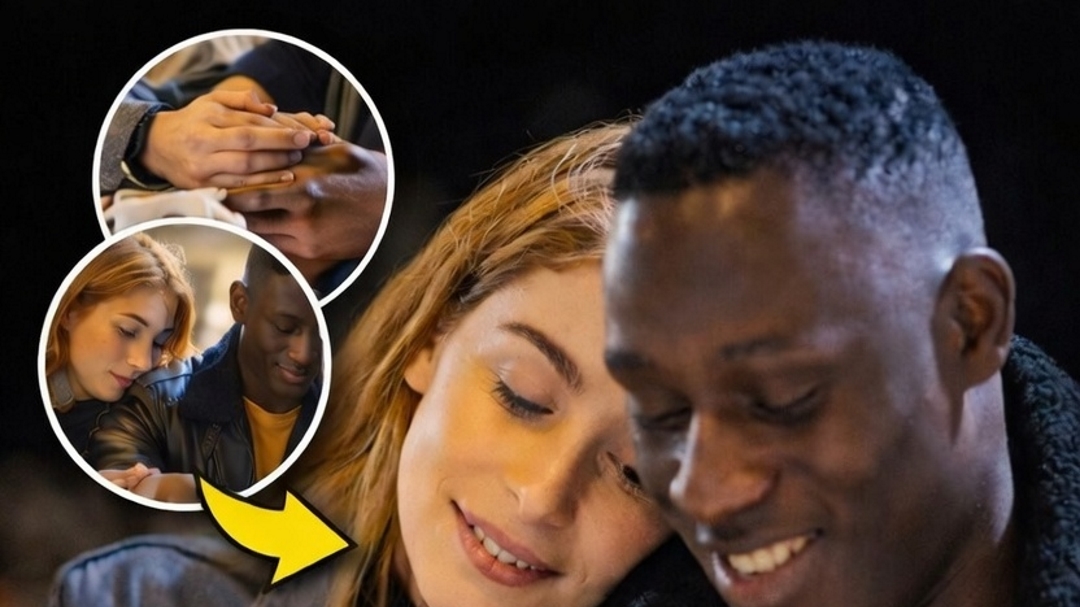

The image looks glamorous at first glance — flawless makeup, bright eyes, champagne in hand, a woman who seems to have it all. But behind the polished photos and holiday glow is a story that hit a nerve online, exposing an uncomfortable truth about jealousy, insecurity, and how quickly friendships can fracture.
The woman at the center of the story says she was quietly excluded from a Christmas gathering by people she considered close friends. There was no argument. No dramatic fallout. Just a sudden realization that plans were happening without her — and an explanation she never expected.
According to her account, one friend eventually admitted the reason: they didn’t want her there because she was “too attractive.” The concern, she was told, wasn’t about personality or behavior, but about how her presence might make others feel.
At first, she thought it was a joke.
It wasn’t.
The explanation landed with a mix of disbelief and humiliation. Being excluded for looks — something she didn’t choose — felt surreal. “I didn’t know whether to laugh or cry,” she later said, adding that the comment reframed years of subtle tension she had ignored.
Friends, she realized, hadn’t been celebrating her confidence. They had been quietly resenting it.
The story spread rapidly once it surfaced online, with many women saying it echoed experiences they rarely talk about. Compliments that turned cold. Invitations that slowly stopped. A sense that standing out — especially in mixed company — can make others uncomfortable.
Social psychologists say this dynamic is more common than people admit. Research into appearance-based threat shows that insecurity within social groups often leads to exclusion rather than confrontation.
In this case, the exclusion didn’t come with cruelty — it came wrapped in politeness. That made it harder to process.
“They said they didn’t want awkwardness,” she explained. “They said it would be uncomfortable for their partners.” What she heard instead was that her existence was being treated as a problem to manage.
Online reaction was swift and divided. Some dismissed the story as vanity. Others saw something deeper — a reflection of how women are often punished socially for confidence or beauty rather than supported.
Being excluded for being “too attractive” is wild, but it happens way more than people want to admit.— Culture Mirror (@CultureMirror) June 2025
Several commenters pointed out that attractiveness can disrupt unspoken hierarchies within friend groups. When one person draws attention, others may feel exposed, compared, or insecure — especially in environments tied to partners and validation.
Experts studying social comparison behavior note that resentment often grows quietly, fueled by internal narratives rather than actual wrongdoing.
The woman insists she never flirted inappropriately or sought attention. She says she dressed the same way she always had, behaved the same way she always had, and assumed friendships were rooted in trust.
That assumption shattered quickly.
After the truth came out, the group tried to smooth things over, framing the decision as “protective” rather than exclusionary. That explanation only deepened the hurt.
“Protecting who?” she asked. “Because it wasn’t me.”
What made the situation especially painful was the timing. Christmas, she said, amplified the loneliness. Watching group photos surface online while knowing she was intentionally left out triggered a spiral of self-doubt she didn’t expect.
Mental health professionals say exclusion during holidays can hit harder than usual. Studies examining social rejection show that being ostracized activates the same neural pathways as physical pain.
Rather than retreat quietly, she chose to speak openly — not to shame anyone, but to process what happened. That honesty resonated with thousands of women who shared similar stories of being sidelined for reasons no one says out loud.
Some admitted they had once been on the other side of the dynamic — feeling threatened, insecure, or relieved when someone “too confident” wasn’t around.
That admission sparked uncomfortable reflection.
This story made me realize how often women punish each other for confidence instead of supporting it.— Real Talk (@RealTalkDaily) June 2025
Relationship counselors say the issue isn’t beauty — it’s unspoken fear. Fear of comparison. Fear of inadequacy. Fear that attention is a limited resource.
When those fears aren’t addressed honestly, they metastasize into quiet exclusion, passive distance, and rationalizations that feel kinder than confrontation.
For the woman at the center of the story, the experience forced a hard reassessment of her friendships. She says she no longer wants to be “managed” to make others comfortable.
“If being myself is a problem,” she said, “then I’m not the one who needs to change.”
Since sharing her story, she’s received messages from women across ages and backgrounds saying they’ve felt the same invisible push-out — sometimes labeled as confidence, sometimes as attractiveness, sometimes as “intimidating energy.”
The labels change. The outcome doesn’t.
Experts argue that healthy friendships require space for difference, not conformity. Studies on insecurity and group dynamics suggest that exclusion often signals unresolved internal conflict rather than genuine threat.
As the holiday season approaches again, the woman says she’s done chasing invitations. She’s choosing spaces where she doesn’t have to dim herself to belong.
The image that sparked the conversation may look glamorous, but the story underneath is raw. It exposes a contradiction many women live with — praised for beauty in public, punished for it in private.
Being left out didn’t break her, she says.
It clarified everything.
And for thousands watching, it forced an uncomfortable but necessary question: how often do we exclude others — not because they did something wrong — but because they made us feel something we didn’t want to face?