
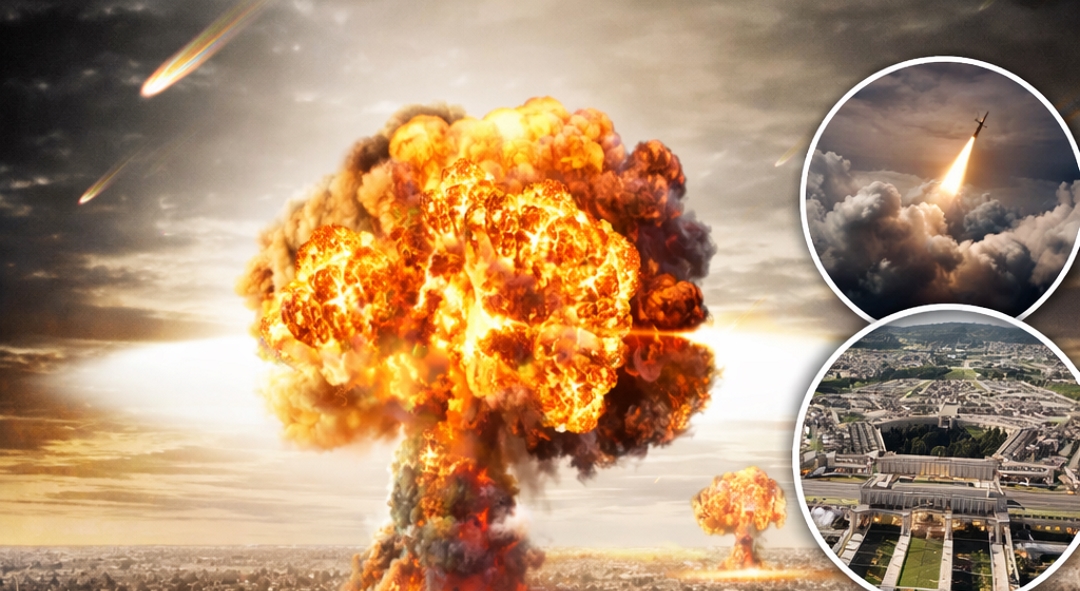
Concerns about a potential global conflict have intensified again in 2026 as military analysts, intelligence officials, and political leaders debate what a modern world war could actually look like. While the idea of World War III has circulated for decades, growing geopolitical tensions and rapid advances in weapons technology have made the discussion feel less theoretical than it once did.
Security experts say the nature of warfare has changed dramatically since the last major global conflict. Instead of traditional battle lines, modern war could involve cyberattacks, missile systems, infrastructure sabotage, and strikes on critical military hubs.
That shift has led analysts to identify locations around the world that could become immediate flashpoints if a major confrontation were to erupt.
Some of the most frequently discussed targets are strategic defense facilities and command centers tied to global military alliances. Installations connected to nuclear command systems, missile defense networks, and intelligence operations would likely be among the first places adversaries attempt to disable.
Military planners often emphasize that disabling communications and defense coordination early in a conflict can provide a major tactical advantage. This is why large command structures such as the Pentagon frequently appear in discussions about strategic vulnerability.
According to defense analysis published by Brookings Institution research on great-power conflict, modern warfare would likely begin with attempts to blind or disrupt the opposing side’s decision-making systems rather than immediately focusing on large population centers.
Another area experts continue to watch closely is the Pacific region. Tensions between global powers in that part of the world have steadily increased over the past decade, making military bases and naval routes especially sensitive.
Large naval installations, aircraft carrier groups, and satellite tracking stations could become priority targets in the opening hours of any major conflict. Analysts say the goal would be to limit an opponent’s ability to project power across oceans.
Europe remains another region frequently discussed in defense briefings. NATO infrastructure, radar installations, and logistics hubs are all considered strategically important because they support rapid deployment of forces across the continent.
Cyberwarfare also plays a massive role in modern conflict scenarios. Instead of bombs, an initial strike could come in the form of attacks on power grids, communication networks, or financial systems.
Government reports warn that critical infrastructure is increasingly connected to digital networks, creating opportunities for adversaries to cause widespread disruption without launching a single missile.
The Department of Homeland Security has repeatedly emphasized the need to protect key infrastructure sectors, including transportation systems, energy facilities, and telecommunications networks.
Information about these vulnerabilities is outlined in federal guidance such as the U.S. Cybersecurity and Infrastructure Security Agency overview of critical infrastructure sectors, which identifies industries considered essential to national security.
Beyond physical locations, analysts also warn about the psychological dimension of modern warfare. Social media manipulation, misinformation campaigns, and propaganda are now seen as powerful tools capable of influencing public opinion and destabilizing governments.
In a global crisis, experts say controlling the narrative could be nearly as important as controlling territory.
Political leaders have also weighed in on the growing concerns. Officials across several countries have acknowledged that geopolitical tensions are currently at one of their most fragile points since the Cold War era.
Some leaders have called for renewed diplomatic engagement in order to prevent misunderstandings from escalating into direct confrontation. Others argue that strengthening defense systems is necessary to deter potential adversaries.
Despite alarming headlines, many defense analysts stress that predicting a world war scenario is extremely complex. Conflicts rarely unfold exactly as simulations suggest, and diplomatic channels remain active between major powers.
Still, the ongoing discussion reflects a broader reality: global security dynamics are shifting rapidly.
Technological advances, emerging alliances, and regional disputes are all reshaping how nations prepare for potential threats. The modern battlefield may look very different from the wars of the past.
For now, experts continue to analyze risks, identify vulnerabilities, and advise governments on how to prevent worst-case scenarios from becoming reality.
Whether those warnings ultimately remain theoretical or prove prescient will depend on decisions made by world leaders in the years ahead.