
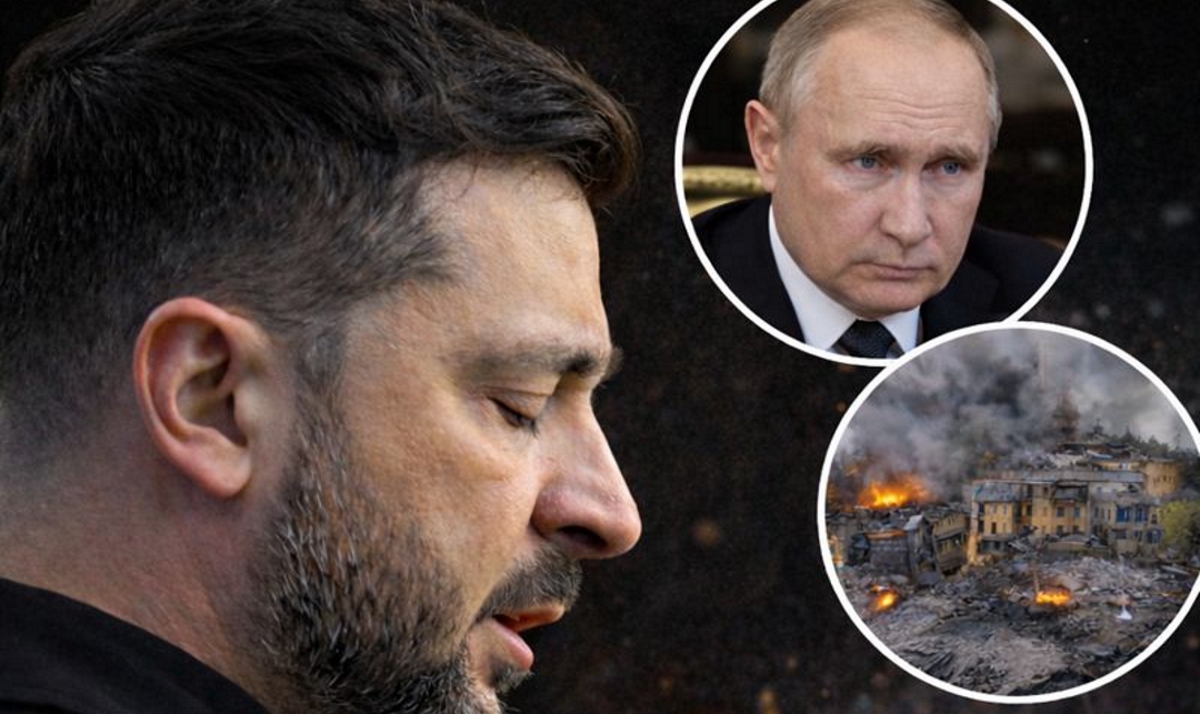
Ukrainian President Volodymyr Zelensky used his Christmas address to deliver one of his sharpest messages yet to Vladimir Putin, blending holiday symbolism with defiance as the war dragged into another brutal winter. The speech, released amid air-raid sirens and rolling blackouts, was less about celebration and more about resolve.
Standing against a backdrop shaped by conflict rather than tradition, Zelensky framed Christmas not as a moment of peace granted from above, but as something Ukrainians are fighting to reclaim. His words were pointed, emotional, and unmistakably directed at Moscow.
He poke of light versus darkness, accusing Russia of attempting to steal not only Ukrainian territory, but its future, identity, and faith. Without naming Putin directly at first, the target was clear as he described a leader who “believes missiles can silence truth.”
Moments later, the restraint vanished. Zelensky directly addressed, accusing him of weaponizing winter, targeting civilians, and hiding brutality behind false narratives. The address echoed themes Zelensky has repeated throughout the war, but the Christmas framing gave it added moral weight.
Observers noted how carefully the message balanced faith and fury. Zelensky invoked Christmas traditions not to soften his stance, but to contrast them with Russia’s actions, a rhetorical move analyzed in coverage that focused on tone rather than tactics.
He reminded Ukrainians that millions would celebrate Christmas under curfew, in shelters, or far from home. Yet he insisted that survival itself was an act of resistance. “We are still here,” he said, calling endurance a victory Russia had failed to prevent.
Christmas in Ukraine isn’t about gifts — it’s about defiance. — Kyiv-based journalist (@KyivObserver) Dec 2025
The message also carried a warning. Zelensky suggested that history would remember who destroyed and who defended, framing the conflict in moral terms rather than geopolitical ones. Analysts say that approach has helped sustain international support, as discussed in explanations of his wartime messaging.
In Russia, state media dismissed the address as propaganda, accusing Zelensky of exploiting religion for political gain. Kremlin-aligned commentators claimed Ukraine’s suffering was self-inflicted, a narrative increasingly rejected outside Russia and dissected in deep dives into Moscow’s messaging.
The Christmas speech came as fighting intensified along several fronts, with Ukrainian officials warning of renewed missile strikes targeting energy infrastructure. Zelensky’s words were therefore not abstract; they were delivered in the shadow of very real threats.
For many Ukrainians, the address struck a chord precisely because it avoided false optimism. Zelensky did not promise quick victory. Instead, he promised endurance and accountability, vowing that those responsible for atrocities would eventually face judgment.
This wasn’t a holiday speech. It was a reminder of why the fight continues. — Foreign policy analyst (@EasternFront) Dec 2025
International reaction was swift. Western leaders praised the speech as powerful and unifying, while human rights groups highlighted its emphasis on civilian suffering. Some diplomats privately acknowledged that Zelensky’s moral framing continues to outperform Russia’s transactional rhetoric, a contrast explored in political analysis of wartime leadership.
The use of Christmas itself carried symbolism. Ukraine has increasingly distanced itself from Moscow’s religious calendar, and Zelensky’s address reinforced that cultural separation. Faith, he suggested, belongs to the people — not to empires.
As the speech ended, Zelensky returned to the idea of light, saying it could not be bombed into darkness. It was a line designed to resonate beyond Ukraine’s borders, reminding allies why the conflict still matters.
For Putin, the message was unmistakable: Ukraine is not breaking, and time is not erasing responsibility. Even on a day traditionally associated with peace, Zelensky made clear that justice remains unfinished business.
As another wartime Christmas passes, the speech stands as a snapshot of a country that refuses to surrender its voice — or its future — no matter the season.